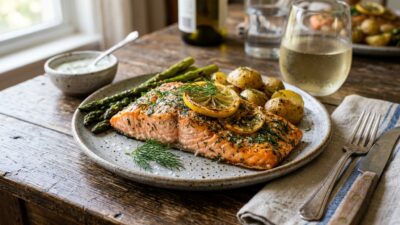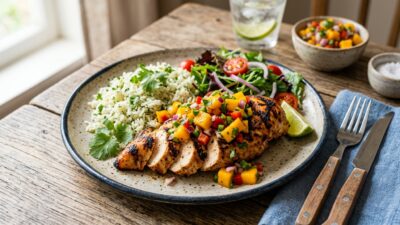
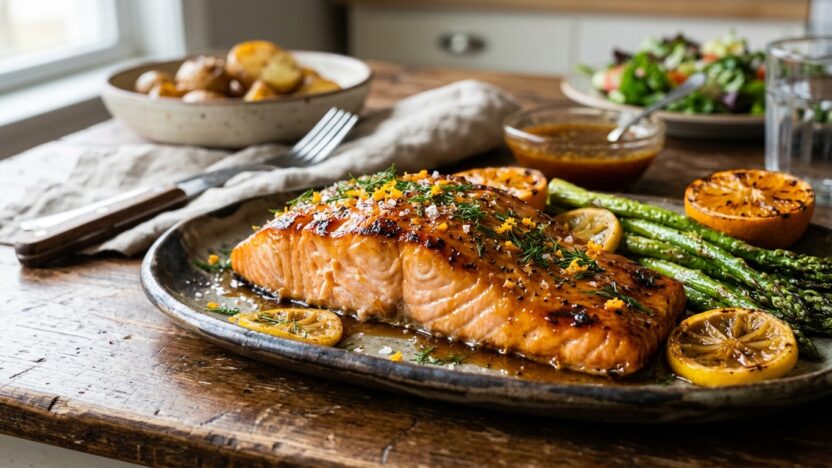
Introduction
If you’ve been searching for a salmon recipe that actually makes you excited to cook dinner, maple citrus glazed salmon is your answer. That glossy, golden glaze — sweet from real maple syrup, bright from fresh citrus — hits every note a good meal should. It smells amazing while it cooks, looks beautiful on the plate, and tastes like something you’d order at a nice restaurant.
The best part? It comes together in about 30 minutes. So you don’t need any fancy equipment or advanced cooking skills. Whether you’re cooking for a quiet Tuesday night or impressing guests on the weekend, this guide walks you through everything — step by step, tip by tip — so your salmon turns out perfectly every single time.
Let’s get into it.
Key Takeaways
- Maple citrus glaze = sweet + tangy + sticky perfection — a mix that works beautifully with salmon’s natural richness
- 30-minute meal — quick enough for weeknights, impressive enough for guests
- 5 delicious variations — from a classic oven-baked version to a honey-lime twist
- Beginner-friendly — no special equipment needed, just a pan or baking dish
- Works with multiple citrus fruits — orange, lemon, lime, or grapefruit all work well here
- Make-ahead friendly — the glaze can be prepped up to 3 days in advance
What You’ll Need
Before you start cooking, it helps to have everything ready to go. Here’s a general overview of what you’ll use across the recipes in this guide.
Core Ingredients
- Fresh salmon fillets (skin-on or skinless — both work)
- Pure maple syrup (use the real thing, not pancake syrup)
- Fresh citrus — oranges, lemons, or limes depending on the variation
- Garlic — minced or grated
- Soy sauce or tamari — adds depth and a savory balance to the sweetness
- Olive oil or avocado oil
- Salt and black pepper
- Fresh herbs — thyme, rosemary, or dill depending on your taste
- Red pepper flakes — optional, but they add a nice kick
Kitchen Tools
- Baking sheet or oven-safe skillet
- Small saucepan (for reducing the glaze)
- Whisk
- Citrus juicer or hand squeezer
- Fine grater (for zesting)
- Meat thermometer — your best tool for avoiding overcooked fish
- Pastry brush or spoon (for putting on the glaze)
- Parchment paper or foil (for easy cleanup)
Optional Add-Ins
- Dijon mustard — adds a light tang to the glaze
- Fresh ginger — for a warm, slightly spicy note
- Sesame oil — a small drizzle brings a toasty depth
- Honey — swap for or combine with maple syrup
- Garlic butter — for finishing the fish right out of the oven
Step 1: Choosing the Right Salmon
This might be the most important step in the whole process. And yet, it’s one that a lot of home cooks skip right past.
Why Freshness Matters
Fresh salmon makes a huge difference. When you’re working with a glaze as good as maple citrus, you want the fish itself to shine. So look for salmon that’s bright in color — either deep coral-pink or rich orange-red, depending on the type.
Wild-caught sockeye salmon has a bold, firm feel that holds up well to high heat and thick glazes. King salmon (also called Chinook) is fattier and more buttery — it practically melts in your mouth. Farmed Atlantic salmon is milder and widely available, and it works great here too.
What to Look For at the Store
Avoid fillets that look pale, gray, or overly wet. Fresh salmon shouldn’t have a strong fishy smell. Instead, it should smell clean and light, like the ocean.
If you’re buying from a grocery store, don’t hesitate to ask when the salmon came in. Most fish counters will tell you. And since freshness matters more than almost anything else, it’s always worth asking.
One Simple Trick Before You Cook
Pat your salmon fillets dry with paper towels before adding the glaze. This step is easy to skip, but it matters. Dry fish browns better and holds the glaze well. Wet fish, on the other hand, creates steam — and steam stops that gorgeous glaze from sticking.
Step 2: Making the Maple Citrus Glaze
Here’s where the magic happens. The glaze is the heart of this whole recipe. And fortunately, it’s much simpler to make than it looks.
The base formula is:
Maple syrup + fresh citrus juice + soy sauce + garlic
That mix creates a glaze that’s sweet, tangy, savory, and slightly sticky. In other words, everything you want coating a beautiful piece of salmon.
Classic Maple Citrus Glaze Recipe
- 3 tablespoons pure maple syrup
- 2 tablespoons fresh orange juice (about half an orange)
- 1 tablespoon fresh lemon juice
- 1 tablespoon soy sauce or tamari
- 2 garlic cloves, minced
- 1 teaspoon orange zest
- ¼ teaspoon black pepper
Directions: Whisk everything together in a small bowl. For a thicker, shinier glaze, pour it into a small saucepan and simmer over medium-low heat for about 5 minutes, stirring now and then, until it reduces slightly and becomes glossy.
Why Reducing the Glaze Is Worth It
I’ve noticed that taking those extra 5 minutes to reduce the glaze really lifts the whole dish. It builds up the citrus flavor and helps the glaze cling to the salmon instead of running off. So if you have the time, don’t skip this step.
Step 3: Seasoning and Marinating Your Salmon
Once your glaze is ready, it’s time to get the fish prepared.
Season First — Always
Before you brush on any glaze, season both sides of each fillet with a pinch of salt and freshly cracked black pepper. This is a step many people forget. However, it matters a lot — it brings out the salmon’s natural flavor so the glaze adds to it, rather than covering it up.
Should You Marinate?
You don’t have to marinate salmon, but even a short rest in some of the glaze makes a clear difference. So if you have 15 extra minutes, use them. Place your seasoned fillets in a shallow dish or zip-lock bag, spoon over half the glaze, and let it sit at room temperature for 10–20 minutes. Then save the other half of the glaze for brushing during and after cooking.
An Important Food Safety Note
Never use marinade that’s touched raw fish as a finishing sauce unless you’ve simmered it first. This is a basic food safety rule that’s well worth remembering.
Step 4: Cooking Methods Explained
One of the things I love most about this glaze is how flexible it is. You can cook your salmon in several different ways, and each method gives you a slightly different result.
Oven-Baked (Most Beginner-Friendly)
Preheat your oven to 400°F (200°C). Then line a baking sheet with parchment paper or foil. Place the salmon skin-side down, brush well with glaze, and bake for 12–15 minutes depending on thickness. In the last 2 minutes, switch on the broiler to brown the top. Watch it closely, though — maple syrup burns fast.
Pan-Seared (Best for a Golden Crust)
Heat an oven-safe skillet over medium-high heat with a drizzle of oil. Place salmon skin-side up and sear for 3–4 minutes until golden. Then flip it, brush with glaze, and slide the pan into a 375°F oven for another 6–8 minutes. This method gives you the best of both worlds — a crispy crust and a perfectly cooked inside.
Grilled (Smoky and Charred)
Preheat your grill to medium-high. First, brush the grates well with oil — citrus glazes are known for sticking. Grill skin-side down for 4–5 minutes, flip carefully, brush with glaze, and cook another 3–4 minutes. The light smokiness from the grill pairs really well with the sweetness of the maple.
Air Fryer (Quickest Option)
Air fry at 390°F for 8–10 minutes, brushing with glaze halfway through. As a result, you get a nicely glazed finish without heating up your whole kitchen.
Salmon Cooking Temperature Guide
| Doneness Level | Internal Temperature | Texture Description |
|---|---|---|
| Medium-Rare | 110–120°F | Very silky, see-through center |
| Medium | 125–130°F | Slightly soft, moist and tender |
| Medium-Well | 135–140°F | Mostly solid, firm but still moist |
| Well Done | 145°F+ | Fully solid, flaky — USDA recommended |
I personally love salmon at 125–130°F — the texture is incredible at that point. However, if you’re serving anyone who is pregnant, elderly, or very young, always cook to the USDA-recommended 145°F.
Step 5: Applying the Glaze Like a Pro
This step is small, but it makes a big difference in both looks and flavor.
Build Up Thin Layers
Don’t pour all the glaze on at once. Instead, brush a thin layer on before cooking, add another coat halfway through, and finish with a final brush right before the fish comes off the heat. This builds up that beautiful, shiny finish you see in food photos.
Use the Right Tool
A pastry brush gives you the most even coverage. A spoon also works, but a brush reaches all the small areas and coats everything more evenly.
Watch the Edges
The thinner edges of a salmon fillet cook faster than the center. Because maple syrup has a lot of natural sugar, those edges can darken or even burn before the center is done. If that starts to happen, cover the edges loosely with foil.
5 Maple Citrus Glazed Salmon Variations
Now that you know the how, here are five recipes to try — each one a little different in flavor and style.
Classic Orange Maple Salmon
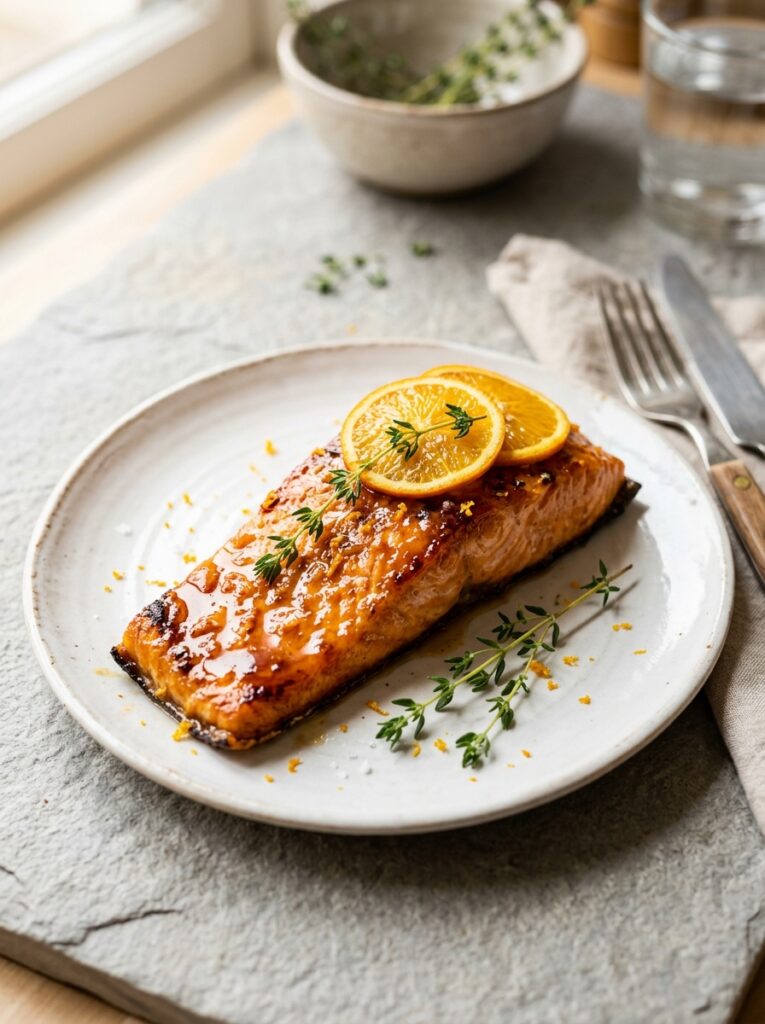
This is the recipe to start with. It’s clean, classic, and easy — sweet orange juice meets earthy maple syrup with a hint of garlic. The glaze bakes down into something almost jam-like, and the finished salmon is sticky-sweet with a bright citrus finish. So it’s perfect for weeknights when you want something that feels special without a lot of effort.
Ingredients:
- 4 salmon fillets (6 oz each)
- 3 tablespoons pure maple syrup
- 3 tablespoons fresh orange juice
- 1 tablespoon soy sauce
- 2 garlic cloves, minced
- 1 teaspoon orange zest
- Salt and pepper to taste
- Fresh thyme for topping
Instructions:
- Preheat oven to 400°F. Line a baking sheet with parchment paper.
- Whisk together maple syrup, orange juice, soy sauce, garlic, and orange zest in a small bowl.
- Pat salmon fillets dry, then season with salt and pepper.
- Place salmon skin-side down on the baking sheet. Brush well with glaze.
- Bake for 12–14 minutes, brushing with glaze again halfway through.
- Turn the broiler on for the final 2 minutes to brown the top. Watch carefully.
- Top with fresh thyme and serve right away.
In my experience, the broiler step transforms this dish from good to incredible. That slight char on the glaze adds a bitter-sweet note that balances the sweetness perfectly.
Lemon Maple Pan-Seared Salmon
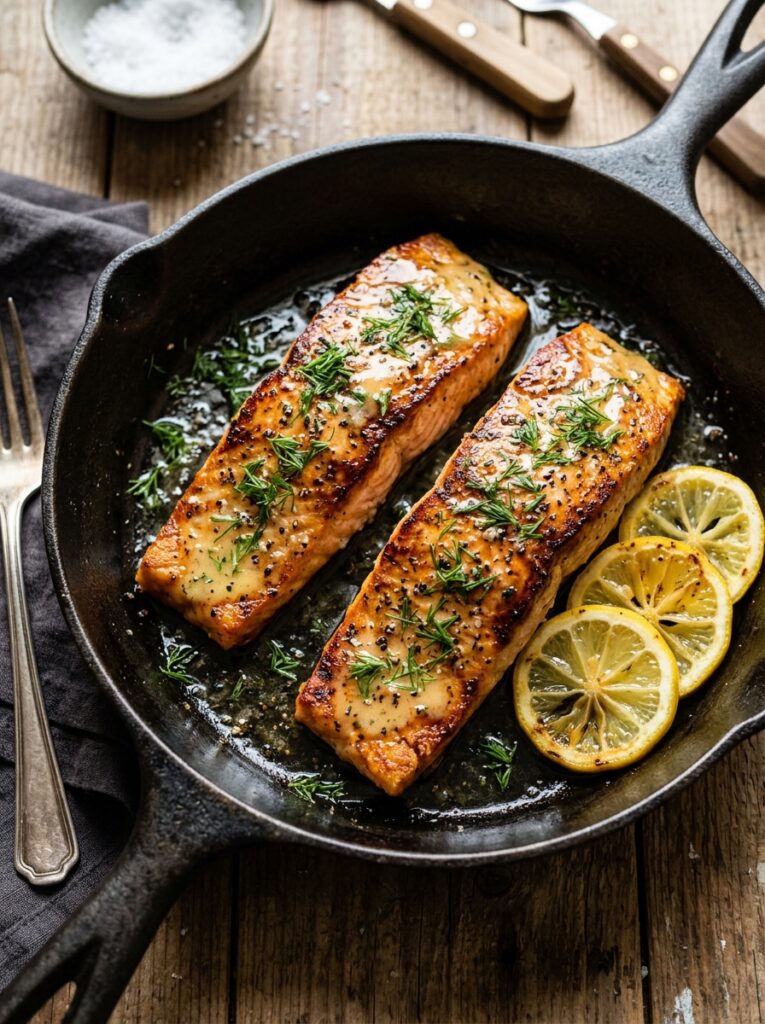
If orange feels a little too sweet for your taste, this lemon maple version is a great match. It’s brighter and more sharp, with a glaze that cuts through the richness of the salmon in a very satisfying way. Also, the pan-seared method gives you a beautifully golden crust that you just can’t get from baking alone.
Ingredients:
- 4 salmon fillets (6 oz each)
- 3 tablespoons pure maple syrup
- 3 tablespoons fresh lemon juice
- 1 tablespoon Dijon mustard
- 1 tablespoon olive oil
- 2 garlic cloves, minced
- 1 teaspoon lemon zest
- Salt, pepper, and fresh dill to finish
Instructions:
- Whisk together maple syrup, lemon juice, Dijon, garlic, and lemon zest. Set aside.
- Pat salmon dry. Season both sides with salt and pepper.
- Heat olive oil in an oven-safe skillet over medium-high heat until hot.
- Place salmon skin-side up. Sear for 3–4 minutes until deeply golden. Don’t move it.
- Flip, pour glaze over the top, and move the pan to a 375°F oven.
- Bake for 6–8 minutes until cooked to your liking.
- Spoon pan juices over the salmon before serving. Finish with fresh dill.
Honey Lime Glazed Salmon
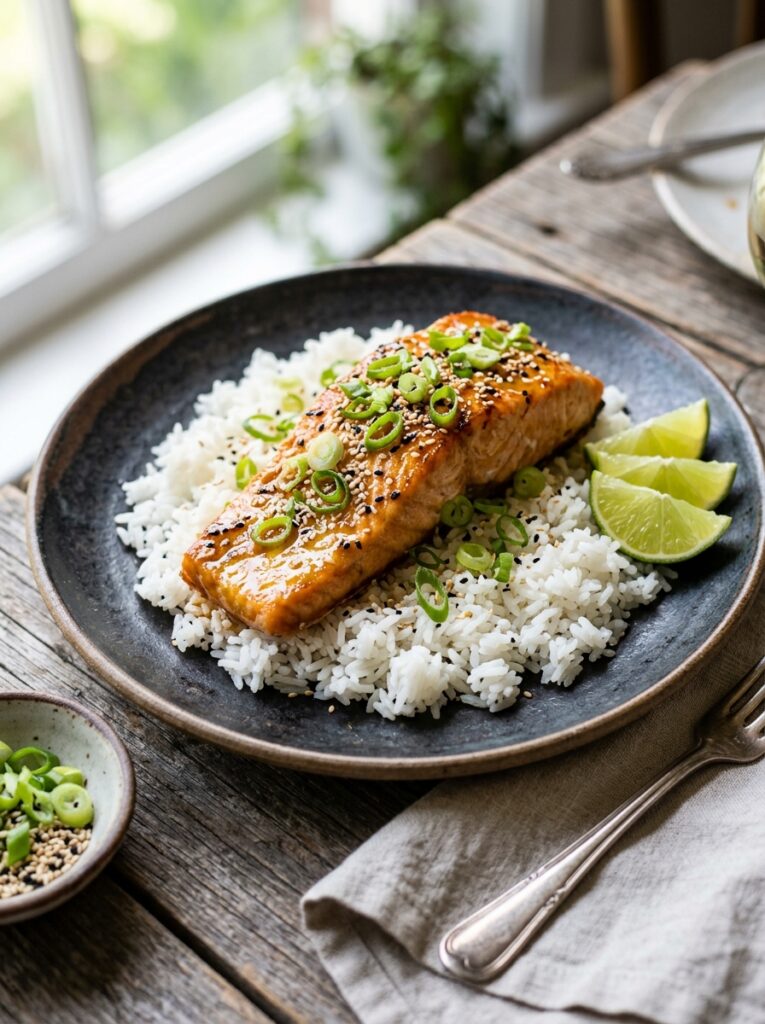
This version leans toward Asian-inspired flavors — think of it as the more complex cousin of the classic recipe. A little sesame oil, a touch of fresh ginger, and a hit of lime make this glaze completely addictive. It’s sweet, sour, savory, and slightly toasty all at once. In fact, I’ve made this one more than any other in this guide, and every time the plate comes back empty.
Ingredients:
- 4 salmon fillets (6 oz each)
- 2 tablespoons pure maple syrup
- 1 tablespoon honey
- 3 tablespoons fresh lime juice
- 1 tablespoon soy sauce
- 1 teaspoon sesame oil
- 1 teaspoon fresh ginger, grated
- 2 garlic cloves, minced
- Sesame seeds and scallions for topping
Instructions:
- Whisk together maple syrup, honey, lime juice, soy sauce, sesame oil, ginger, and garlic.
- Pat salmon dry and season lightly with salt and pepper.
- Place salmon in half the glaze and let it sit for 15 minutes at room temperature.
- Preheat oven to 400°F. Line a baking sheet with foil.
- Place salmon on the baking sheet. Bake for 12 minutes.
- Brush with the remaining glaze. Then broil for 2–3 minutes until golden.
- Add sesame seeds and scallions on top. Serve over rice.
Spicy Maple Grapefruit Salmon
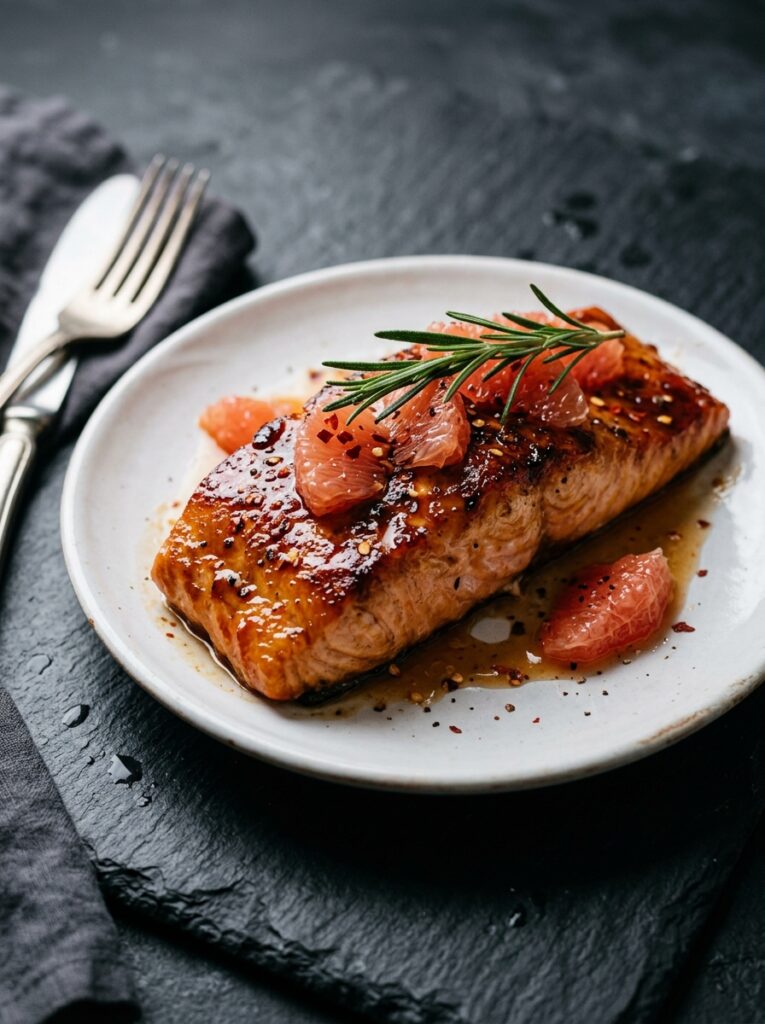
This is the bold one. Grapefruit is more bitter and complex than orange or lemon. So when you balance it with maple syrup and a hit of red pepper flakes, the result is deeply layered and totally addictive. This recipe is for anyone who likes their salmon with some personality — a little heat, a little bitterness, and a lot of flavor.
Ingredients:
- 4 salmon fillets (6 oz each)
- 3 tablespoons pure maple syrup
- 3 tablespoons fresh grapefruit juice
- 1 teaspoon grapefruit zest
- 1 tablespoon soy sauce
- ½ teaspoon red pepper flakes (adjust to taste)
- 2 garlic cloves, minced
- 1 teaspoon olive oil
- Fresh rosemary for topping
Instructions:
- Simmer maple syrup, grapefruit juice, zest, soy sauce, and red pepper flakes in a small pan for 5 minutes until slightly thick.
- Remove from heat, then stir in garlic and olive oil.
- Pat salmon dry and season with salt and pepper.
- Brush both sides of salmon with the glaze.
- Preheat grill or grill pan to medium-high. Oil the grates well.
- Grill skin-side down for 4–5 minutes. Flip, brush with more glaze, and grill 3–4 more minutes.
- Top with fresh rosemary and grapefruit pieces. Serve right away.
Herb-Infused Maple Lemon Salmon (Oven-Roasted)
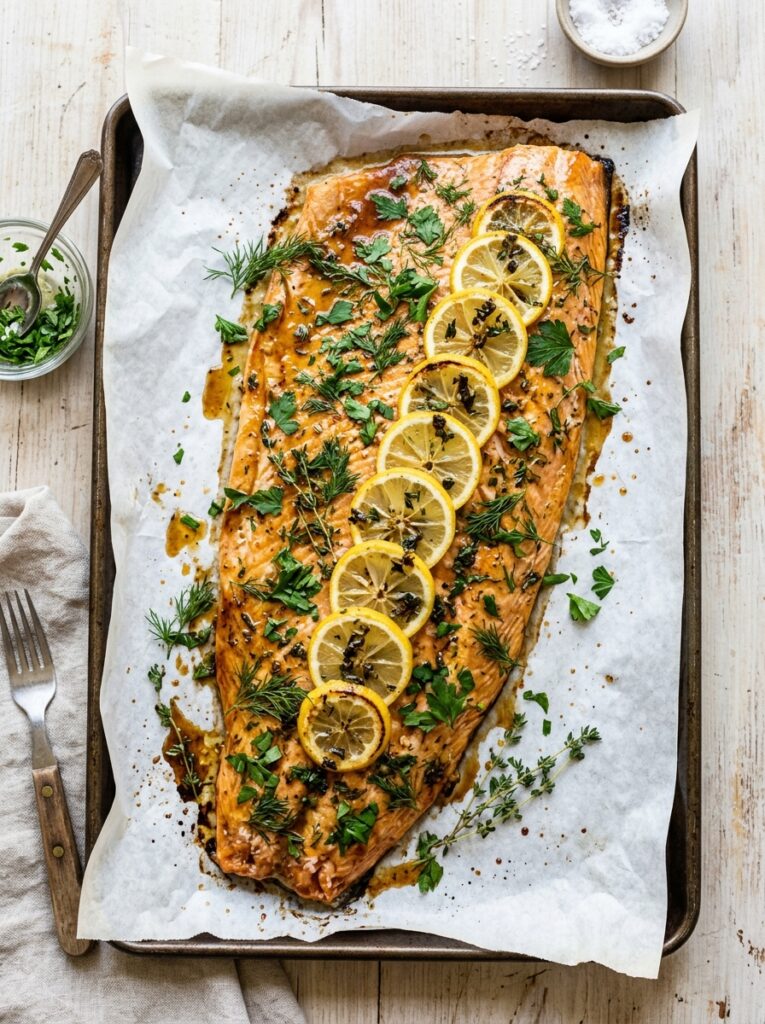
This is the showstopper recipe — the one to bring out when you’re feeding a group or want something that looks truly impressive. It’s a whole side of salmon, roasted slowly, basted with a herb-filled maple lemon glaze. As the fish cooks, the fresh herbs toast on top and fill your kitchen with the most amazing smell. It feeds a family with ease and looks like you spent hours on it.
Ingredients:
- 1 full side of salmon (2–2.5 lbs)
- 4 tablespoons pure maple syrup
- 3 tablespoons fresh lemon juice
- 1 tablespoon olive oil
- 1 teaspoon lemon zest
- 3 garlic cloves, minced
- 1 tablespoon fresh dill, chopped
- 1 tablespoon fresh flat-leaf parsley, chopped
- 1 teaspoon fresh thyme
- Salt and pepper
- Lemon slices for roasting on top
Instructions:
- Preheat oven to 375°F. Line a large baking sheet with parchment paper.
- Whisk together maple syrup, lemon juice, olive oil, garlic, and lemon zest.
- Stir half the fresh herbs into the glaze.
- Pat the salmon dry. Season well with salt and pepper.
- Place salmon skin-side down. Brush with the glaze, then lay lemon slices across the top.
- Roast for 18–22 minutes until the edges flake easily but the center is still slightly soft.
- In the final 3 minutes, broil until the top is lightly golden. Watch closely.
- Add the remaining fresh herbs over the salmon before serving.
This is the recipe I make every time I need to cook for more than four people. It looks beautiful, it’s hard to mess up, and the whole side comes out so evenly cooked.
Tips for Best Results
Getting great results with this recipe is mostly about a few simple habits. Here are the ones that matter most.
Use Real Maple Syrup
I can’t say this enough. Pancake syrup is corn syrup with added flavoring — it won’t reduce the same way, it won’t brown as well, and the flavor is flat. For cooking, use Grade A dark robust maple syrup. It has the strongest maple flavor and works best in a glaze.
Always Zest Before You Juice
Zesting a lemon or orange that’s already been squeezed is nearly impossible. So zest first, then juice. It takes 30 extra seconds and saves a lot of frustration.
Let the Salmon Warm Up First
Room temperature salmon cooks more evenly than cold salmon. Therefore, take your fillets out of the fridge about 15 minutes before cooking. Cold fish straight from the refrigerator tends to cook unevenly — the outside gets done while the center is still raw.
Use a Meat Thermometer
Perfectly cooked salmon is wonderful. Overcooked salmon is dry and not much fun. A basic instant-read thermometer removes all the guesswork and costs very little. It’s one of the best tools you can add to your kitchen.
Don’t Crowd the Pan
If the fillets are touching each other, they’ll steam instead of sear. So leave at least an inch of space between them for the best results.
Common Mistakes to Avoid
Even simple recipes have a few easy traps. Here’s what to watch out for.
Moving the Fish Too Soon
When you place salmon in a hot pan, leave it alone. It will naturally let go from the surface when it’s ready to flip. If it’s sticking, it simply needs more time. Forcing it too early tears the flesh and ruins the crust.
Skipping the Dry Pat
Moisture on the surface of the fish creates steam, which stops it from browning. As a result, you get a pale, soft piece of salmon instead of a crispy, golden one. Always pat dry before seasoning and adding the glaze.
Using Too Much Glaze at Once
More isn’t always better. Too much glaze pools around the fish and burns on the pan before the salmon has time to cook through. Instead, apply thin layers and build them up slowly. That’s the key to a beautiful, shiny finish.
Cooking Straight from Frozen
Partially thawed or frozen salmon cooks unevenly. So always thaw it fully in the refrigerator overnight, or in cold water for 30–45 minutes if you’re in a hurry.
Overcooking Out of Fear
A slightly soft, translucent center isn’t raw — it’s perfectly cooked. In fact, the fish will keep cooking for a minute or two after it leaves the heat. Pull it a little early and let it rest.
Variations and Substitutions
| Original Ingredient | Substitution | Notes |
|---|---|---|
| Maple syrup | Honey | Slightly sweeter, less earthy |
| Orange juice | Pineapple juice | Tropical twist, works great |
| Soy sauce | Coconut aminos | Gluten-free and lower sodium |
| Salmon | Trout or arctic char | Similar texture and fat content |
| Fresh garlic | Garlic powder | Use ¼ tsp per clove |
| Dijon mustard | Whole grain mustard | Adds texture to the glaze |
| Red pepper flakes | Sriracha | For a saucier, spicier kick |
Dietary Adjustments
- Gluten-free: Swap soy sauce for tamari or coconut aminos
- Dairy-free: All versions here are naturally dairy-free
- Lower sugar: Reduce maple syrup by half and add a splash of apple cider vinegar for balance
- Paleo/Whole30: Use coconut aminos instead of soy sauce, and check that your maple syrup is 100% pure
Storage and Reheating
Refrigerating Leftovers
Store cooked salmon in a sealed container in the refrigerator for up to 3 days. Let it cool fully before sealing — trapping steam leads to a soft, soggy texture.
Freezing
Cooked glazed salmon can be frozen for up to 2 months. Wrap each fillet tightly in plastic wrap, then place in a freezer-safe bag. Label with the date so you know what’s inside.
Reheating
The oven is the best way to reheat salmon without drying it out. Place it on a baking sheet, cover loosely with foil, and warm at 275°F for about 10–12 minutes. This gentle heat keeps the moisture in.
The microwave works too — but use 50% power and heat in 30-second intervals. Never blast it on full power, as you’ll end up with dry, tough fish.
Cold salmon is also delicious. Flake leftover glazed salmon over a salad with arugula, avocado, and a lemon dressing. It’s one of my favorite next-day lunches.
Make-Ahead Tips
- The glaze can be made up to 3 days ahead and stored in the fridge in a jar
- You can season and marinate salmon up to 4 hours ahead — longer than that and the citrus starts to change the texture of the fish
- For parties, roast the salmon just before guests arrive and let it rest — it stays warm well for about 10 minutes
Storage Guide Summary
| Item | Storage Method | Duration |
|---|---|---|
| Cooked salmon | Sealed container, refrigerator | Up to 3 days |
| Cooked salmon | Wrapped tightly, freezer | Up to 2 months |
| Maple citrus glaze | Jar with lid, refrigerator | Up to 3 days |
| Marinated raw salmon | Covered bowl, refrigerator | Up to 4 hours |
| Fresh raw salmon | Refrigerator | 1–2 days max |
Frequently Asked Questions
Can I use frozen salmon for these recipes? Yes! Frozen salmon works well — just make sure it’s fully thawed before cooking. The best method is to let it defrost overnight in the refrigerator. If you’re in a hurry, place sealed fillets in cold water for 30–45 minutes. However, never thaw at room temperature, as that creates food safety risks.
How do I know when salmon is done cooking? The most reliable way is a meat thermometer. For medium doneness, aim for 125–130°F in the thickest part. If you don’t have a thermometer, use the flake test — gently press the thickest part with a fork. If it flakes easily and is mostly solid on the outside with a slightly soft center, it’s ready.
Can I make the glaze without soy sauce? Absolutely. Soy sauce adds savory depth, but you can swap it for coconut aminos as a gluten-free option. Or simply leave it out and add a small pinch of salt instead to keep things balanced.
What’s the best citrus to use? It depends on your preference! Orange gives you the sweetest, most balanced glaze. Lemon is brighter and more sharp. Lime leans tropical. Grapefruit is bold and slightly bitter. You can also mix them — for example, half orange and half lemon is a classic pairing.
Can I prep the salmon the night before? You can season it the night before, but don’t marinate it in citrus glaze overnight. Because of the acid in citrus, it will start to change the texture of the fish. A 15–30 minute marinade is plenty. Instead, make the glaze the night before and apply it just before cooking.
Is this recipe kid-friendly? Most versions are! For younger kids, simply skip the red pepper flakes and go with the orange maple version — it’s mild, sweet, and easy to enjoy. In addition, salmon is a very healthy protein for children, full of omega-3 fatty acids.
Conclusion
There’s something genuinely joyful about pulling a tray of maple citrus glazed salmon out of the oven — that glossy, golden glaze, the bright citrus smell filling your kitchen, the way the fish practically glows under the broiler. I’ve seen how a recipe like this one can turn a regular weeknight into something your family actually looks forward to.
Whether you go classic with orange maple, bold with spicy grapefruit, or impressive with the whole roasted side, these five variations give you plenty to explore. So try one this week, save this guide to Pinterest so you always have it handy, and share it with someone who’s been looking for a salmon recipe worth making. Happy cooking! 🍋🐟