Introduction
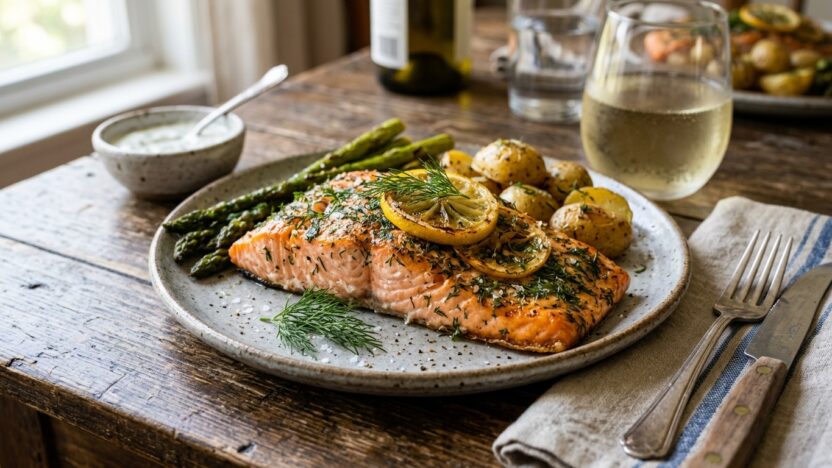
There’s a moment that happens when you pull a perfectly cooked piece of salmon from the oven — golden edges, flesh that flakes apart at the gentlest touch, and that intoxicating aroma of bright lemon and fresh dill filling every corner of your kitchen. That moment is why lemon dill salmon has become one of the most searched, saved, and shared seafood recipes across every food platform in America right now.
And honestly? It deserves every bit of that attention.
This combination — flaky, rich salmon with the brightness of lemon zest, the herby freshness of dill, and a garlic-butter base that ties it all together — is one of those rare flavor pairings that manages to feel both elegant and effortless at the same time. It’s the kind of dish that impresses dinner guests on a Friday night and comes together just as easily on a busy Tuesday with twenty minutes to spare.
But “lemon dill salmon” isn’t just one recipe. It’s a concept — a flavor profile that works beautifully across five completely different cooking methods and presentations. Whether you want a crispy pan-seared fillet, a tender baked sheet pan dinner, a creamy pasta, a light grain bowl, or an impressive foil-packet version for outdoor cooking, this guide covers all of it.
If you’ve ever overcooked salmon, struggled with sticking pans, or wondered how restaurant fish tastes so much better than what you make at home — you’re in the right place. This guide answers all of it and gives you five genuinely delicious ways to cook this beautiful fish.
Key Takeaways
- Lemon dill salmon works across multiple cooking methods — baking, pan-searing, poaching, grilling, and foil-packet cooking
- Internal temperature of 125–130°F gives you perfectly cooked, moist salmon every time (145°F is the FDA guideline for fully cooked)
- Fresh dill and fresh lemon zest deliver significantly better flavor than dried dill and bottled lemon juice
- Bringing salmon to room temperature for 15 minutes before cooking helps it cook more evenly
- All five dishes in this guide are beginner-friendly and come together in 35 minutes or less
- Salmon is one of the most nutritious proteins you can cook — rich in omega-3 fatty acids, high-quality protein, and vitamin D
What You’ll Need
Choosing the Right Salmon
Wild-Caught vs. Farm-Raised
Before anything else, the salmon you choose matters enormously to the final result. Wild-caught salmon — sockeye, king (Chinook), or coho — tends to have a deeper, more robust flavor and firmer flesh. It’s leaner, which also means it can overcook slightly faster. Farm-raised Atlantic salmon is fattier, slightly milder in flavor, and more forgiving for beginners because that higher fat content provides a natural buffer against drying out.
Both work beautifully with lemon and dill. For weeknight cooking, farm-raised fillets from the grocery store are perfectly fine and usually more affordable. For a special occasion, wild-caught sockeye is worth the upgrade.
Fresh vs. Frozen Salmon
Fresh salmon is ideal when you can get it, but high-quality frozen salmon — properly thawed overnight in the refrigerator — is genuinely excellent and often fresher than what sits in a grocery store seafood case. Never thaw salmon at room temperature or under hot water, as this affects both texture and food safety.
Core Ingredients Used Across All Five Dishes
- Salmon fillets — 4–6 oz per person, skin-on or skinless depending on the recipe
- Fresh dill — bright, feathery, and aromatic; dried dill is a substitute but fresh is significantly better
- Fresh lemon — you’ll need both the zest and the juice; bottled lemon juice doesn’t deliver the same bright flavor
- Garlic — freshly minced; jarred pre-minced garlic works in a pinch but loses some potency
- Butter or olive oil — both work; butter adds richness, olive oil keeps things lighter
- Flaky sea salt and cracked black pepper — essential seasoning for any salmon dish
- Capers — optional but wonderful; they add a briny, tangy pop that complements lemon and dill beautifully
- Dijon mustard — used in some variations as a flavor-deepening base coat
Equipment
- Oven-safe skillet or baking sheet
- Parchment paper or aluminum foil
- Fish spatula (wider and more flexible than a regular spatula — genuinely worth having)
- Instant-read meat thermometer
- Microplane or fine zester for lemon zest
- Small mixing bowl for sauces and marinades
Step-by-Step Guide: Mastering Lemon Dill Salmon
Step 1 — Prepare Your Salmon Correctly
This step is where most home cooks make their first mistake — skipping preparation entirely and going straight from fridge to heat. Instead, follow these steps every time.
Pat the salmon completely dry with paper towels. Moisture on the surface of the fish creates steam rather than sear, which prevents that gorgeous golden crust from forming. Dry fish browns; wet fish steams. This single step makes a visible difference.
Bring it to room temperature. Remove your salmon from the refrigerator 15 minutes before cooking. Cold fish placed directly into a hot pan or oven cooks unevenly — the outside finishes while the inside is still struggling to catch up. Room temperature fish cooks evenly from edge to center.
Check for pin bones. Run your fingers along the center of each fillet from head to tail. You’ll feel small, thin bones if they’re present. Remove them with clean tweezers or needle-nose pliers by gripping firmly and pulling in the direction the bone is lying — not straight up, which can tear the flesh.
Step 2 — Make Your Lemon Dill Mixture
This is the flavor foundation that runs through every dish in this guide. The specific quantities vary by recipe, but the core technique stays the same.
In a small bowl, combine fresh lemon zest (from 1 lemon), fresh lemon juice (1–2 tablespoons), finely chopped fresh dill (2 tablespoons), minced garlic (2 cloves), softened butter or olive oil (2 tablespoons), flaky sea salt (½ teaspoon), and cracked black pepper (¼ teaspoon).
Mix until fully combined. The zest is the most important element here — lemon zest contains the essential oils that give you that bright, floral lemon flavor. The juice adds acidity and moisture. Together they create a depth of citrus flavor that juice alone simply can’t match.
In my experience, people consistently underuse lemon zest in their cooking. If your lemon dill sauce tastes a little flat, adding more zest (rather than more juice) is almost always the fix.
Step 3 — Season Your Salmon
Season the salmon generously on both sides with salt and pepper before applying any sauce or marinade. This direct seasoning penetrates the flesh and seasons from within, whereas sauce applied on top mainly flavors the surface.
If your recipe calls for a mustard base coat (which acts as a flavor enhancer and helps the lemon dill mixture adhere), brush a thin layer of Dijon directly onto the flesh side before adding your lemon dill topping.
Step 4 — Apply Your Lemon Dill Mixture
Spoon or brush your lemon dill mixture generously over the flesh side of each fillet. For baked preparations, this can be a thicker coating that forms a gorgeous crust. For pan-seared versions, a lighter application works better to avoid burning the delicate herbs.
If time allows, let the coated salmon rest for 10 minutes before cooking. Even this brief marinating window allows the lemon and garlic to start working their way into the top layer of the fish, and the salt begins drawing out a tiny amount of surface moisture that then reabsorbs along with the flavors.
Step 5 — Cook Using Your Chosen Method
The five dishes below each use a different cooking method, and each has its own timing and technique. However, every method shares one universal truth: don’t overcook it.
Overcooked salmon is dry, chalky, and almost impossible to enjoy no matter how good your seasoning is. Perfectly cooked salmon is moist, flaky, and slightly translucent in the very center. The USDA recommends cooking fish to 145°F internally, but many professional chefs and food enthusiasts prefer 125–130°F for a silkier, more tender result. Know which you prefer and use an instant-read thermometer to check.
Doneness signs by method:
- Baked: Flesh flakes easily when pressed with a fork; edges are opaque, center slightly translucent
- Pan-seared: Skin is crispy and releases from pan easily; flesh is opaque two-thirds of the way up when flipped
- Foil packet: Steam has built up fully inside packet; fish flakes at the thickest part
- Poached: Flesh has turned from translucent to opaque throughout; texture is very gentle and soft
- Grilled: Grill marks are set; flesh releases from grates without sticking
Step 6 — Rest and Garnish
Just like a good steak, salmon benefits from a brief rest before serving. Two to three minutes off the heat allows the residual heat to finish cooking the center gently while the juices redistribute throughout the fillet. Cutting into it immediately causes the moisture to run out onto the plate rather than staying in the fish.
After resting, garnish with additional fresh dill fronds, lemon slices or zested lemon, and a sprinkle of flaky sea salt. These final touches aren’t just decorative — a squeeze of fresh lemon right at the table brightens every bite.
Dish 1: Baked Lemon Dill Salmon With Garlic Butter
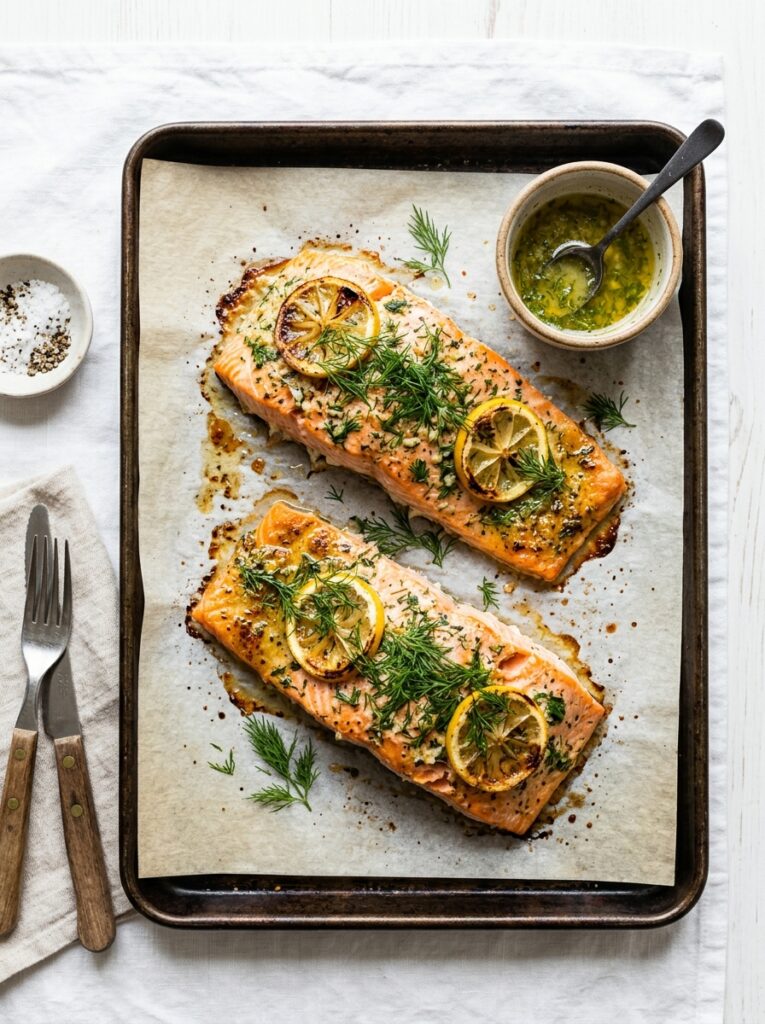
This is the go-to for a reason. Baking salmon in a hot oven with a garlic butter and lemon dill coating gives you a gorgeous golden top, tender flaky flesh underneath, and almost no effort in between. It’s the method I recommend to anyone who’s nervous about cooking fish for the first time — the oven does most of the work, and the margin for error is much more forgiving than stovetop cooking.
Ingredients
- 4 salmon fillets (6 oz each), skin-on
- 3 tablespoons unsalted butter, softened
- 2 tablespoons fresh dill, finely chopped
- Zest of 1 large lemon
- 2 tablespoons fresh lemon juice
- 3 garlic cloves, minced
- 1 teaspoon Dijon mustard
- ½ teaspoon flaky sea salt
- ¼ teaspoon cracked black pepper
- Thin lemon slices and fresh dill for garnish
Instructions
- Preheat your oven to 400°F. Line a baking sheet with parchment paper.
- In a small bowl, mix softened butter, fresh dill, lemon zest, lemon juice, minced garlic, Dijon mustard, salt, and pepper until fully combined into a smooth, fragrant paste.
- Pat salmon fillets completely dry with paper towels. Place skin-side down on the prepared baking sheet, spacing them evenly.
- Spoon the garlic butter mixture generously over the top of each fillet, spreading it to cover the entire flesh surface. Lay a thin lemon slice over each fillet.
- Bake at 400°F for 12–15 minutes, depending on fillet thickness. The fish is done when it flakes easily at the thickest part and the butter coating is lightly golden.
- Remove from the oven and let rest 2–3 minutes. Garnish with fresh dill fronds and serve immediately with your choice of sides.
In my experience, 400°F is the sweet spot for baked salmon. Lower temperatures leave the top pale and steamy rather than golden. Higher temperatures can dry out the edges before the center finishes cooking. Stick to 400°F and check at the 12-minute mark.
Dish 2: Pan-Seared Crispy Skin Salmon
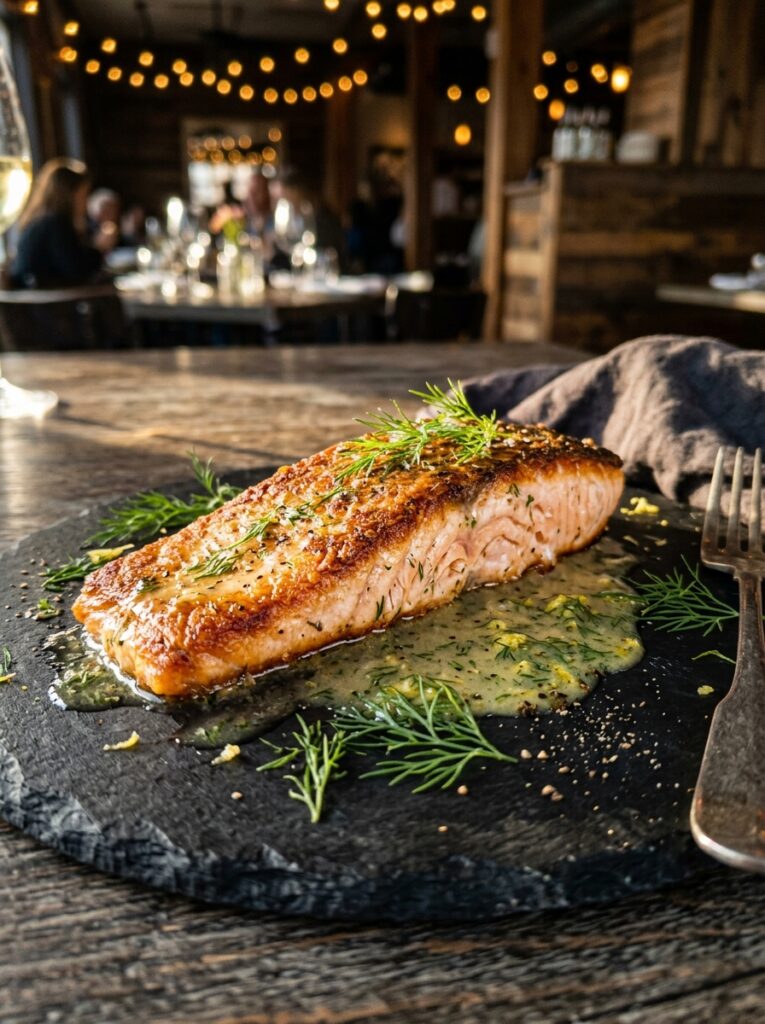
Crispy skin salmon is one of those things that seems intimidating but becomes completely reliable once you understand the technique. The skin becomes almost like a chip — shattering under your fork with a satisfying crunch before giving way to the rich, flaky flesh beneath. A lemon dill pan sauce made in the same skillet after the fish comes out takes this from great to genuinely impressive.
Ingredients
- 4 salmon fillets (6 oz each), skin-on, skin scored lightly with a knife
- 2 tablespoons olive oil
- 2 tablespoons unsalted butter (for pan sauce)
- 2 tablespoons fresh dill, chopped
- Juice and zest of 1 lemon
- 2 garlic cloves, minced
- 2 tablespoons capers, drained
- Salt and cracked black pepper to taste
Instructions
- Pat salmon completely dry — this is the most important step for crispy skin. Score the skin side lightly with a sharp knife to prevent curling during cooking.
- Season both sides generously with salt and pepper. Heat olive oil in a heavy-bottomed skillet (cast iron is ideal) over medium-high heat until shimmering and just beginning to smoke.
- Place salmon skin-side down. Press gently with a spatula for the first 30 seconds to prevent the skin from curling. Cook skin-side down for 4–5 minutes without moving — you’ll see the flesh turn opaque from the bottom up.
- Flip carefully using a fish spatula. Cook flesh-side down for 1–2 minutes only. Remove salmon to a plate and let rest.
- In the same skillet over medium heat, add butter and minced garlic. Cook 30 seconds until fragrant, then add lemon juice, lemon zest, and capers. Stir briefly to combine.
- Remove from heat, stir in fresh dill, and spoon the pan sauce over the resting salmon. Serve skin-side up to preserve the crispiness.
I’ve noticed that the number one reason people get soggy salmon skin is insufficient pan heat. The pan needs to be genuinely hot before the fish goes in — not medium, not medium-high, but fully hot. A properly heated pan plus completely dry skin gives you crispy results every single time.
Dish 3: Lemon Dill Salmon Sheet Pan Dinner
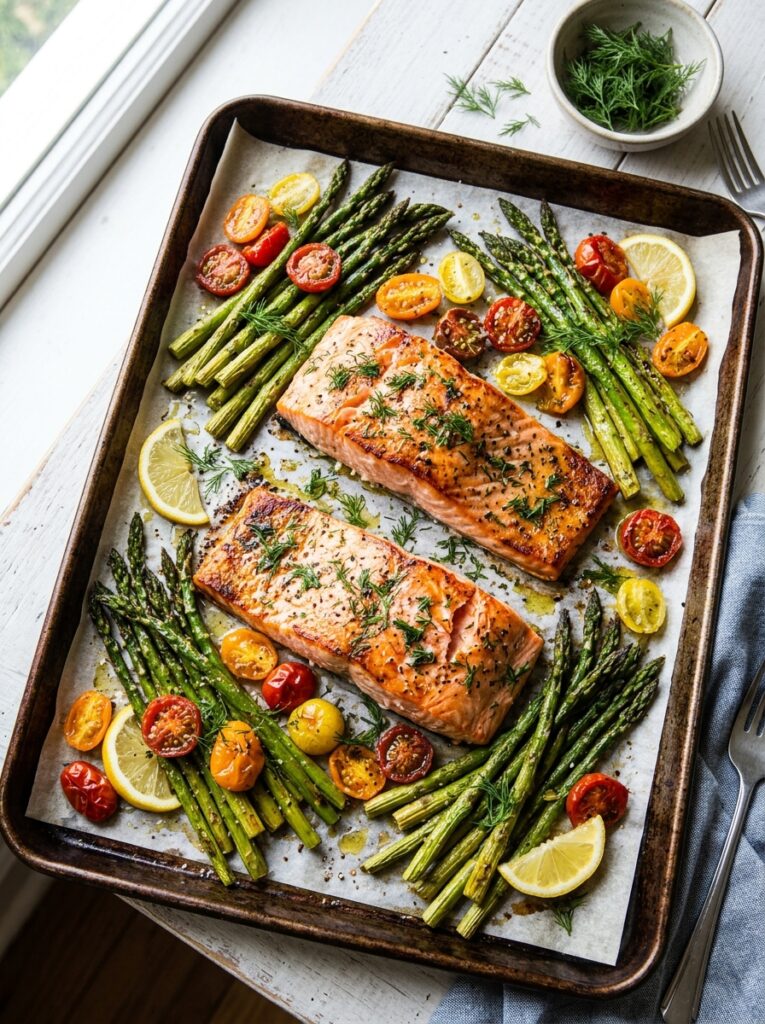
This is the complete dinner that comes together on one pan with essentially no cleanup. Salmon, vegetables, and lemon dill seasoning all roast together at the same temperature, finishing at the same time, and landing on the table with everything perfectly cooked and infused with each other’s flavor. It’s the kind of meal that genuinely makes weeknight cooking feel manageable and exciting.
Ingredients
- 4 salmon fillets (6 oz each)
- 1 bunch asparagus, woody ends trimmed
- 1 cup cherry tomatoes, halved
- 1 lemon, half sliced into rounds, half juiced
- 3 tablespoons olive oil, divided
- 2 tablespoons fresh dill, chopped
- 3 garlic cloves, minced
- 1 teaspoon Italian seasoning
- Salt and cracked black pepper to taste
Instructions
- Preheat oven to 425°F. Line a large baking sheet with parchment paper.
- Toss asparagus and cherry tomatoes with 2 tablespoons olive oil, garlic, Italian seasoning, salt, and pepper. Spread evenly across the baking sheet, leaving space in the center for the salmon.
- Place salmon fillets skin-side down in the center of the pan. Drizzle remaining 1 tablespoon olive oil over each fillet.
- Spoon lemon juice over the salmon and vegetables. Lay lemon rounds over and around the fillets. Season salmon with additional salt and pepper.
- Scatter fresh dill generously over everything.
- Roast at 425°F for 12–15 minutes until salmon is cooked through and asparagus is tender with lightly caramelized edges. Serve directly from the pan.
Dish 4: Creamy Lemon Dill Salmon Pasta
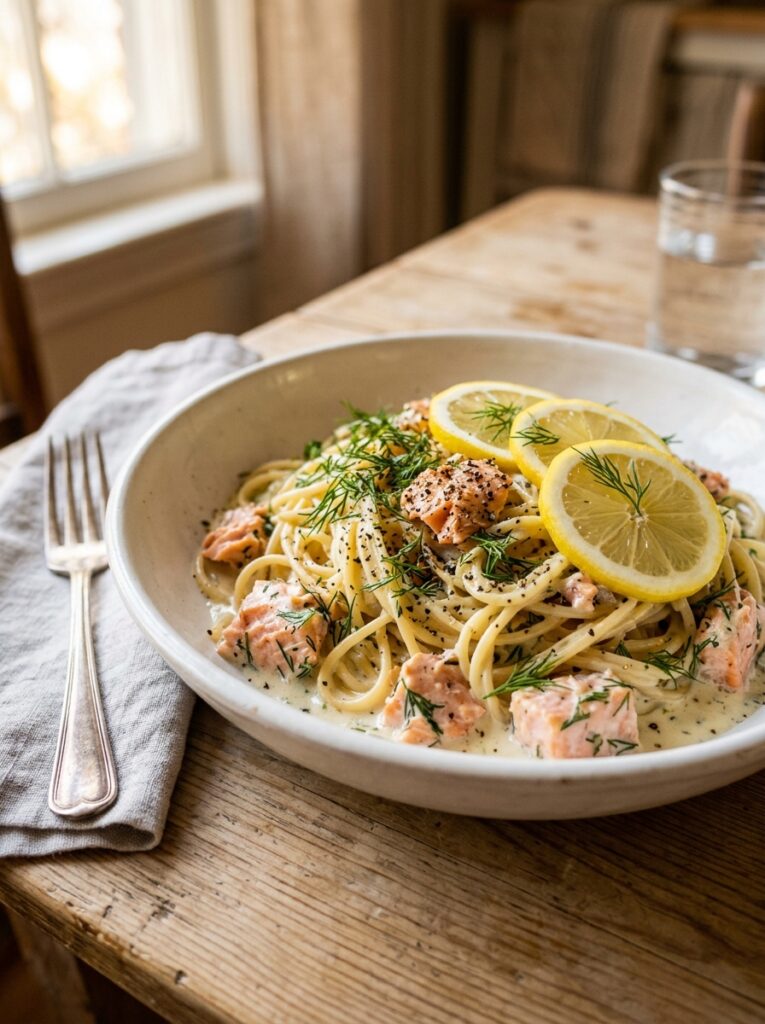
This is the dish for when you want something that feels genuinely restaurant-worthy but comes together in one pan in under 30 minutes. Flaked salmon in a silky lemon dill cream sauce clinging to al dente pasta — it’s rich without being heavy, indulgent without being complicated. A little pasta water is the secret to getting that sauce perfectly glossy and cohesive.
Ingredients
- 2 salmon fillets (6 oz each), cooked and flaked
- 12 oz linguine or fettuccine
- 1 cup heavy cream (or half-and-half for a lighter version)
- ½ cup dry white wine (or chicken broth)
- 3 garlic cloves, minced
- 2 tablespoons fresh dill, chopped
- Zest and juice of 1 lemon
- 2 tablespoons butter
- ¼ cup reserved pasta water
- Salt and cracked black pepper to taste
- Optional: 2 tablespoons capers, fresh parsley for garnish
Instructions
- Cook pasta in generously salted boiling water until al dente according to package directions. Reserve ¼ cup pasta water before draining.
- Meanwhile, in a large skillet over medium heat, melt butter and sauté garlic for 1 minute until fragrant and softened but not browned.
- Add white wine (or broth) and cook for 2 minutes until slightly reduced. Then pour in heavy cream and bring to a gentle simmer, stirring occasionally.
- Add lemon zest, lemon juice, and fresh dill to the sauce. Stir to combine and cook for 2 more minutes until the sauce thickens slightly and coats a spoon.
- Add drained pasta to the skillet and toss to coat. Add reserved pasta water a little at a time if the sauce seems too thick — the starch in the pasta water helps emulsify the sauce and gives it that glossy restaurant finish.
- Gently fold in flaked cooked salmon. Season with salt and pepper. Serve immediately with extra fresh dill and a lemon wedge.
Dish 5: Foil-Packet Salmon for Grilling or Camping
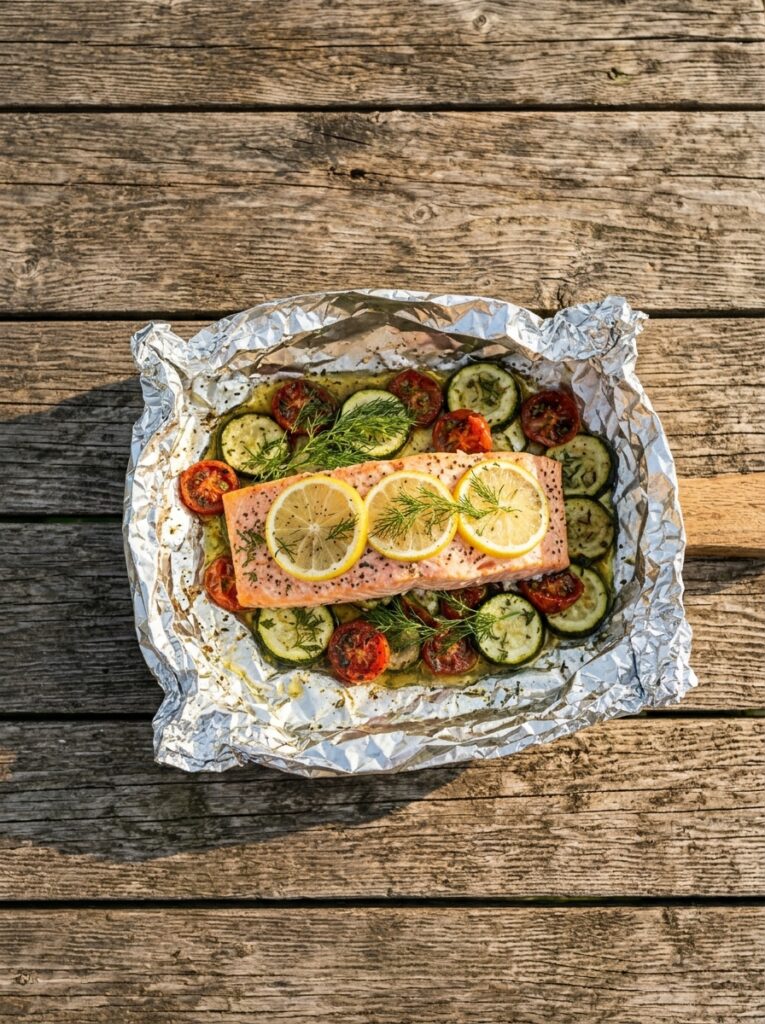
Foil packet salmon is the recipe that makes outdoor cooking genuinely foolproof. Everything goes into the packet, the packet goes on the grill (or in a campfire), and 15 minutes later you have a perfectly steamed, flavor-infused piece of fish that tastes like it was professionally cooked. It’s also an outstanding option for cooking at home when you want zero cleanup — just fold, cook, and throw the foil away.
Ingredients
- 4 salmon fillets (6 oz each)
- 2 medium zucchini, sliced into thin rounds
- 1 cup cherry tomatoes
- 4 tablespoons olive oil
- 3 tablespoons fresh dill, chopped
- Zest and juice of 1 large lemon
- 4 garlic cloves, minced
- 1 teaspoon onion powder
- Salt and cracked black pepper to taste
- Lemon slices for inside the packets
Instructions
- Preheat grill to medium-high heat (about 400°F) or preheat oven to 425°F if cooking indoors.
- Tear four large sheets of heavy-duty aluminum foil (about 18 inches each). Place one salmon fillet in the center of each sheet.
- Divide zucchini slices and cherry tomatoes evenly around each salmon fillet.
- In a small bowl, mix olive oil, minced garlic, fresh dill, lemon zest, lemon juice, onion powder, salt, and pepper. Spoon evenly over each fillet and the surrounding vegetables.
- Lay 1–2 lemon slices on top of each fillet. Fold the foil up and over the fish, then crimp the edges tightly to seal — you want the packets completely closed so steam builds up inside and cooks everything evenly.
- Grill for 12–15 minutes (or bake for 15–18 minutes) without opening the packets. To check doneness, carefully open one packet away from you — steam will escape. Salmon should flake easily at the thickest part.
- Serve directly in the packets for zero cleanup, or plate the contents on individual dishes.
A helpful trick with foil packets is to make a small tent shape rather than pressing the foil flat against the fish. The air space inside allows steam to circulate freely, which gives you more even, gentle cooking throughout the whole fillet.
Tips for Best Results
Use Fresh Herbs and Zest — Always
Fresh dill and fresh lemon zest are non-negotiable for the best flavor. Dried dill has a noticeably muted, dusty flavor compared to the bright, grassy punch of fresh. It works as an emergency substitute but falls well short of what fresh delivers. Similarly, lemon zest contains the volatile oils that give these dishes their characteristic vibrancy. Bottled lemon juice simply can’t replicate it.
Don’t Skip the Pat-Dry Step
Dry salmon = golden salmon. Moisture on the surface of any protein — fish, chicken, steak — creates steam and prevents browning. Take 30 seconds to thoroughly pat every fillet dry before seasoning. This small step makes a very visible difference in the final color and crust of your fish.
Rest the Fish After Cooking
Two to three minutes of resting time makes the fish more moist and flavorful. The residual heat continues cooking the center gently while the internal juices redistribute. Cutting in immediately causes those juices to escape onto the plate. It’s the same principle as resting meat — just a shorter timeframe because fish cooks faster.
Season Generously — Salmon Can Take It
I’ve noticed that home cooks tend to under-season salmon because they’re cautious with a relatively expensive protein. But salmon has bold, rich flavor that needs confident seasoning to balance it. Don’t be shy with the salt, the dill, or the lemon. Taste your lemon dill mixture before applying it and make sure it’s well seasoned — it should taste slightly too intense on its own, because it needs to season the fish from the outside in.
Common Mistakes to Avoid
Overcooking Is the Biggest Enemy
Overcooked salmon is the most common salmon mistake, by far. Salmon goes from perfectly cooked to dry and chalky in about two minutes. Always use an instant-read thermometer and pull the fish slightly before you think it’s done — at 120–125°F internal temperature for moist salmon, knowing the residual heat will carry it another few degrees while it rests. Visual cues help too: perfect salmon is still very slightly translucent in the very center when you cut into it.
Cooking Cold Fish Straight From the Fridge
Cold-to-heat cooking creates uneven results. The outside of a cold fillet heats up and starts cooking before the center has come up to temperature. Resting 15 minutes at room temperature before cooking is a simple step that eliminates this problem entirely.
Moving Fish Too Soon in the Pan
Don’t try to flip salmon before it’s ready. If the fillet is sticking to the pan, it’s not done releasing. Properly seared fish releases from the pan naturally when it’s ready to be turned — the proteins at the surface contract and pull away from the heat source. If you force it too early, the skin tears and the fillet falls apart. Patience here is truly rewarded.
Using Dried Dill as a Direct 1:1 Swap
Dried dill is significantly more concentrated and has a different flavor profile than fresh. If you must use dried dill, use only one-third of the amount the recipe specifies for fresh — so 1 teaspoon dried dill in place of 1 tablespoon fresh. Using too much dried dill gives the dish a slightly medicinal, overpowering taste that overshadows everything else.
Variations and Swaps
| Variation | Swap or Adjustment | Best For |
|---|---|---|
| Dairy-free | Replace butter with olive oil or vegan butter | Dairy intolerance, lighter dishes |
| Herb variation | Swap dill for fresh tarragon or chives | Different flavor profile, same brightness |
| Spicy version | Add red pepper flakes or sriracha to the lemon dill mixture | Heat lovers, bold flavor preference |
| Lower calorie | Use olive oil instead of butter, skip cream in pasta version | Calorie-conscious meals |
| Gluten-free | All dishes are naturally GF; use GF pasta for the pasta dish | Celiac disease or gluten sensitivity |
| No fresh dill available | Use 1 tsp dried dill + 1 tbsp fresh parsley | Emergency substitution |
| Protein swap | Use halibut, cod, or trout in place of salmon | Different fish preference or availability |
Storage and Reheating Guide
| Method | Duration | Tips |
|---|---|---|
| Refrigerator (cooked salmon) | 3–4 days | Store in an airtight container; keep sauce separate if possible |
| Refrigerator (pasta dish) | 2–3 days | Add a splash of cream or broth when reheating to loosen the sauce |
| Freezer (plain cooked salmon) | Up to 3 months | Wrap individually in plastic wrap then foil; thaw overnight in fridge |
| Freezer (cream pasta) | Not recommended | Cream sauces separate after freezing; texture becomes grainy |
| Reheating (oven) | 10–12 min at 275°F | Low and slow prevents drying; cover with foil, add a splash of water |
| Reheating (stovetop) | 3–4 min on low | Add butter or oil and heat gently; don’t rush with high heat |
| Reheating (microwave) | 60–90 sec on 50% power | Lower power prevents rubbery texture; cover with a damp paper towel |
FAQs
How do I know when lemon dill salmon is fully cooked?
The most reliable method is using an instant-read thermometer — 125°F for moist, slightly translucent salmon; 145°F for fully cooked. Visually, the flesh should be opaque and flake apart easily when pressed with a fork at the thickest part. For pan-searing, you can also check by watching the color change travel up the side of the fillet as it cooks.
Can I use frozen salmon for these recipes?
Absolutely. Thaw frozen salmon overnight in the refrigerator for the best texture and food safety. Never thaw at room temperature or in warm water, as these methods can begin partially cooking the outside while the inside remains frozen. Once fully thawed, pat completely dry and proceed with any of the five recipes exactly as written.
What’s the best side dish to serve with lemon dill salmon?
Salmon pairs beautifully with roasted vegetables (asparagus, broccoli, zucchini, green beans), rice pilaf, quinoa, mashed potatoes, or a simple cucumber dill salad. For lighter meals, a grain bowl with farro or barley is wonderful. For the pasta dish, a simple arugula salad with lemon vinaigrette on the side rounds out the meal perfectly.
Can I marinate salmon in the lemon dill mixture overnight?
For a brief marinade — 30 minutes to 2 hours — yes, and it adds flavor. However, avoid marinating salmon in lemon juice overnight. The acid in the lemon juice begins to chemically “cook” (denature) the proteins in the fish over time, which changes the texture and can make the surface mushy by the time you’re ready to cook it. A 30–60 minute marinade is the sweet spot.
Is lemon dill salmon healthy?
Yes — genuinely so. Salmon is one of the most nutrient-dense proteins available, rich in omega-3 fatty acids that support heart and brain health, high-quality protein, vitamin D, and B vitamins. The lemon dill preparation is naturally low in added sugar and can be made lower in saturated fat by substituting olive oil for butter. It’s an outstanding choice for a healthy, balanced meal.
What if I don’t have fresh dill?
Fresh dill is strongly recommended, but dried dill works as an emergency substitute. Use one-third the amount (1 teaspoon dried for every 1 tablespoon fresh). Alternatively, fresh tarragon, chives, or flat-leaf parsley all complement lemon and salmon beautifully and can substitute in a pinch. Each herb will give the dish a slightly different personality while still being delicious.
Conclusion
From a simple baked fillet to a restaurant-worthy cream pasta, these five dishes show just how versatile and genuinely beautiful lemon dill salmon can be — no matter your skill level, your kitchen setup, or the amount of time you have. I’ve seen how recipes like these can make weeknight dinners feel exciting again, turning what might have been a forgettable Tuesday into a meal worth sitting down for. Pick whichever dish calls to you first, save this guide to your Pinterest boards for every future salmon night, and share it with anyone who says they’re not confident cooking fish. You’ve got this — and your kitchen is about to smell absolutely incredible.