Key Takeaways
- Primary keyword: Greek Salmon Rice Bowls — healthy, protein-rich dinner ready in under 30 minutes
- Base components: salmon fillet, cooked rice (white, brown, or cauliflower), and a Greek-inspired topping combination
- Salmon cook time: 12–15 minutes in the oven at 400°F, or 8–10 minutes in the air fryer
- Best rice for bowls: long-grain white rice for weeknights; brown rice or farro for extra nutrition
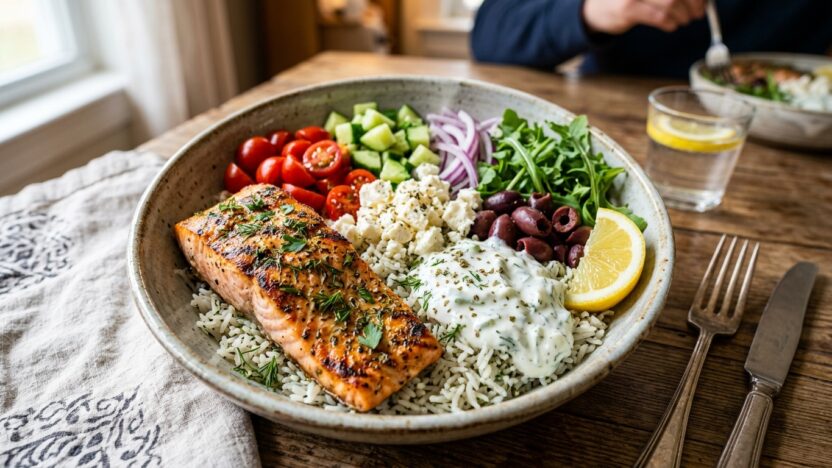
- Signature Greek toppings: tzatziki, cucumber, Kalamata olives, cherry tomatoes, red onion, and fresh dill or parsley
- Meal prep friendly: salmon keeps 3 days in the fridge; bowls assemble in minutes once components are prepped
- Dietary notes: naturally gluten-free; dairy-free adaptable by swapping tzatziki for hummus or tahini sauce
Introduction
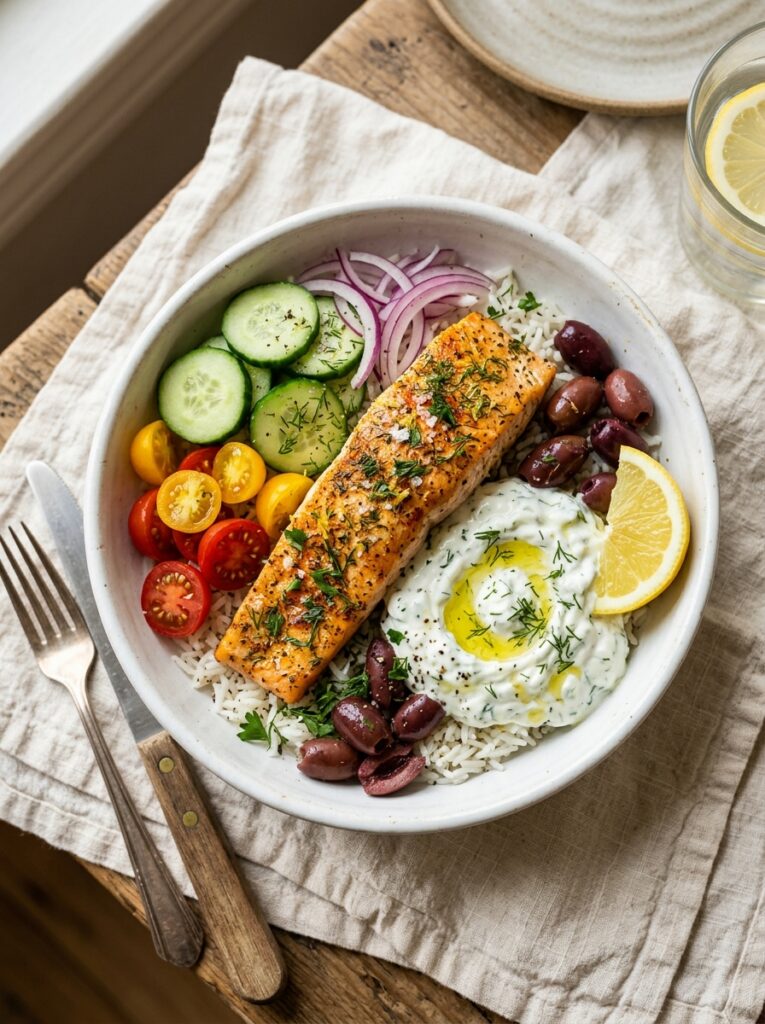
Greek Salmon Rice Bowls are the kind of dinner that looks like you planned ahead and actually tried — even on a Tuesday when you had about twenty-five minutes and very little motivation. Flaky, well-seasoned salmon over fluffy rice with cucumber, olives, fresh herbs, and a cool spoonful of tzatziki — it’s a complete meal in one bowl that somehow tastes like vacation.
The problem with most weeknight salmon dinners is that they’re either too plain or too time-consuming. This guide solves both ends of that problem. Eight different bowl variations cover everything from a simple classic to a spicy harissa version, a meal-prep build, an air fryer method, and a few that push the Greek flavor profile in directions you might not expect. Each one works with the same basic technique — season the salmon, cook it, build the bowl — so once you’ve made one, the rest take almost no time to figure out.
What You’ll Need
Equipment
- Oven-safe baking sheet or air fryer — depending on the method you choose
- Parchment paper — for oven methods; prevents sticking and makes cleanup fast
- Medium saucepan or rice cooker — for the rice base
- Sharp knife and cutting board — for portioning salmon and chopping bowl ingredients
- Small mixing bowls — for marinades and sauces
- Meat thermometer — optional but helpful; salmon is done at an internal temperature of 145°F
Shared Pantry and Fridge Staples
- Salmon fillets — skin-on or skinless both work; 6-oz portions per serving
- Long-grain white rice, brown rice, or cauliflower rice — white rice cooks fastest; brown adds fiber; cauliflower is the low-carb option
- Olive oil — for seasoning and cooking
- Lemon — juice and zest appear in almost every recipe here
- Garlic — fresh or powdered; fresh adds more punch
- Dried oregano — the signature Greek herb across all eight recipes
- Salt and black pepper
Greek Bowl Toppings (mix and match by recipe)
- Tzatziki sauce (store-bought or homemade)
- Sliced cucumber
- Halved cherry tomatoes
- Kalamata olives
- Thinly sliced red onion
- Crumbled feta cheese
- Fresh dill and parsley
- Hummus or tahini sauce
- Roasted red peppers
Recipe 1: Classic Lemon Herb Bowl
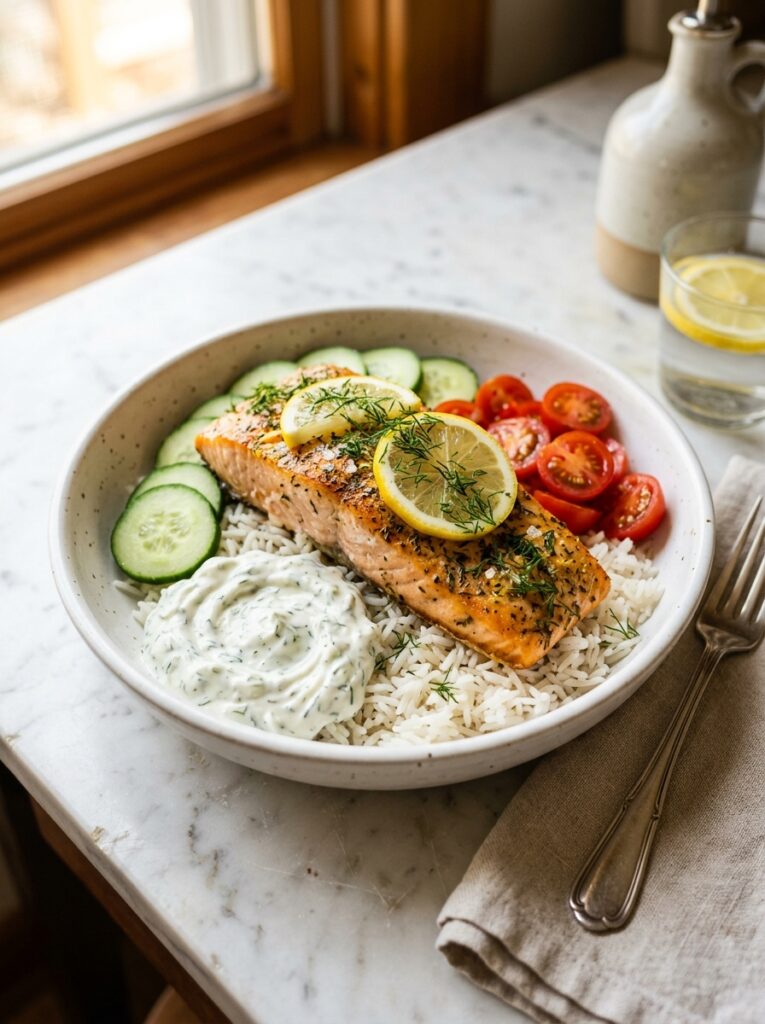
This is where to start. A simple lemon-oregano salmon fillet roasted until the skin crisps and the flesh flakes easily, served over white rice and finished with all the classic Greek bowl toppings. The tzatziki does the work of a sauce, the lemon keeps everything bright, and the whole bowl takes about twenty-five minutes from cold salmon to table. Once you’ve made this version, all seven other variations feel like straightforward adjustments.
Ingredients
- 2 salmon fillets (about 6 oz each)
- 1 cup dry white rice, cooked (yields about 2 cups)
- 2 tablespoons olive oil
- 1 tablespoon fresh lemon juice
- 1 teaspoon dried oregano
- ½ teaspoon garlic powder
- Salt and black pepper to taste
- ½ cup tzatziki
- ½ cup cucumber, sliced into rounds
- ½ cup cherry tomatoes, halved
- ¼ cup red onion, thinly sliced
- 2 tablespoons Kalamata olives
- Fresh dill and lemon wedges for serving
Instructions
- Preheat oven to 400°F. Line a baking sheet with parchment paper. Meanwhile, cook the rice according to package directions.
- Pat the salmon fillets dry with paper towels — this step helps the seasoning adhere and promotes better browning on the surface.
- Brush the salmon with olive oil, then season with lemon juice, oregano, garlic powder, salt, and pepper on all sides.
- Place the salmon on the prepared baking sheet skin-side down. Roast for 12–15 minutes until the flesh is opaque throughout and flakes easily when pressed gently with a fork.
- While the salmon roasts, prep the bowl toppings: slice the cucumber, halve the tomatoes, and slice the red onion.
- Divide the cooked rice between two bowls. Place one salmon fillet over each portion of rice.
- Arrange cucumber, tomatoes, red onion, and olives around the salmon. Add a generous spoonful of tzatziki and finish with fresh dill and a lemon wedge.
In my experience, drying the salmon fillets before seasoning makes a real difference in how the surface browns. Wet salmon releases steam in the oven, which prevents proper caramelization on the outside. A quick pat with paper towels before adding oil takes ten seconds and produces noticeably better results.
Recipe 2: Spicy Harissa Salmon Bowl
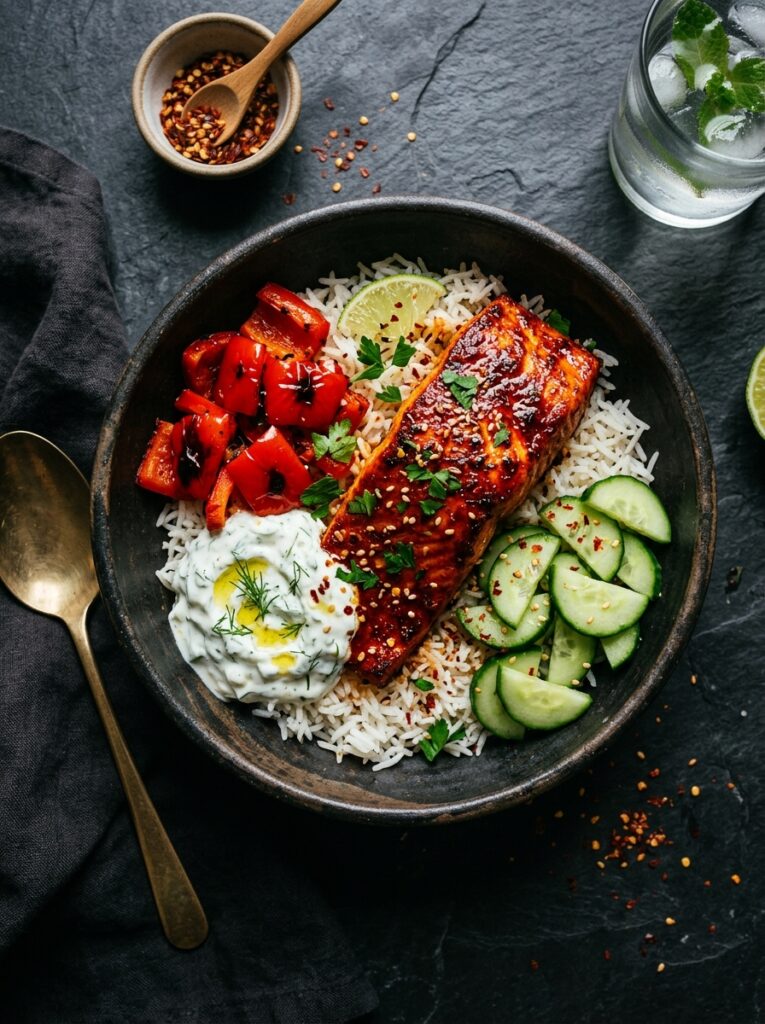
Harissa is a North African chili paste that layers heat with smoky, roasted pepper depth in a way that red pepper flakes alone can’t match. In this bowl, it serves as a salmon marinade that caramelizes in the oven and creates a slightly charred, deeply flavored crust. The tzatziki alongside isn’t optional here — its coolness against the heat of the harissa is the whole appeal of this version. This is the bowl to make when the classic starts to feel too familiar.
Ingredients
- 2 salmon fillets (6 oz each)
- 2 tablespoons harissa paste
- 1 tablespoon olive oil
- 1 teaspoon lemon juice
- 1 cup dry white rice, cooked
- ½ cup tzatziki
- ½ cup roasted red peppers, sliced
- ½ cup cucumber, sliced
- ¼ cup Kalamata olives
- Fresh parsley for garnish
Instructions
- Preheat oven to 400°F. In a small bowl, mix together harissa paste, olive oil, and lemon juice to make the marinade.
- Pat the salmon dry, then coat generously with the harissa mixture on all sides. Let it sit for 5–10 minutes if you have time — the brief marinade deepens the flavor noticeably.
- Place on a parchment-lined baking sheet and roast for 13–16 minutes. The harissa will darken and char slightly at the edges, which adds flavor rather than indicating burning.
- Meanwhile, slice the roasted peppers and cucumber and cook the rice if not already done.
- Divide rice between bowls. Place the harissa salmon over the rice.
- Add roasted red peppers, cucumber, and olives around the salmon. Spoon tzatziki generously over the top.
- Garnish with fresh parsley and serve immediately.
Recipe 3: Garlic Butter Salmon Bowl
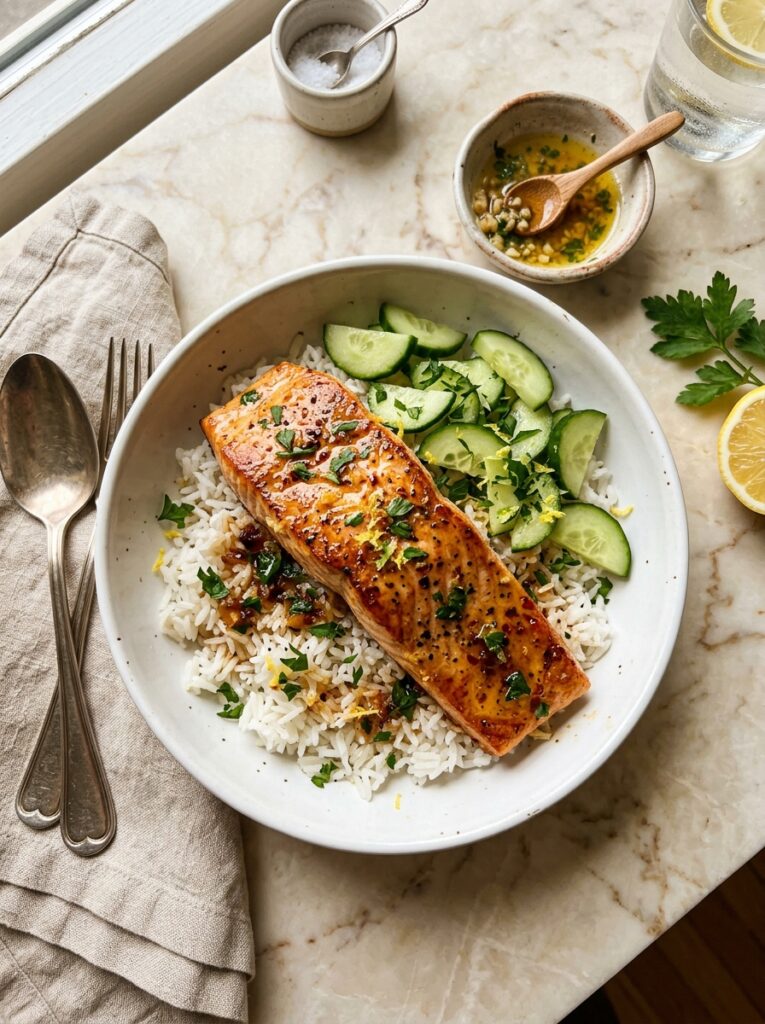
Garlic butter and salmon is a combination that exists for good reason. The butter bastes the fish as it cooks, the garlic caramelizes against the hot pan, and the result is a salmon fillet that’s rich, golden, and fragrant in a way that olive oil alone doesn’t achieve. Adding the Greek bowl elements underneath and around it — rice, cucumber, olives, feta — balances the richness with freshness and gives the dish enough lightness to work as a healthy weeknight dinner rather than something heavier.
Ingredients
- 2 salmon fillets (6 oz each)
- 3 tablespoons unsalted butter
- 3 garlic cloves, minced
- 1 teaspoon dried oregano
- Juice of ½ lemon
- 1 cup dry white rice, cooked
- ½ cup cucumber, sliced
- ⅓ cup crumbled feta cheese
- ¼ cup Kalamata olives
- Fresh parsley and lemon wedges for serving
Instructions
- Cook the rice according to package directions. Meanwhile, pat the salmon dry and season both sides with salt, pepper, and oregano.
- In a large oven-safe skillet, melt the butter over medium-high heat. Once the butter foams and starts to settle, add the minced garlic and cook for 30 seconds until fragrant — watch it closely, as garlic burns quickly in butter.
- Place the salmon fillets in the pan skin-side up. Cook for 3–4 minutes without moving them until the bottom is golden.
- Flip the salmon, then tilt the pan slightly and use a spoon to baste the fish repeatedly with the garlic butter for 1–2 minutes.
- Transfer the skillet to a 400°F oven for 4–6 more minutes until the salmon flakes easily. Squeeze lemon juice over the top as soon as it comes out of the oven.
- Build the bowls: rice first, then salmon, then cucumber, feta, and olives arranged around the fish. Drizzle any remaining garlic butter from the pan over the top.
- Garnish with fresh parsley and a lemon wedge. Serve immediately.
I’ve noticed that basting the salmon in the pan before finishing it in the oven produces a more evenly cooked fillet than either method alone. The stovetop sear creates a golden crust; the oven heat cooks the center through gently without drying out the edges.
Recipe 4: Avocado Tzatziki Salmon Bowl
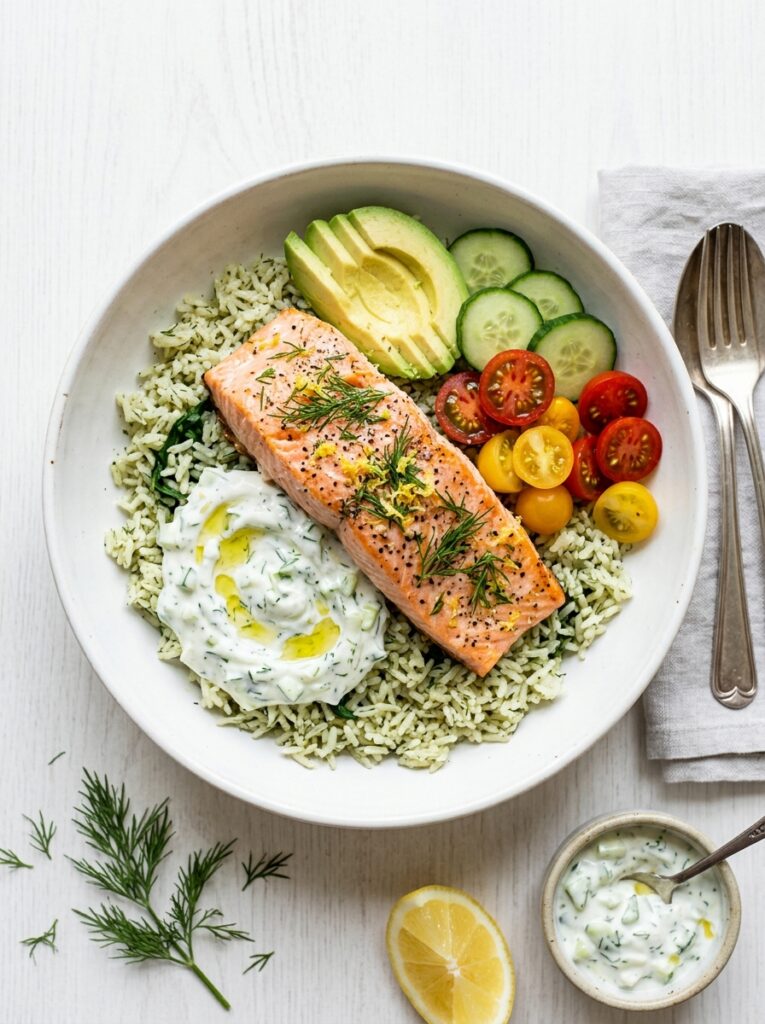
Avocado and tzatziki together create a creamy, cooling combination that makes this the richest-feeling bowl in the collection without being heavy. The avocado adds healthy fat and a buttery texture that pairs with the flaky salmon, while the tzatziki brings the herbaceous tang that keeps the whole bowl from feeling too dense. This version works particularly well in spring and summer when you want something satisfying but not warming.
Ingredients
- 2 salmon fillets (6 oz each)
- 2 tablespoons olive oil
- 1 teaspoon dried oregano
- ½ teaspoon garlic powder
- Salt and pepper to taste
- 1 cup dry white rice, cooked
- 1 large ripe avocado, sliced
- ½ cup tzatziki
- ½ cup cherry tomatoes, halved
- ½ cup cucumber, sliced
- Juice of ½ lemon
- Fresh dill for garnish
Instructions
- Preheat oven to 400°F. Pat salmon dry, then season with olive oil, oregano, garlic powder, salt, and pepper.
- Roast salmon on a parchment-lined baking sheet for 12–15 minutes until flaky.
- Meanwhile, cook rice and slice the avocado. Squeeze lemon juice directly over the avocado slices immediately after cutting to prevent browning.
- Halve the cherry tomatoes and slice the cucumber while the salmon finishes cooking.
- Divide rice between bowls. Lay the salmon fillet over the rice.
- Arrange the avocado slices, cucumber, and cherry tomatoes in sections around the salmon.
- Spoon tzatziki generously over the bowl and finish with fresh dill and an extra lemon squeeze. Serve immediately.
Recipe 5: Roasted Veggie Salmon Bowl
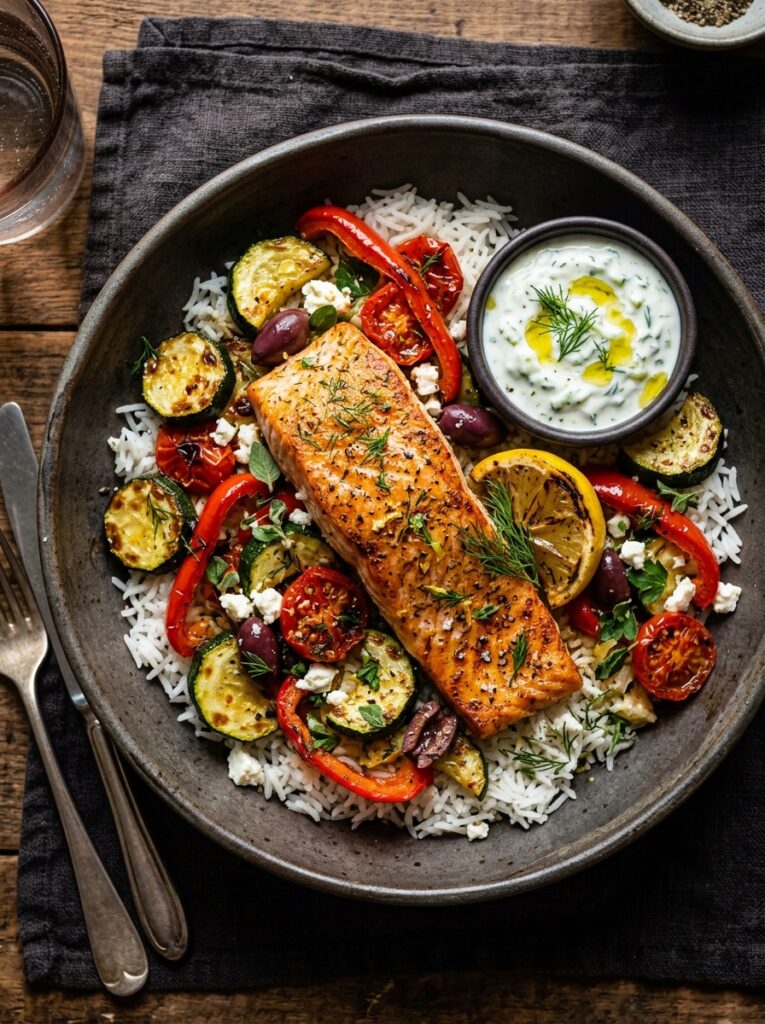
Roasting the vegetables alongside the salmon concentrates their sweetness and adds a caramelized depth that raw bowl toppings can’t replicate. Zucchini, bell pepper, and cherry tomatoes go onto the same baking sheet as the salmon, which means dinner is on one pan with minimal cleanup. This is the version to make when you want something that feels more substantial — closer to a complete roasted meal than a assembled bowl.
Ingredients
- 2 salmon fillets (6 oz each)
- 1 zucchini, cut into half-moons
- 1 red bell pepper, sliced
- 1 cup cherry tomatoes, whole
- 3 tablespoons olive oil, divided
- 1 teaspoon dried oregano
- ½ teaspoon smoked paprika
- Salt and pepper to taste
- 1 cup dry white rice, cooked
- ½ cup tzatziki
- ¼ cup crumbled feta
- Fresh parsley for garnish
Instructions
- Preheat oven to 425°F. Toss the zucchini, bell pepper, and cherry tomatoes with 2 tablespoons olive oil, salt, pepper, and smoked paprika on a large rimmed baking sheet. Spread into a single layer.
- Roast the vegetables for 10 minutes, then push them to the sides to make space in the center.
- Pat salmon dry and season with the remaining olive oil, oregano, salt, and pepper. Place the salmon fillets in the cleared center of the pan.
- Return the pan to the oven and roast for 12–14 more minutes until the salmon flakes easily and the vegetables are caramelized at their edges.
- Meanwhile, cook the rice.
- Divide rice between bowls. Arrange the roasted vegetables over the rice, then top with the salmon fillet.
- Add tzatziki, crumbled feta, and fresh parsley. Serve warm.
A helpful trick: if your vegetables are very wet (especially zucchini), pat them dry before tossing with oil. Excess moisture causes steaming rather than roasting, and you lose the caramelization that makes this bowl stand out.
Recipe 6: Lemon Dill Salmon Bowl
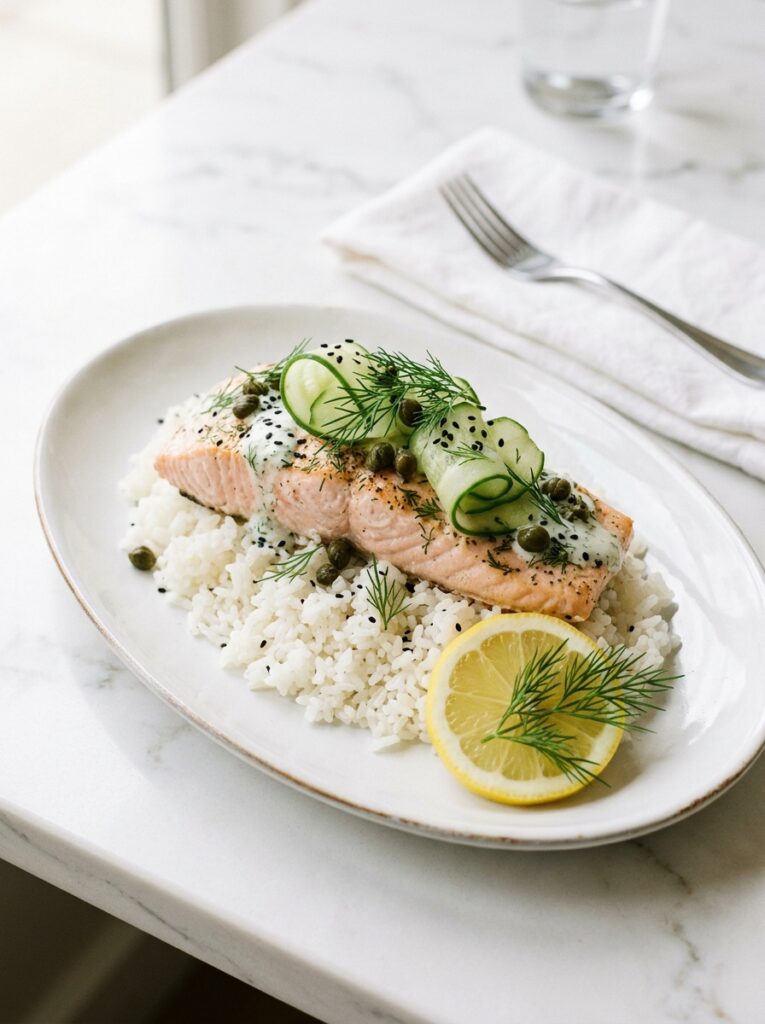
This is the lightest, most delicate version in the collection. Lemon and dill are the classic pairing for salmon, and here they appear in both the salmon seasoning and a simple yogurt-based sauce that replaces the thicker tzatziki. Cucumber ribbons (made by peeling the cucumber into thin strips with a vegetable peeler) make the bowl feel more refined without any extra work. This is the one to serve when you want something that looks elegant without involving much effort.
Ingredients
- 2 salmon fillets (6 oz each)
- 2 tablespoons olive oil
- Zest and juice of 1 lemon
- 2 tablespoons fresh dill, chopped (divided)
- Salt and white pepper to taste
- 1 cup dry white rice, cooked
- 1 cucumber, peeled into ribbons with a vegetable peeler
- 1 tablespoon capers
- ⅓ cup plain Greek yogurt
- 1 teaspoon lemon juice (for the yogurt sauce)
- ½ teaspoon garlic powder
Instructions
- Preheat oven to 400°F. Mix the olive oil, lemon zest, lemon juice, half the dill, salt, and white pepper in a small bowl.
- Pat salmon dry and coat with the lemon-dill mixture. Place on a parchment-lined baking sheet.
- Roast for 12–14 minutes until the salmon is opaque throughout and flakes gently.
- Meanwhile, make the yogurt sauce: stir together Greek yogurt, 1 teaspoon lemon juice, garlic powder, salt, and the remaining dill. Set aside.
- Use a vegetable peeler to peel the cucumber lengthwise into long, thin ribbons. Gather the ribbons loosely rather than laying them flat — they look more elegant piled gently than pressed flat.
- Build the bowls: rice base, then salmon, then cucumber ribbons and capers arranged alongside.
- Drizzle the yogurt sauce over everything. Finish with extra fresh dill and a lemon wheel.
Recipe 7: Salmon Meal Prep Bowl
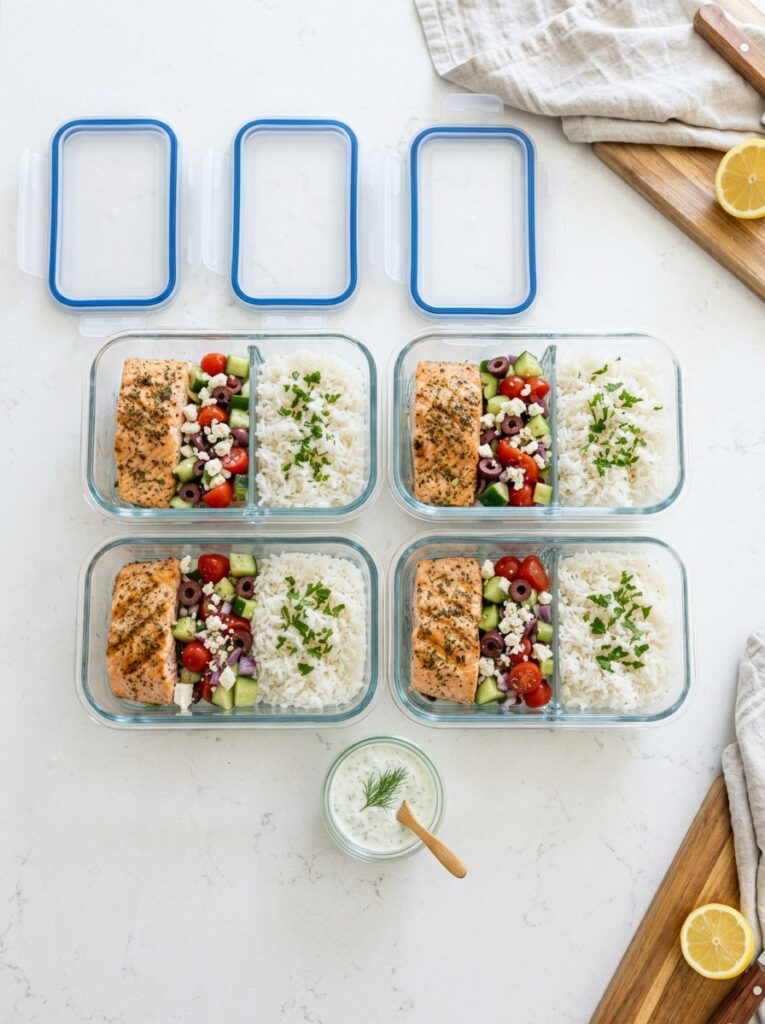
This version is designed specifically for making Sunday and eating across the week. Rather than assembling the bowl for immediate serving, the components get packed separately in meal prep containers to preserve texture and prevent the rice from absorbing the tzatziki before it’s time to eat. The salmon can be cooked all at once and stored cold; the toppings stay fresh for several days when kept dry and separate. It’s the most practical version in this guide and the one that changes the weekday routine most significantly.
Ingredients (for 4 meal prep portions)
- 4 salmon fillets (6 oz each)
- 2 cups dry white or brown rice, cooked
- 2 tablespoons olive oil
- 1 teaspoon dried oregano
- 1 teaspoon garlic powder
- Salt and pepper to taste
- 1 cup cherry tomatoes, halved
- 1 cucumber, sliced
- ½ cup Kalamata olives
- ½ cup crumbled feta cheese
- 1 cup tzatziki (packed in separate small containers)
Instructions
- Preheat oven to 400°F. Season all four salmon fillets with olive oil, oregano, garlic powder, salt, and pepper.
- Roast on a parchment-lined baking sheet for 12–15 minutes until cooked through. Let cool completely before packing — storing warm salmon in a sealed container creates condensation that makes the texture watery.
- Cook the rice and let it cool fully as well.
- Divide the rice evenly among four meal prep containers, placing it on one side of each container.
- Add one salmon fillet per container on the other side. Then arrange cucumber, tomatoes, olives, and feta in the remaining space, keeping ingredients grouped rather than mixed so they stay fresher longer.
- Pack the tzatziki in separate small dipping containers — mixing it into the bowl before refrigerating makes the rice soggy by day two.
- Refrigerate for up to 3 days. To serve, reheat the salmon and rice in the microwave for 60–90 seconds, then add the cold toppings and tzatziki fresh.
Recipe 8: Air Fryer Salmon Bowl
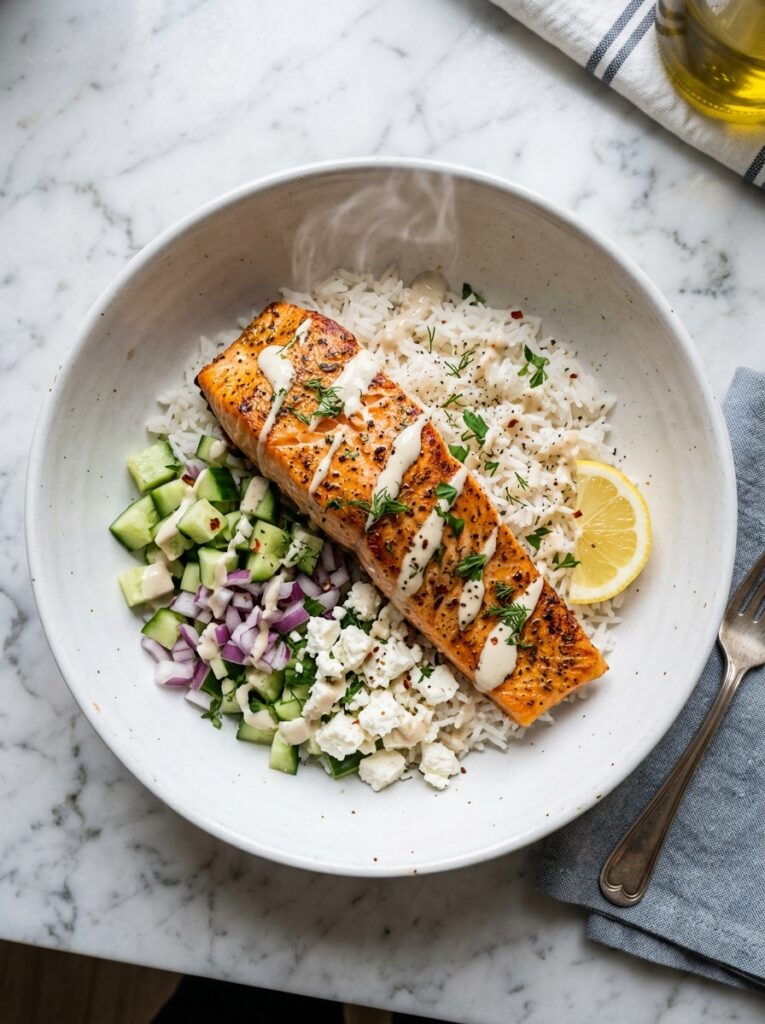
The air fryer produces the crispiest salmon exterior of any method in this guide in the shortest amount of time. At 400°F, an average salmon fillet is done in 8–10 minutes with edges that are slightly golden and a center that stays moist. There’s also no preheating wait, no baking sheet to wash, and almost no oil required. This is the version for the nights when you want dinner done in under twenty minutes without compromising on anything.
Ingredients
- 2 salmon fillets (6 oz each)
- 1 tablespoon olive oil
- 1 teaspoon dried oregano
- ½ teaspoon smoked paprika
- ½ teaspoon garlic powder
- Salt and pepper to taste
- 1 cup dry white rice, cooked
- ½ cup cucumber, sliced
- ¼ cup red onion, sliced
- ¼ cup crumbled feta
- 2 tablespoons tahini
- 1 tablespoon lemon juice
- 1 tablespoon water (to thin the tahini)
- Fresh parsley for garnish
Instructions
- Pat the salmon fillets completely dry. Brush with olive oil and season with oregano, smoked paprika, garlic powder, salt, and pepper on all sides.
- Preheat the air fryer to 400°F for 3 minutes. Lightly spray or brush the air fryer basket with oil to prevent sticking.
- Place the salmon fillets in the basket skin-side down, leaving space between them so hot air circulates freely. Cook for 8–10 minutes. There’s no need to flip — the hot air cooks the fillet evenly from all sides.
- While the salmon cooks, prepare the tahini sauce: whisk together tahini, lemon juice, and water until smooth and pourable. Add more water a teaspoon at a time if it’s too thick.
- Slice the cucumber and red onion.
- Divide rice between bowls. Place one salmon fillet over each bowl of rice.
- Arrange cucumber, red onion, and feta around the salmon. Drizzle the tahini sauce generously over the top and garnish with fresh parsley.
I’ve noticed that air fryer models vary significantly in actual cooking temperature. For your first batch, check the salmon at 7 minutes rather than 8. The fillet should be opaque throughout and flake when pressed gently at the thickest point. Once you know your machine’s timing, you won’t need to check again.
Tips for Best Results
Getting the Salmon Right
Always dry the salmon before seasoning. This is the single most impactful step in all eight recipes. Surface moisture creates steam in the oven or air fryer, which prevents browning and makes the outside of the fillet look gray and unappetizing. Pat both sides firmly with paper towels just before adding oil and seasoning. The surface should look matte rather than shiny.
Don’t cook past 145°F internally. Overcooked salmon turns dry, chalky, and unpleasant in a way that no amount of tzatziki can rescue. At 145°F, it’s fully cooked but still moist in the center. At 150°F or above, the texture changes noticeably. A simple $10 instant-read thermometer removes all the guesswork from salmon cooking permanently.
Season the rice too. Rice cooked in plain water with no salt is flat and doesn’t support the bold Greek flavors going on top. Cook the rice in salted water at minimum, or use chicken broth instead of water for more depth. Since the bowl components are assembled rather than cooked together, the rice needs to be seasoned on its own before anything goes on top.
Building a Better Bowl
Add toppings in sections rather than mixing. When you pile all the ingredients together, they look muddled and it becomes hard to see what’s in the bowl. Arranging cucumber, tomatoes, olives, and feta in distinct sections around the salmon makes the bowl more visually appealing and lets each ingredient maintain its individual flavor. This matters even more if you’re photographing the bowl for social media.
Add tzatziki and sauces last. Adding the tzatziki or tahini drizzle to an already-assembled bowl keeps it from soaking into the rice before serving. If you add it too early, the sauce disappears into the grains and the bowl loses its visual appeal and textural contrast.
Common Mistakes to Avoid
During Cooking
Overcooking the salmon is the most common mistake and the hardest to recover from. Salmon continues cooking after it leaves the oven or air fryer due to residual heat, so pulling it out when it looks just barely done is the right call. If it looks perfect in the oven, it’s already a minute or two past where it should be.
Skipping the marinade time. For recipes that use a marinade (particularly the harissa version), even 5 minutes of resting after seasoning makes a noticeable difference in how the flavors penetrate the surface. While you’re waiting, you can prep all the bowl toppings — nothing is wasted.
Crowding the baking sheet or air fryer basket. When fillets touch each other, they steam rather than roast. The edges don’t crisp, the skin doesn’t render, and the overall texture suffers. Leave at least an inch of space between fillets, and if you’re cooking for four people, use two pans rather than one.
During Assembly
Using warm rice with cold toppings carelessly. Warm rice can begin to wilt delicate greens or cause avocado to brown faster than usual. If you’re using arugula or avocado as a topping, let the rice cool for a few minutes or arrange the fresh elements on the cooler outer edge of the bowl away from the salmon.
Not seasoning the tzatziki. Store-bought tzatziki can vary widely in saltiness and flavor. Always taste it before adding it to the bowl and adjust with a pinch of salt or a squeeze of lemon if it tastes bland straight from the container.
Variations
Cauliflower Rice Base: Swap white or brown rice for cauliflower rice to cut carbs significantly. Sauté the cauliflower rice in a dry pan with olive oil, salt, garlic powder, and a squeeze of lemon before building the bowl — raw cauliflower rice tastes flat and slightly bitter. This swap works well in all eight recipes.
Farro Instead of Rice: Farro has a chewy, nutty texture that holds up better than rice when the bowl sits for a few hours, which makes it an excellent choice for the meal prep version. It takes about 30 minutes to cook, so plan accordingly if using this swap.
Canned Salmon for Weeknight Speed: Wild-caught canned salmon, drained and broken into chunks, works in any of these bowl recipes. The texture is less dramatic than a whole fillet, but the flavor is still good and the prep drops to under ten minutes. This is the version I make when I haven’t had time to thaw fresh salmon.
Hummus Instead of Tzatziki: For a dairy-free version, swap tzatziki for hummus or tahini sauce. Both provide creaminess and depth without dairy, and both pair well with the Greek flavor profiles across all eight recipes.
Arugula Under the Rice: Adding a small handful of arugula to the bowl before the rice creates a wilted green layer that adds peppery bitterness and extra nutrients. The warm rice wilts it gently without fully cooking it, so you still get some texture.
Quinoa Base: Quinoa adds protein and a slightly earthier flavor compared to white rice. It cooks in 15 minutes and works as a direct substitution in equal amounts. Furthermore, it provides a complete protein, which makes these bowls even more nutritionally complete.
Storage and Reheating
| Component | Method | Duration | Key Notes |
|---|---|---|---|
| Cooked salmon | Airtight container, fridge | Up to 3 days | Cool completely before sealing to prevent sogginess |
| Cooked rice | Airtight container, fridge | Up to 5 days | Store separately from toppings |
| Assembled bowl (no tzatziki) | Airtight container, fridge | Up to 2 days | Add tzatziki fresh each time |
| Tzatziki (store-bought) | Original container or airtight jar | Per package date | Stir before using if it separates |
| Roasted vegetables | Airtight container, fridge | Up to 4 days | Reheat briefly in a skillet for best texture |
| Salmon in freezer | Zip freezer bag | Up to 2 months | Thaw overnight in fridge; texture softens slightly |
Best reheating method: For stored salmon, place it in a 275°F oven for 10–12 minutes rather than microwaving. This gentle heat warms the fillet through without drying it out or making the edges rubbery. The microwave works in a pinch — 60–90 seconds at 60% power — but the oven method keeps the texture much closer to freshly cooked.
FAQs
What rice works best for Greek salmon rice bowls? Long-grain white rice is the most practical choice — it cooks in 18 minutes, stays fluffy without clumping, and doesn’t overwhelm the other flavors in the bowl. Brown rice works well for added fiber but takes 40–45 minutes, so plan ahead. Farro and quinoa are both excellent for meal prep since they hold their texture better than white rice over several days in the fridge.
How do you know when salmon is fully cooked? The most reliable method is a meat thermometer — 145°F at the thickest point means it’s fully cooked. If you don’t have one, press the thickest part gently with a fork; the flesh should flake and separate easily, and the color should be opaque throughout rather than translucent pink in the center. The edges will always look done before the center, so always check the thickest part.
Can I make these bowls ahead of time? Yes, with one important caveat: keep the tzatziki or sauce separate until serving. The rice and salmon can be prepped 3 days ahead, and the dry toppings (cucumber, olives, onion, feta) stay fresh for 4–5 days when stored separately. Assemble the bowl fresh when you’re ready to eat and add the sauce last.
What can I use instead of tzatziki? Hummus, tahini sauce (tahini, lemon juice, water, garlic), or plain Greek yogurt with herbs all work as substitutes. For a dairy-free version, hummus or tahini are the most natural replacements and still complement the Greek flavor profile well. Store-bought tzatziki is also an easy option if you don’t want to make your own.
Can I use frozen salmon for these recipes? Yes — thaw it in the fridge overnight or under cold running water for about 30 minutes before cooking. Avoid thawing salmon in warm water or the microwave, since both methods begin partially cooking the fish unevenly. Once thawed, pat it dry and proceed with any recipe as normal.
Is this recipe good for meal prep beginners? Recipe 7 (Salmon Meal Prep Bowl) is specifically designed for meal prep beginners. The key insight is keeping components separated rather than assembled — this single habit prevents the most common meal prep problems (soggy rice, watery dressing, soft vegetables). Start with that recipe, build a system that works for your containers and fridge, and then apply the same principle to the other seven variations.
Conclusion
Eight bowls, one core technique, and a flavor range wide enough that you could rotate through all of them for two months without repeating. These Greek Salmon Rice Bowls are the kind of dinner that makes weeknight cooking feel like something worth sitting down for rather than just getting through.
Start with the classic lemon herb version to learn how the bowl comes together, then branch out toward whichever variation caught your attention while reading. Save this guide to your Pinterest healthy dinner board so it’s there when you need it. And if one of these eight becomes a weekly staple in your house, share it — recipes like these are worth passing around.