Introduction
There’s a specific kind of chaos that happens around a tray of pulled pork nachos the moment it hits the table — hands reaching from every direction, someone always claiming “just one more chip,” and the tray somehow empty within minutes despite how much food was actually piled on there. That’s the magic of this dish, and it’s exactly why it’s become one of the most requested party foods in America.
Smoky, tender pulled pork. A blanket of melted cheese pulling apart in long, gooey strands. Crispy tortilla chips that somehow stay crunchy underneath all that saucy goodness. Then the toppings — cool, creamy, tangy, crunchy — layered on top to balance every rich bite. It’s the kind of dish that looks like a serious effort but is genuinely one of the most forgiving, flexible recipes you can make for a crowd.
The problem most people run into is the soggy nacho disaster — chips that go limp before they even reach the table, toppings sliding off in one motion, or pulled pork that’s either too dry or drowning everything in sauce. This guide solves all of that. You’ll learn the exact layering technique that keeps every chip crispy, the right way to use pulled pork without overwhelming the dish, and six completely different flavor directions to take this recipe — from classic barbecue to spicy Mexican-inspired, tropical Hawaiian, and even a loaded breakfast version.
Whether you’re hosting game day, feeding a crowd, or just want something genuinely satisfying for dinner tonight, this is the complete guide to making nachos that disappear in minutes — for all the right reasons.
Key Takeaways
- Pulled pork nachos are one of the most crowd-pleasing party foods you can make, and they’re far easier than they look
- Layering is everything — chips, cheese, pork, and toppings need to be built in stages, not dumped all at once
- Using pre-shredded, freshly grated cheese (not pre-shredded bagged cheese) gives you a noticeably smoother, glossier melt
- Pulled pork should be lightly sauced, not drenched — excess liquid is the number one cause of soggy nacho chips
- Baking at 400°F for 8–10 minutes gives you the ideal balance of melted cheese and crispy chips
- Cool, fresh toppings (sour cream, pico, avocado) should always be added after baking, never before
What You’ll Need
Choosing the Right Chips
Sturdy Chips Make or Break This Dish
Not all tortilla chips are created equal when it comes to nacho-building. Thick, restaurant-style tortilla chips hold up significantly better under the weight of cheese, pork, and toppings than thin, standard grocery store chips. Round chips work, but the slightly larger, sturdier triangular “restaurant style” bags labeled specifically for nachos are worth seeking out. If you’ve ever had nachos collapse into a sad pile of mush, thin chips are very often the reason.
The Pulled Pork Foundation
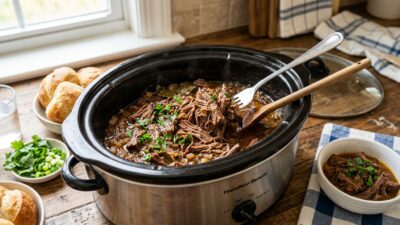
Pulled pork is the heart of this dish, and its texture matters enormously. Whether you’re using leftover pulled pork from a previous cook, a slow cooker batch, or store-bought pulled pork, the key is making sure it’s shredded into small, manageable pieces rather than large chunks. Large chunks make every bite uneven — you either get a mouthful of pork with no chip, or a chip with no pork. Smaller, well-shredded pieces distribute evenly across the entire tray.
Core Ingredients Used Across All Six Recipes
- Thick restaurant-style tortilla chips — about half a standard bag per recipe
- Cooked pulled pork — 2–3 cups, lightly sauced, not drenched
- Shredded cheese — a combination of cheddar and Monterey Jack melts best; freshly grated when possible
- Barbecue sauce or other base sauce — just enough to moisten the pork, never to soak it
- Fresh toppings — diced tomato, red onion, jalapeño, cilantro, lime
- Sour cream or Mexican crema — for drizzling after baking
- Avocado or guacamole — adds creaminess and visual color contrast
Equipment
- Large rimmed baking sheet (essential for even, single-layer nacho building)
- Parchment paper (makes cleanup effortless)
- Box grater (for freshly grating cheese)
- Two forks (for shredding pork if starting from a larger cut)
- Oven set to 400°F
Step-by-Step Guide: How to Build Perfect Pulled Pork Nachos
Step 1 — Prepare Your Pulled Pork
If you’re starting with already-cooked pulled pork (from a slow cooker, smoker, or store-bought), the most important step is checking the moisture level before you build your nachos. Pulled pork that’s sitting in a lot of liquid or heavily sauced will make your chips soggy almost immediately.
Drain excess liquid first. If your pulled pork has been sitting in cooking juices, use a slotted spoon to lift it out, leaving behind the excess liquid. Then toss the pork with just enough barbecue sauce (or other sauce, depending on your recipe direction) to lightly coat it — you’re looking for moistened, glossy pork, not pork that’s dripping.
In my experience, this single step is the difference between nachos that hold their structure through the entire tray and nachos that turn into a soggy puddle by the third layer. Lightly sauced pork keeps everything crisp.
Step 2 — Choose Your Baking Vessel
A large, rimmed baking sheet is the ideal vessel for nachos — far better than a small baking dish. The reason is simple: nachos need to be spread in as close to a single layer as possible so heat reaches every chip evenly and every bite gets a fair share of toppings. A deep dish forces chips to pile up, which means the bottom layers get soggy while the top layer overcooks.
Line your baking sheet with parchment paper for the easiest cleanup, though this is optional. Preheat your oven to 400°F — this temperature is hot enough to melt cheese into a glossy, bubbly finish without drying out the chips before the cheese has melted.
Step 3 — Build in Layers, Not All at Once
This is the single most important technique for great nachos, and it’s the step most people skip in favor of dumping everything onto the tray at once.
Start with the first layer: spread half your chips across the baking sheet in a single, even layer. Next, scatter half your shredded cheese evenly over the chips — getting cheese into the gaps between chips is what prevents bare, dry spots. Then distribute half your pulled pork evenly across the cheese layer. Finally, repeat the entire sequence with the remaining chips, cheese, and pork.
This double-layering method ensures that every single chip in the tray — not just the top ones — gets covered in cheese and pork. It’s a small extra step that makes a massive difference in the finished result. Skipping it and dumping everything in one layer leaves you with bare chips at the bottom of the tray and an overloaded top layer.
Step 4 — Bake Until Melted and Bubbly
Place your assembled nacho tray into the preheated 400°F oven. Bake for 8–10 minutes, watching closely after the 7-minute mark. You’re looking for fully melted, glossy, slightly bubbling cheese throughout the tray — not just on top, but visibly melted in the layers underneath as well, which you can usually tell by gently lifting an edge chip with tongs.
Doneness signs: The cheese should look completely melted with no dry, unmelted patches. Edges of the chips should be golden, not burnt. If you notice the chips browning too quickly before the cheese has fully melted, this usually means your oven runs hot — drop to 375°F for the remainder of the bake time.
Step 5 — Add Fresh, Cool Toppings After Baking
This step is non-negotiable for great nachos. Any topping that should stay cool, fresh, or crisp — sour cream, diced tomato, avocado, fresh cilantro, sliced jalapeño, red onion — goes on after the tray comes out of the oven, never before baking.
Baking these toppings alongside the cheese either cooks them into mush (tomatoes, avocado) or causes them to wilt and lose their fresh crunch (cilantro, raw onion). Add them generously across the top immediately after the tray comes out of the oven while everything is still hot underneath. The temperature contrast between the hot, cheesy base and the cool, fresh toppings is part of what makes nachos so satisfying to eat.
Step 6 — Serve Immediately
Nachos wait for no one. The moment your toppings are on, get the tray to the table. Since chips begin softening within minutes of being topped, this is genuinely a “serve immediately” dish rather than something you can assemble ahead and let sit. If you’re hosting, time your nacho-building for right before guests are ready to eat — the payoff in crispy, fresh nachos is absolutely worth the timing attention.
Recipe 1: Classic BBQ Pulled Pork Nachos
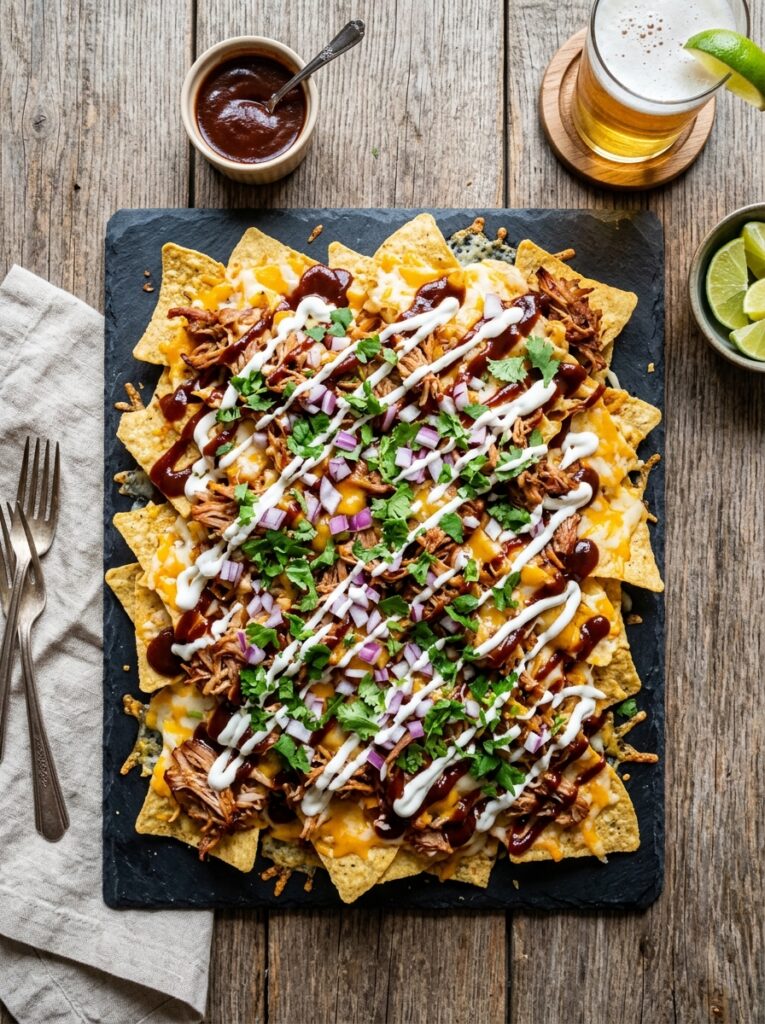
This is the foundational version — smoky barbecue pulled pork, a generous blanket of melted cheddar, and classic toppings that never miss. It’s the recipe most people picture when they think of pulled pork nachos, and for very good reason: the sweet-smoky barbecue sauce and rich melted cheese is a combination that works every single time, for every occasion, for every crowd.
Ingredients
- 8 oz thick restaurant-style tortilla chips
- 2½ cups cooked pulled pork
- ⅓ cup barbecue sauce (plus extra for drizzling)
- 2 cups shredded cheddar cheese
- ½ cup diced red onion
- ¼ cup fresh cilantro, chopped
- ½ cup sour cream, for drizzling
- 1 jalapeño, thinly sliced (optional)
- Lime wedges for serving
Instructions
- Preheat oven to 400°F. Line a large rimmed baking sheet with parchment paper.
- In a bowl, toss pulled pork with barbecue sauce until lightly and evenly coated — not drenched.
- Spread half the tortilla chips in a single layer across the baking sheet. Scatter half the cheese over the chips, then half the sauced pulled pork.
- Repeat with the remaining chips, cheese, and pork to create a second layer.
- Bake for 8–10 minutes until the cheese is fully melted and bubbling throughout.
- Remove from oven and immediately top with diced red onion, fresh cilantro, sliced jalapeño if using, and a generous drizzle of sour cream and extra barbecue sauce.
- Serve immediately with lime wedges on the side.
In my experience, using a good quality smoky barbecue sauce — rather than a very sweet, ketchup-forward one — makes a noticeable difference here. The smokiness complements the pulled pork instead of competing with the cheese for sweetness.
Recipe 2: Spicy Mexican-Style Pulled Pork Nachos
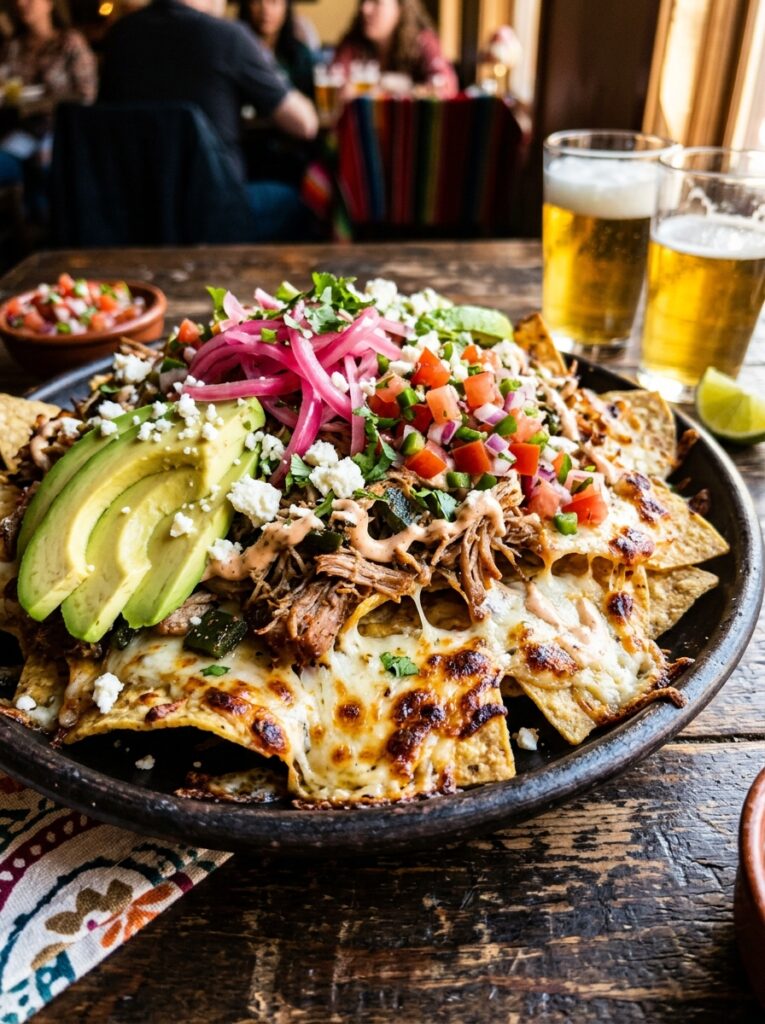
This version takes the classic in a bold, Mexican-inspired direction with pepper jack cheese, roasted poblano peppers, and a fresh pico de gallo that brightens every bite. The combination of smoky, spicy pork and cool, fresh toppings creates layers of flavor and temperature contrast that make this version genuinely addictive. It’s the one to make when your crowd wants real heat alongside real flavor.
Ingredients
- 8 oz thick restaurant-style tortilla chips
- 2½ cups cooked pulled pork
- ¼ cup salsa verde or red enchilada sauce (for tossing pork)
- 1 poblano pepper, roasted and diced
- 2 cups shredded pepper jack cheese
- ¾ cup fresh pico de gallo (or diced tomato, onion, jalapeño, cilantro, lime mixed)
- ½ cup crumbled queso fresco
- 1 avocado, sliced
- ¼ cup pickled red onion (optional)
- Fresh cilantro and lime wedges for serving
Instructions
- Preheat oven to 400°F. Line a large baking sheet with parchment paper.
- To roast the poblano, char it directly over a stovetop flame or under the broiler for 3–4 minutes per side until blistered. Let cool, peel off the charred skin, remove seeds, and dice.
- Toss pulled pork with salsa verde until lightly coated. Fold in the diced roasted poblano.
- Layer half the chips, half the cheese, and half the pork mixture on the baking sheet. Repeat with remaining chips, cheese, and pork.
- Bake for 8–10 minutes until the pepper jack is fully melted and slightly golden at the edges.
- Remove from the oven and immediately top with fresh pico de gallo, crumbled queso fresco, sliced avocado, and pickled red onion if using.
- Garnish with fresh cilantro and serve with lime wedges immediately.
Recipe 3: Hawaiian-Inspired Pulled Pork Nachos
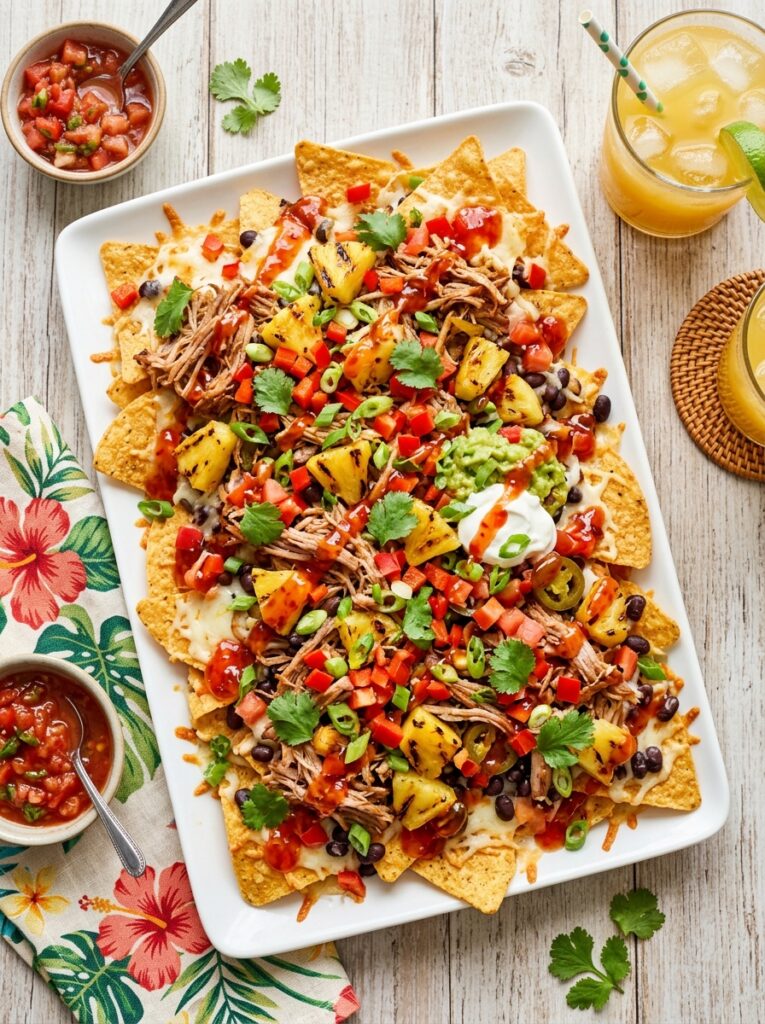
Sweet, smoky, and a little unexpected — this version pairs pulled pork with caramelized pineapple and a sweet chili drizzle for a tropical twist that genuinely surprises people the first time they try it. The natural sweetness of the grilled pineapple plays beautifully against the savory pork and salty cheese, creating a flavor combination that feels fresh, fun, and completely different from a typical nacho tray.
Ingredients
- 8 oz thick restaurant-style tortilla chips
- 2½ cups cooked pulled pork
- ¼ cup teriyaki sauce or sweet barbecue sauce
- 1 cup fresh pineapple chunks, grilled or pan-seared
- 2 cups shredded mozzarella (or a mozzarella-cheddar blend)
- ½ cup diced red bell pepper
- 3 green onions, thinly sliced
- 2 tablespoons sweet chili sauce, for drizzling
- Fresh cilantro for garnish
Instructions
- Preheat oven to 400°F. Line a baking sheet with parchment paper.
- Pan-sear pineapple chunks in a dry skillet over medium-high heat for 3–4 minutes, turning occasionally, until caramelized and lightly charred at the edges. Set aside.
- Toss pulled pork with teriyaki sauce until lightly coated.
- Layer half the chips, half the cheese, half the sauced pork, and half the grilled pineapple on the baking sheet. Repeat with remaining ingredients for the second layer.
- Scatter diced red bell pepper across the top before baking.
- Bake for 8–10 minutes until cheese is fully melted and the pineapple edges are slightly caramelized further.
- Remove from oven and immediately top with sliced green onion and a generous drizzle of sweet chili sauce. Garnish with fresh cilantro and serve right away.
A helpful trick is to pat your pineapple chunks dry with a paper towel before searing them. Excess moisture prevents proper caramelization, and you’ll end up steaming the pineapple instead of getting those beautiful golden-brown edges that add real flavor depth.
Recipe 4: Loaded Breakfast Pulled Pork Nachos
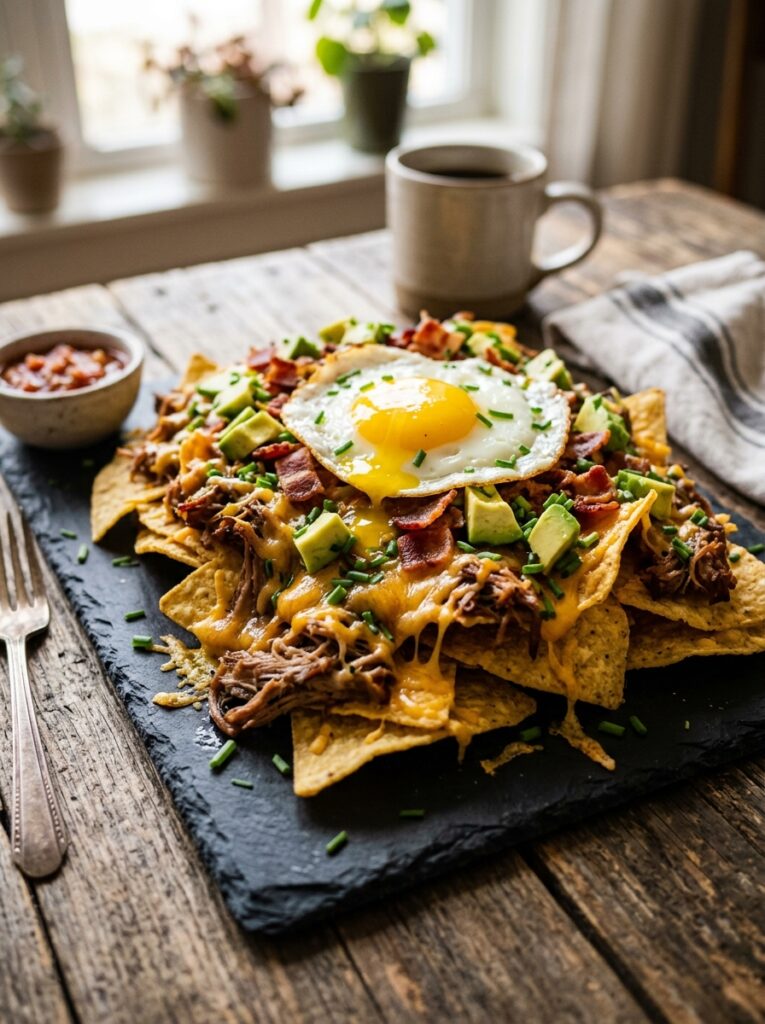
Yes, nachos for breakfast — and once you try this version, you’ll understand exactly why it works. Smoky pulled pork, melted cheddar, crispy bacon, and a fried egg with a perfectly runny yolk that coats every chip when you cut into it. This is the ultimate hangover cure, lazy Sunday brunch centerpiece, or “treat yourself” breakfast that makes any morning feel like an occasion.
Ingredients
- 8 oz thick restaurant-style tortilla chips
- 2 cups cooked pulled pork
- 2 tablespoons barbecue sauce (for lightly coating pork)
- 2 cups shredded cheddar cheese
- 4 strips bacon, cooked crisp and chopped
- 2–4 eggs, fried with runny yolks
- 1 avocado, diced
- 2 tablespoons fresh chives, chopped
- Hot sauce, for serving
Instructions
- Preheat oven to 400°F. Line a baking sheet with parchment paper.
- Cook bacon in a skillet until crisp. Remove, chop, and set aside, reserving a small amount of bacon fat in the pan.
- Toss pulled pork lightly with barbecue sauce.
- Layer half the chips, half the cheese, and half the pulled pork on the baking sheet. Repeat with the remaining chips, cheese, and pork for the second layer. Scatter chopped bacon across the top.
- Bake for 8–10 minutes until the cheese is fully melted and bubbling.
- While the nachos bake, fry your eggs in the reserved bacon fat over medium-low heat until the whites are set but the yolks remain runny, about 3–4 minutes.
- Remove nachos from the oven and immediately top with diced avocado and fresh chives. Carefully place the fried eggs on top, distributing them evenly across the tray. Serve immediately with hot sauce on the side so everyone can break their yolk over their portion.
Recipe 5: Loaded Ranch Pulled Pork Nachos
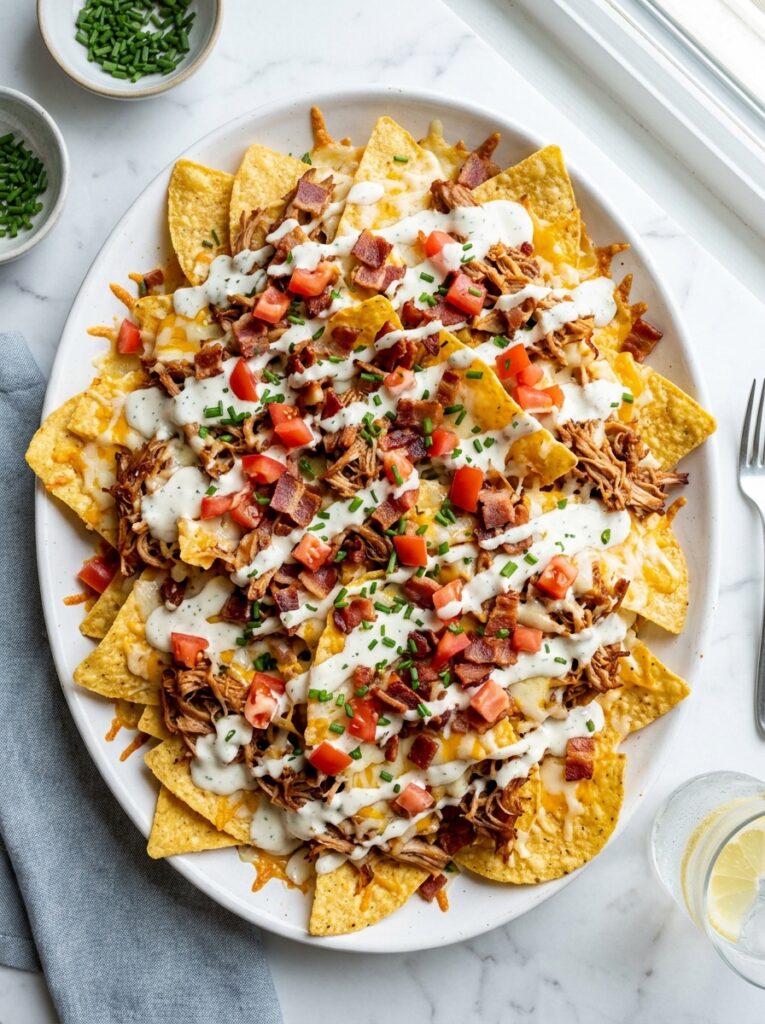
Ranch dressing drizzled generously over pulled pork nachos creates a cooling, herby, creamy contrast that makes this version one of the most requested at every gathering I’ve brought it to. The combination of smoky pork, melted cheese, crispy bacon, and that cool ranch finish hits every craving at once — savory, creamy, smoky, and just a little tangy.
Ingredients
- 8 oz thick restaurant-style tortilla chips
- 2½ cups cooked pulled pork
- 3 tablespoons barbecue sauce
- 2 cups shredded cheese blend (cheddar, Monterey Jack, and Colby work beautifully)
- 4 strips bacon, cooked crisp and chopped
- ½ cup diced tomato
- ½ cup ranch dressing, for drizzling
- 3 tablespoons fresh chives, chopped
- Cracked black pepper, to taste
Instructions
- Preheat oven to 400°F. Line a large baking sheet with parchment paper.
- Toss pulled pork lightly with barbecue sauce until evenly coated.
- Layer half the chips, half the cheese blend, and half the pork on the baking sheet. Repeat with remaining chips, cheese, and pork.
- Scatter half the chopped bacon across the top layer before baking, reserving the rest for garnish.
- Bake for 8–10 minutes until the cheese is fully melted and bubbling throughout the tray.
- Remove from the oven and immediately top with diced tomato, remaining bacon, and a generous drizzle of ranch dressing across the entire tray.
- Finish with fresh chives and a crack of black pepper. Serve immediately while hot.
I’ve noticed that thinning ranch dressing with a tiny splash of milk before drizzling makes it pour much more evenly across the nachos, giving you that beautiful zigzag drizzle effect rather than clumpy spoonfuls.
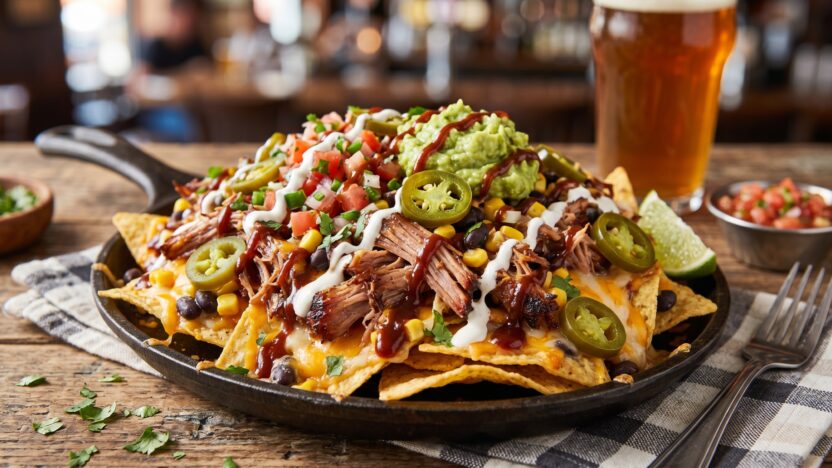
Recipe 6: Loaded Black Bean and Corn Pulled Pork Nachos
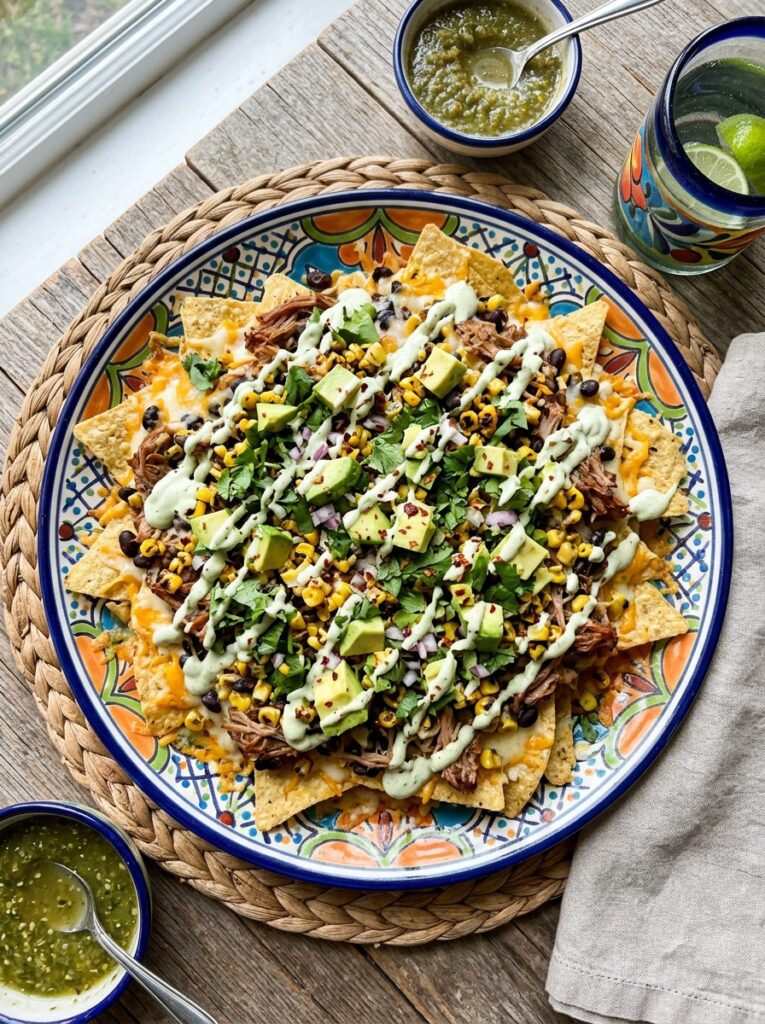
This version bulks up the classic with black beans and sweet charred corn, making it heartier and more filling while adding gorgeous color and texture contrast throughout the tray. It’s an excellent option when you want your nachos to feel a little more substantial — almost like a complete meal rather than just a snack — without losing any of the smoky, cheesy satisfaction that makes pulled pork nachos so beloved.
Ingredients
- 8 oz thick restaurant-style tortilla chips
- 2 cups cooked pulled pork
- 2 tablespoons barbecue sauce
- 1 cup canned black beans, drained, rinsed, and patted dry
- 1 cup corn kernels, charred in a dry skillet
- 2 cups shredded Monterey Jack cheese
- 1 avocado, diced
- ¼ cup fresh cilantro, chopped
- ¼ cup sour cream + juice of ½ lime (mixed for lime crema)
- Salt to taste
Instructions
- Preheat oven to 400°F. Line a baking sheet with parchment paper.
- Char the corn in a dry skillet over medium-high heat for 4–5 minutes, stirring occasionally, until lightly blackened in spots. Set aside.
- Toss pulled pork lightly with barbecue sauce. Pat black beans dry thoroughly with paper towels to remove excess moisture.
- Layer half the chips, half the cheese, half the pork, half the black beans, and half the charred corn on the baking sheet. Repeat with remaining ingredients for the second layer.
- Bake for 8–10 minutes until the cheese is fully melted and the tray is bubbling throughout.
- While baking, whisk together sour cream and lime juice with a small pinch of salt to make a thin, pourable lime crema.
- Remove nachos from the oven and immediately top with diced avocado and fresh cilantro. Drizzle generously with lime crema and serve immediately.
Tips for Best Results
Use Thick, Sturdy Chips
Restaurant-style tortilla chips hold up significantly better under toppings than standard thin chips. If you’ve experienced nacho collapse before, this is very often the root cause. As a result, look for chips specifically labeled for nachos or “restaurant style” — they’re thicker, sturdier, and designed to handle weight without breaking.
Always Layer, Never Dump
Building nachos in two distinct layers — chips, cheese, pork, repeat — ensures every single chip gets coverage. In contrast, dumping all your ingredients in one pile creates a tray with soggy, overloaded chips on top and bare, dry chips at the bottom. The extra two minutes this technique takes is genuinely worth it every time.
Keep Pulled Pork Lightly Sauced
Excess sauce or liquid is the number one cause of soggy nacho chips. To avoid this, drain your pulled pork if it’s sitting in cooking liquid, then toss with just enough sauce to coat — glossy, not drenched. You can always add extra sauce as a drizzle after baking if you want more flavor without compromising the chip texture underneath.
Add Cool Toppings Only After Baking
Sour cream, diced tomato, avocado, fresh herbs, and any other cool or fresh topping go on after the tray comes out of the oven — never before. Baking these ingredients either cooks them into mush or causes them to wilt. Furthermore, the temperature and texture contrast between hot, cheesy nachos and cool, fresh toppings is part of what makes the dish so satisfying.
Common Mistakes to Avoid
Overloading With Sauce
Too much barbecue sauce, salsa, or other liquid sauce mixed into your pulled pork is the fastest way to soggy nachos. Therefore, use just enough to lightly coat and moisten the meat. If your pork looks like it’s swimming in sauce, drain some off before adding it to your nacho layers.
Using Thin, Flimsy Chips
Standard grocery store tortilla chips often can’t support the weight of cheese, pork, and toppings. As a result, they buckle, crack, and turn soggy quickly. Investing in thicker, restaurant-style chips solves this problem almost entirely and makes a dramatic difference in how the finished nachos hold together.
Dumping Everything in One Layer
This is the single most common nacho-building mistake. When all your ingredients are piled on in one layer rather than built in stages, you end up with bare chips at the bottom that never get cheese or toppings, while the top layer is overloaded. By contrast, the two-layer building method takes minimal extra effort and produces a dramatically more even, satisfying result.
Baking Toppings That Should Stay Fresh
Sour cream, avocado, diced tomato, and fresh herbs should never go into the oven. Baking them causes avocado to turn brown and mushy, sour cream to separate and become watery, and fresh herbs to wilt and lose their bright flavor. Instead, always reserve these for after baking.
Variations and Swaps
| Variation | Swap or Addition | Effect |
|---|---|---|
| Gluten-free | Use certified GF tortilla chips | Naturally GF; pulled pork and toppings are typically already GF |
| Lower calorie | Use Greek yogurt instead of sour cream; reduce cheese slightly | Lighter version without losing creaminess |
| Extra protein | Add black beans or pinto beans | More filling, added fiber and protein |
| Dairy-free | Use dairy-free shredded cheese and cashew-based crema | Similar texture, fully plant-based |
| Vegetarian base | Replace pulled pork with jackfruit “pulled pork” | Similar texture, plant-based protein swap |
| Extra heat | Add diced jalapeño, hot sauce, or pepper jack cheese | Significant heat boost for spice lovers |
| Smaller portions | Build in individual cast iron skillets or small trays | Personal nacho portions, great for parties |
Storage and Reheating Guide
| Method | Duration | Tips |
|---|---|---|
| Assembled, unbaked (refrigerator) | Not recommended | Chips go soft quickly when layered with toppings before baking |
| Pulled pork only (refrigerator) | Up to 4 days | Store separately from chips; reheat gently before assembling |
| Baked nachos with toppings (refrigerator) | Same day only | Best enjoyed immediately; texture degrades quickly after baking |
| Pulled pork (freezer) | Up to 3 months | Freeze in portions; thaw overnight before reheating and assembling |
| Reheating leftover nachos (oven) | 5–7 min at 375°F | Best method; remove any cold toppings first, add back after reheating |
| Reheating leftover nachos (microwave) | Not recommended | Chips become rubbery and soggy almost immediately |
FAQs
What’s the best cheese for pulled pork nachos?
A blend of cheddar and Monterey Jack is the most popular and reliable combination — cheddar brings sharp flavor while Monterey Jack melts exceptionally smoothly. Pepper jack works beautifully for spicier versions, and mozzarella adds a milder, stretchier melt for sweeter flavor profiles like the Hawaiian version. Freshly grated cheese from a block always melts more smoothly than pre-shredded bagged cheese, which contains anti-clumping agents that can affect the final texture.
Can I make pulled pork nachos ahead of time for a party?
The chips and cheese layers can be prepped and ready to go, but the actual baking and topping should happen as close to serving time as possible — ideally within 15–20 minutes of guests arriving. Pulled pork can absolutely be made a day or two ahead and reheated gently before assembling. The fresh toppings (pico, avocado, sour cream) should be prepped ahead but added only after the tray comes out of the oven.
How do I keep nacho chips from getting soggy?
Three things matter most: use thick, sturdy restaurant-style chips, keep your pulled pork lightly sauced rather than drenched, and always add cool, wet toppings (sour cream, tomato, avocado) after baking rather than before. Additionally, spreading everything in a single, even layer on a large baking sheet — rather than piling high in a deep dish — helps heat distribute evenly and prevents the bottom layers from steaming into mush.
Can I use a different protein instead of pulled pork?
Absolutely. Pulled or shredded chicken works beautifully using the exact same techniques and quantities in any of these six recipes. Ground beef, shredded brisket, or even seasoned black beans for a vegetarian version all translate well too. The layering method and baking technique stay identical regardless of which protein you choose — only the seasoning profile needs slight adjustment to match.
What can I serve alongside pulled pork nachos?
Nachos are often a complete meal on their own, but they pair wonderfully with a simple side salad, coleslaw, or Mexican rice if you want to round things out for a sit-down dinner. For drinks, a cold beer, margarita, or iced tea complements the smoky, cheesy richness perfectly. If serving for a party, additional dipping sauces on the side — extra ranch, guacamole, or salsa — let guests customize their portions further.
Conclusion
From the smoky classic to a spicy Mexican-inspired tray, a tropical Hawaiian twist, and even a fully loaded breakfast version — every one of these six recipes proves just how versatile and genuinely crowd-pleasing pulled pork nachos can be. I’ve seen how recipes like these can turn an ordinary game day or casual get-together into something everyone remembers and asks you to make again. Pick the version that calls to you most, save this guide to your Pinterest boards for your next party, and share it with anyone who needs a foolproof recipe that disappears in minutes. Your next gathering is about to get a whole lot more delicious.