Key Takeaways
- Core concept: French toast baked in a muffin tin — all the flavor of classic French toast in a portable, pull-apart form
- Base ingredients: eggs, milk, bread, butter, cinnamon, and vanilla — pantry staples across all six recipes
- Best bread for the job: brioche or challah absorb the custard beautifully; stale bread works even better than fresh
- Bake time: 20–25 minutes at 350°F for most variations
- Skill level: beginner-friendly; if you can make scrambled eggs, you can make these
- Meal prep friendly: all six versions freeze well and reheat in a toaster oven in 8 minutes
- Flavor range covered: classic maple-cinnamon, cream cheese stuffed, blueberry lemon, Nutella swirl, apple cinnamon, and overnight make-ahead
Introduction
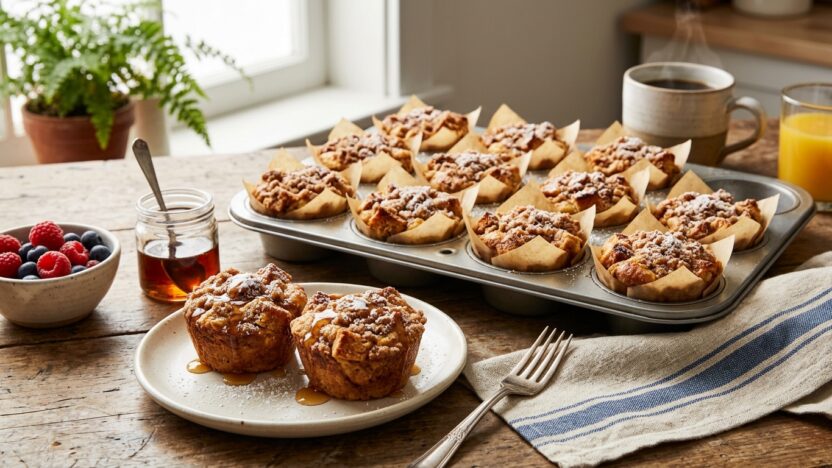
French Toast Muffins are what happen when you take everything people love about a slow Saturday morning breakfast and make it weekday-practical. Same custard-soaked bread, same cinnamon warmth, same golden caramelized exterior — but baked in a muffin tin so they’re done in twenty-five minutes, portable enough to pack in a bag, and easy enough that you can make a full batch while your coffee brews.
The problem with traditional French toast is that it demands your attention at the stove, one slice at a time, right when everyone is hungry and nobody wants to wait. The muffin tin solves that entirely. You assemble the whole batch at once, slide it into the oven, and walk away. When it comes out, everyone gets the same warm, custardy, perfectly browned result at exactly the same moment — no one waiting while someone else’s slice cooks.
This guide covers six different ways to make them — from the simple classic to a cream cheese stuffed version that tastes like dessert for breakfast, a blueberry lemon variation that feels surprisingly light, a Nutella swirl version that children will request by name, an apple cinnamon version built for fall mornings, and an overnight version you assemble the night before and bake straight from the fridge. Although the results look different, the technique is the same for all six. Once you’ve made one, the rest come naturally.
What You’ll Need
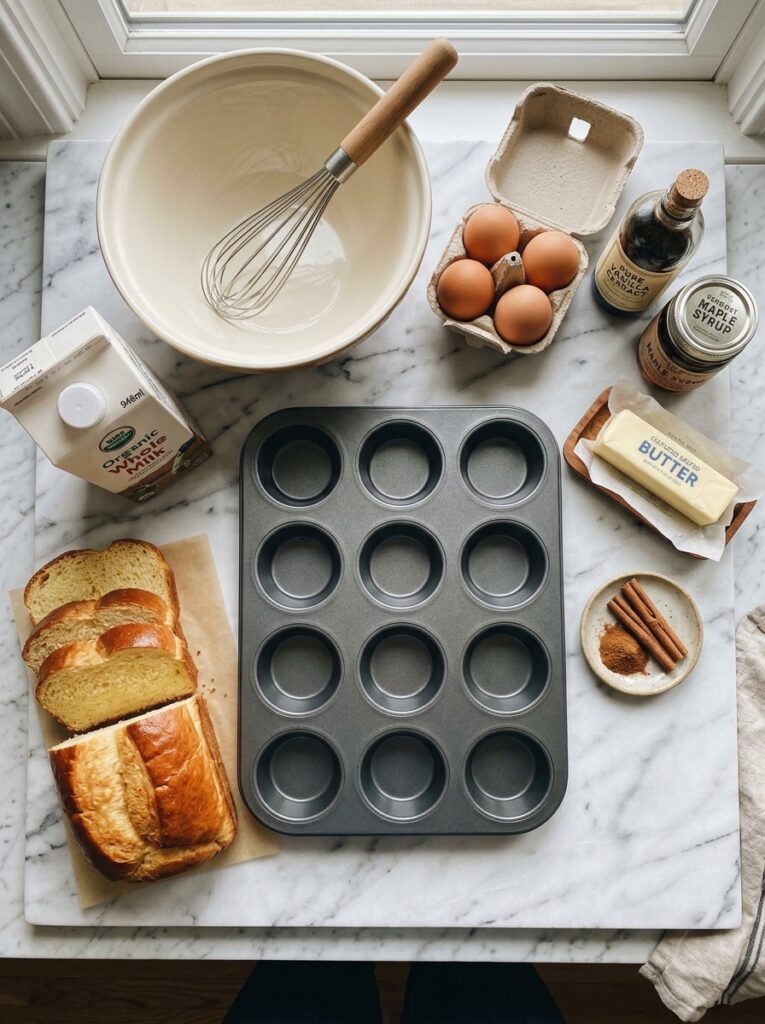
Equipment
- Standard 12-cup muffin tin — all six recipes work in a standard size; silicone tins release more easily but a well-greased metal tin works fine
- Large mixing bowl — for the custard base
- Whisk — for combining eggs, milk, and flavorings
- Sharp bread knife — for cutting bread into cubes; consistent cube size means consistent soaking
- Pastry brush — optional, for buttering the tin thoroughly
- Cooling rack — lets air circulate under the muffins after baking so the bottoms don’t go soggy
- Measuring cups and spoons
Shared Base Ingredients (across all six recipes)
- Brioche or challah bread — day-old or slightly stale is ideal; fresh bread soaks up the custard but can turn mushy; brioche adds richness, challah adds slight sweetness
- Eggs — the backbone of the custard; large eggs in all recipes
- Whole milk or heavy cream — whole milk produces a lighter result; heavy cream makes everything richer and denser
- Vanilla extract — a full teaspoon matters here, not just a splash
- Ground cinnamon
- Sugar or maple syrup — for sweetening the custard base
- Butter — for greasing the tin and, in most recipes, brushing on top before baking
Optional Add-Ins (covered in individual recipes)
- Cream cheese
- Fresh or frozen blueberries
- Nutella or chocolate hazelnut spread
- Diced apple
- Brown sugar and pecans for streusel topping
- Lemon zest
Recipe 1: Classic Maple Cinnamon Muffins
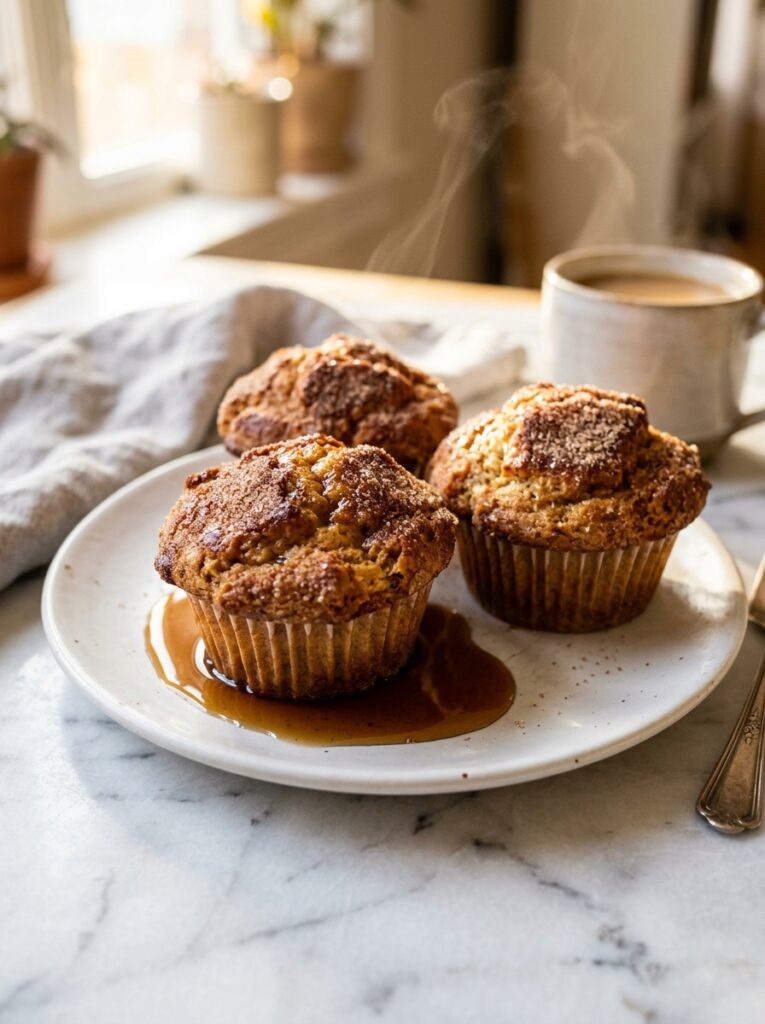
This is the version to start with. Cubed brioche soaks in a vanilla-cinnamon custard, packs into a buttered muffin tin, and bakes until the tops are golden and caramelized. The inside stays custardy and soft while the exterior develops a light crunch. In fact, the flavor lands exactly where classic French toast does — it’s just concentrated into a smaller, more manageable form that doesn’t require you to stand over a pan. Start here, and the other five variations feel like natural next steps.
Ingredients
- 6 cups brioche or challah bread, cut into ¾-inch cubes (about 8 slices)
- 3 large eggs
- ¾ cup whole milk
- 2 tablespoons maple syrup, plus extra for serving
- 1 teaspoon vanilla extract
- 1½ teaspoons ground cinnamon
- Pinch of salt
- 2 tablespoons unsalted butter, melted (for greasing and brushing)
- 1 tablespoon cinnamon sugar (for topping)
Instructions
- Preheat oven to 350°F. Brush each cup of the muffin tin generously with melted butter, making sure to coat the edges and rim — this is where muffins stick most.
- Whisk together eggs, milk, maple syrup, vanilla, cinnamon, and salt in a large bowl until smooth and well combined.
- Add the bread cubes to the custard mixture and toss gently to coat. Let them sit for 5 minutes, tossing once more halfway through, so the bread absorbs the liquid evenly. The cubes should feel heavy and saturated but not falling apart.
- Divide the soaked bread evenly among the 12 muffin cups, pressing gently to pack them in. Each cup should be filled to just above the rim — the muffins settle as they bake.
- Brush the tops lightly with any remaining melted butter and sprinkle with cinnamon sugar.
- Bake for 20–25 minutes until the tops are deeply golden and the custard is set throughout. A toothpick inserted into the center should come out clean with no wet egg on it.
- Cool in the tin for 5 minutes before loosening with a butter knife and transferring to a rack. Serve warm with maple syrup.
In my experience, the 5-minute soak time is worth respecting. Rushing it means uneven absorption and you’ll find dry spots in the center of the muffins once they bake. If you have time, let them soak 8–10 minutes for even better results.
Recipe 2: Cream Cheese Stuffed Muffins
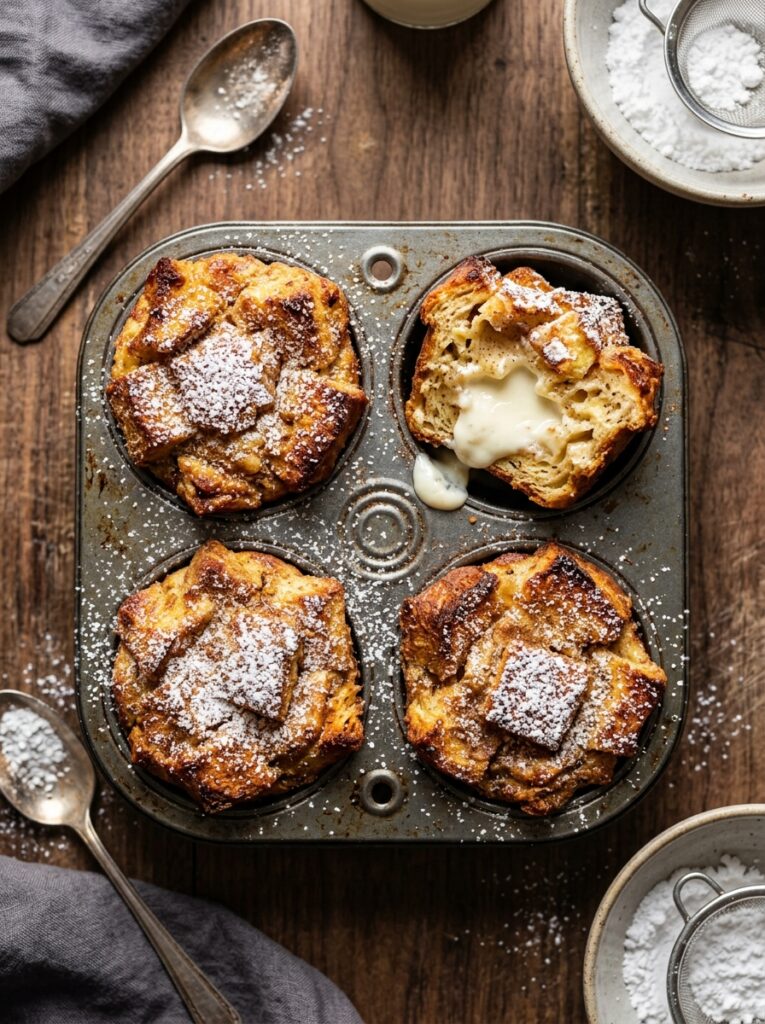
A layer of sweetened cream cheese bakes into the center of each muffin and stays soft and slightly gooey once done. Biting through the caramelized exterior into the warm cream cheese middle is the whole appeal of this version — it tastes like a cross between French toast and a cheese Danish. These take about three extra minutes to assemble compared to the classic, but they’re consistently the ones people ask to take home.
Ingredients
- 6 cups brioche bread, cut into ¾-inch cubes
- 3 large eggs
- ¾ cup whole milk
- 2 tablespoons sugar
- 1 teaspoon vanilla extract
- 1 teaspoon cinnamon
- Pinch of salt
- 4 oz cream cheese, softened to room temperature
- 2 tablespoons powdered sugar
- ½ teaspoon vanilla extract (for the cream cheese)
- Butter for greasing
Instructions
- Preheat oven to 350°F and butter the muffin tin thoroughly.
- Beat together the softened cream cheese, powdered sugar, and ½ teaspoon vanilla in a small bowl until smooth. Transfer to a zip bag and set aside — you’ll use this to pipe or spoon the filling.
- Whisk eggs, milk, sugar, vanilla, cinnamon, and salt together in a large bowl. Add bread cubes and toss to coat. Soak for 5 minutes.
- Fill each muffin cup about halfway with the soaked bread mixture, pressing it into the bottom and up the sides slightly to create a shallow well.
- Spoon or pipe about 1½ teaspoons of the cream cheese mixture into the center of each well.
- Cover each filled cup with more soaked bread, pressing the top layer down gently to seal the cream cheese inside. The cup should be filled just above the rim.
- Bake 22–26 minutes until the tops are golden and set. Cool 5 minutes in the tin before removing. Dust with powdered sugar and serve warm.
A helpful trick: if you don’t have a piping bag, a small zip bag with one corner snipped off works just as well. The goal is accuracy — you want the cream cheese centered so it doesn’t escape through the sides while baking.
Recipe 3: Blueberry Lemon Toast Muffins
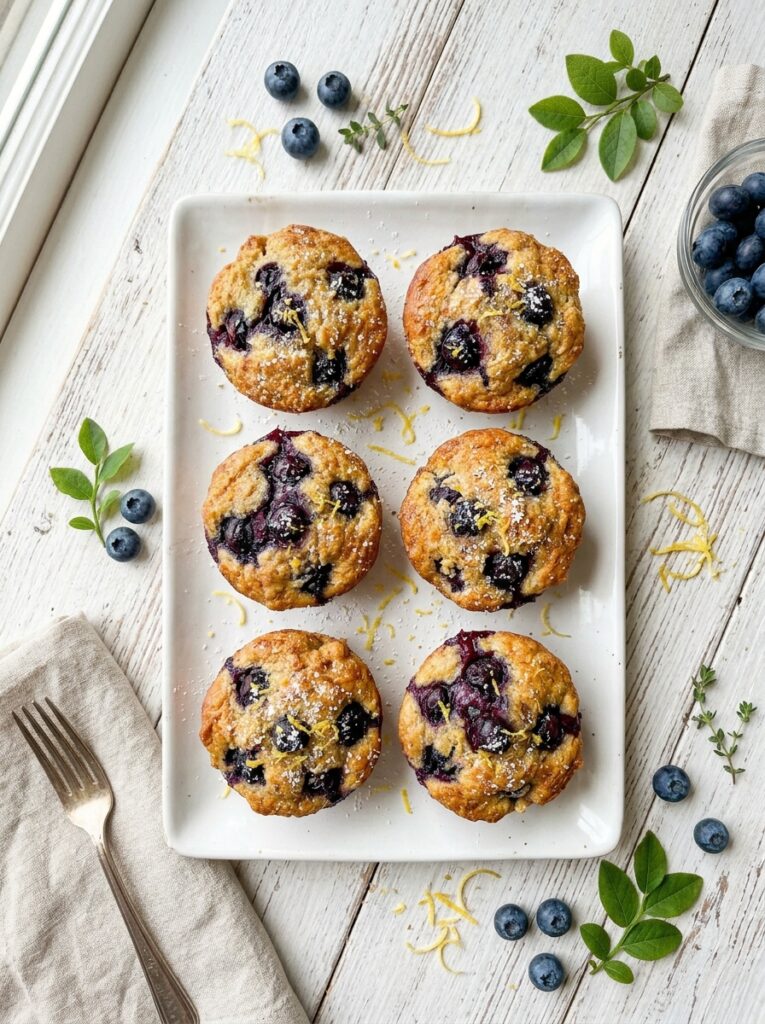
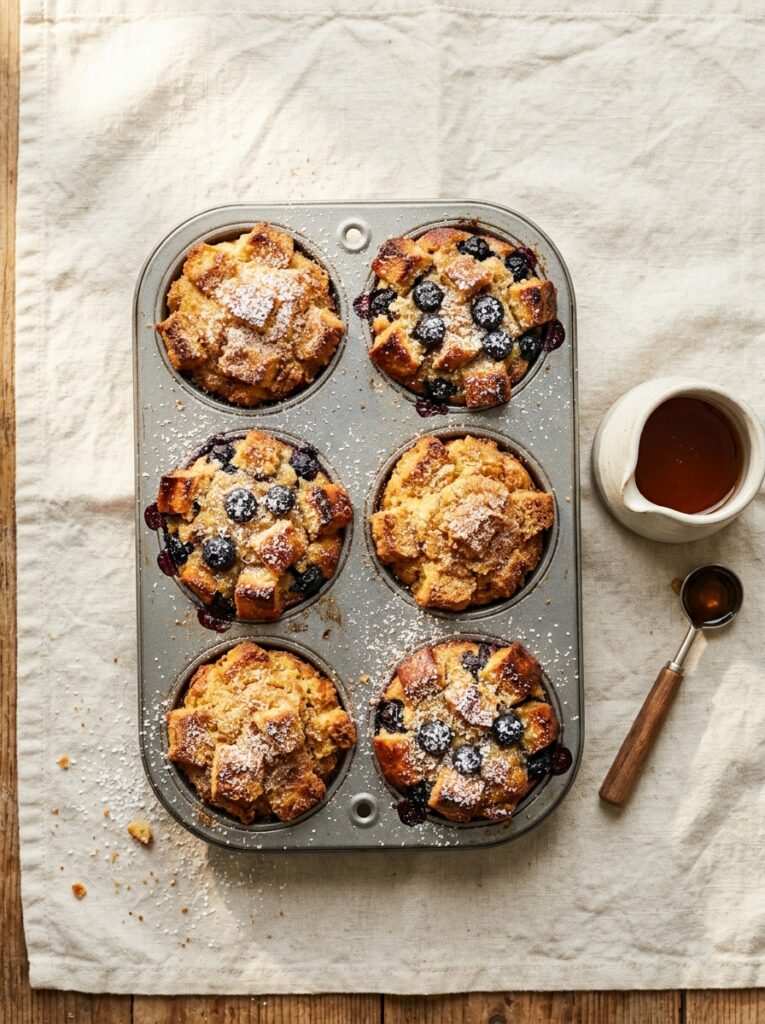
Lemon zest goes into the custard and blueberries get folded in with the soaked bread, so every muffin ends up with pockets of jammy fruit and a faint citrus brightness that cuts through the richness of the egg and bread base. These feel lighter than the classic version, which makes them the one I make most often when I want something that tastes indulgent but doesn’t sit heavily. They’re also the best option when fresh blueberries are in season and you want to use them up before they go soft.
Ingredients
- 6 cups brioche or sandwich bread, cubed
- 3 large eggs
- ¾ cup whole milk
- 2 tablespoons sugar
- 1 teaspoon vanilla extract
- 1 teaspoon cinnamon
- Zest of 1 large lemon
- 1 tablespoon fresh lemon juice
- Pinch of salt
- ¾ cup fresh or frozen blueberries
- Butter for greasing
Instructions
- Preheat oven to 350°F and butter the muffin tin well.
- Whisk together eggs, milk, sugar, vanilla, cinnamon, lemon zest, lemon juice, and salt until fully combined.
- Add bread cubes and toss to coat evenly. Let soak for 5–8 minutes.
- Gently fold in the blueberries, distributing them through the bread mixture without crushing them. If using frozen blueberries, add them straight from frozen — thawed berries release too much juice and make the mixture wet.
- Divide the mixture evenly among the muffin cups, pressing lightly to compact each one.
- Bake 20–24 minutes until the tops are golden and a toothpick inserted into the center comes out clean. Blueberries near the surface will have burst and caramelized slightly around their edges.
- Cool 5 minutes in the tin before removing. Serve with a light dusting of powdered sugar or a small spoonful of lemon curd.
Recipe 4: Nutella Swirl Muffins
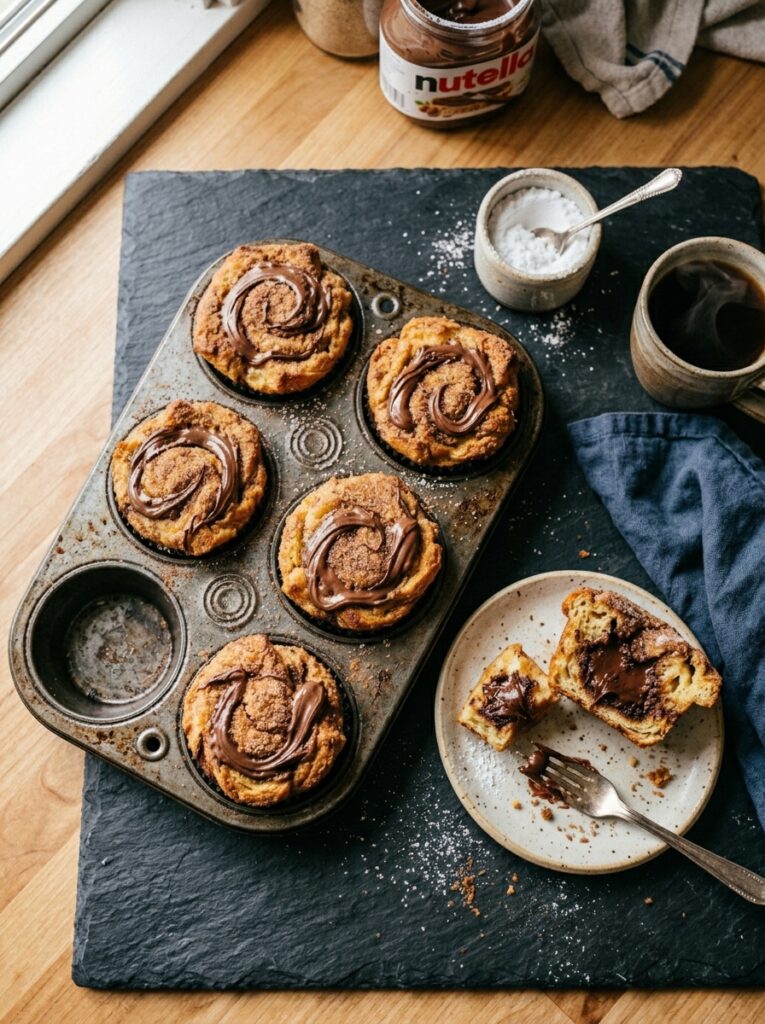
A spoonful of Nutella gets layered into the center of each muffin and swirled into the top layer before baking. As the muffins cook, it melts into the surrounding bread, and when they come out of the oven the interior has a fudgy, chocolate-hazelnut ribbon running through it. These are unambiguously a treat — nobody is pretending otherwise — but they’re also the fastest way to make a breakfast that children wake up early for. Still, the assembly only adds about four extra minutes over the classic version, so the payoff-to-effort ratio is hard to argue with.
Ingredients
- 6 cups brioche bread, cubed
- 3 large eggs
- ¾ cup whole milk
- 2 tablespoons sugar
- 1 teaspoon vanilla extract
- 1 teaspoon cinnamon
- Pinch of salt
- ⅓ cup Nutella (about 1 teaspoon per muffin, generously)
- Butter for greasing
- Powdered sugar for finishing
Instructions
- Preheat oven to 350°F and butter the muffin tin well.
- Whisk together eggs, milk, sugar, vanilla, cinnamon, and salt. Add bread cubes and toss to coat. Soak 5 minutes.
- Fill each muffin cup about halfway with soaked bread, pressing it in gently.
- Add approximately 1 teaspoon of Nutella to the center of each cup, pressing it in slightly so it’s nestled between the bread pieces rather than sitting on top.
- Cover with the remaining soaked bread, pressing down lightly to seal.
- For the swirl: dip a toothpick or thin knife into a small amount of additional Nutella and drag it across the surface of each muffin in a loose S-shape. This creates visible swirl on the baked top.
- Bake 22–26 minutes until the tops are golden. The Nutella may bubble slightly at the edges — that’s fine. Cool 5 minutes in the tin. Dust with powdered sugar and serve warm.
I’ve noticed that Nutella is much easier to portion when it’s at room temperature. Cold Nutella from the fridge is stiff and harder to tuck into the bread layers without displacing the bread. Set the jar on the counter while you prep everything else.
Recipe 5: Apple Cinnamon French Muffins
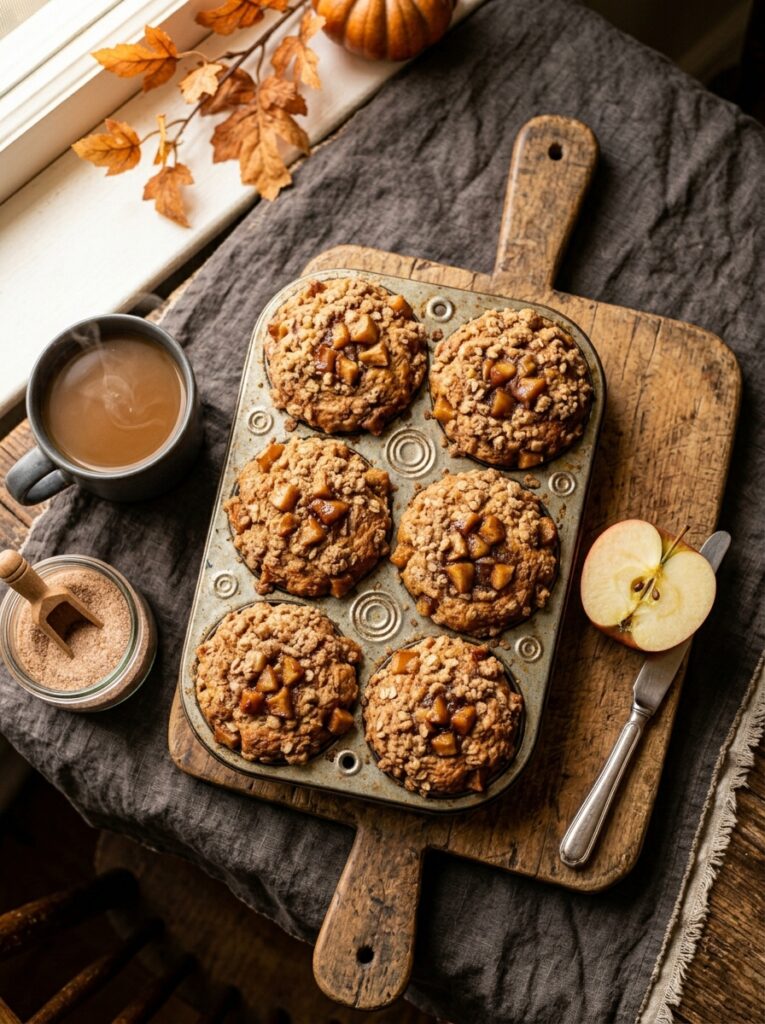
Diced apple goes into the soaked bread mixture and a simple brown sugar oat crumble sits on top of each muffin before baking. As the muffins bake, the apple pieces soften and caramelize, while the crumble goes crispy and golden on the outside and absorbs some of the custard from below. Together, they create something that smells like apple crisp and tastes like fall condensed into one breakfast. I start making these as soon as the weather turns — and I don’t stop until late March, which tells you something about how reliably good they are.
Ingredients
For the muffins:
- 6 cups brioche or white sandwich bread, cubed
- 3 large eggs
- ¾ cup whole milk
- 2 tablespoons brown sugar
- 1 teaspoon vanilla extract
- 1½ teaspoons cinnamon
- ¼ teaspoon nutmeg
- Pinch of salt
- 1 medium apple, peeled and cut into ¼-inch dice (about ¾ cup)
For the crumble topping:
- 3 tablespoons rolled oats
- 2 tablespoons brown sugar
- 1 tablespoon all-purpose flour
- ½ teaspoon cinnamon
- 1½ tablespoons cold butter, cut into small pieces
Instructions
- Preheat oven to 350°F and butter the muffin tin.
- Make the crumble first: combine oats, brown sugar, flour, and cinnamon in a small bowl. Add the cold butter pieces and rub between your fingers until the mixture resembles coarse crumbs with some pea-sized butter pieces. Set aside in the fridge while you prep the rest.
- Whisk together eggs, milk, brown sugar, vanilla, cinnamon, nutmeg, and salt.
- Add bread cubes and toss to coat. Soak 5 minutes, then fold in the diced apple.
- Divide the mixture evenly among the muffin cups, pressing in gently.
- Distribute the crumble topping evenly over each muffin, pressing very lightly so it adheres.
- Bake 24–28 minutes until the crumble is golden and crisp and a toothpick inserted into the center comes out clean. Cool 5 minutes before removing. Serve with a drizzle of maple syrup or a spoonful of warm caramel sauce.
Recipe 6: Overnight Make-Ahead Muffins
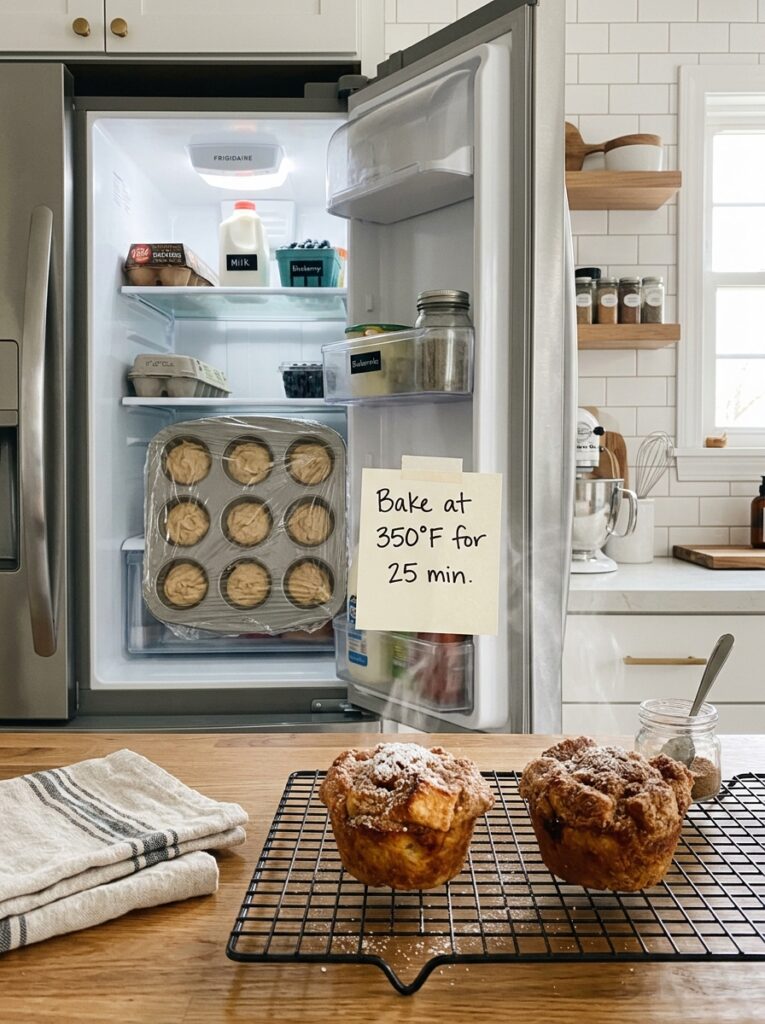
This version is assembled the night before and goes directly from the fridge into a cold oven in the morning. Because the bread has hours to fully absorb the egg mixture, the overnight soak produces a noticeably more custardy, evenly saturated result compared to a quick 5-minute soak. In exchange, the morning effort is about thirty seconds — pull the tin from the fridge, set the oven, put it in. By the time you’ve showered and made coffee, breakfast is already done.
Ingredients
- 6 cups day-old brioche or challah, cubed
- 4 large eggs (one extra for the longer soak — it needs more structure)
- 1 cup whole milk
- 3 tablespoons maple syrup
- 1½ teaspoons vanilla extract
- 1½ teaspoons cinnamon
- ¼ teaspoon nutmeg
- Pinch of salt
- Butter for greasing
- Cinnamon sugar for topping
Instructions
- The night before: butter the muffin tin generously and set aside.
- Whisk together eggs, milk, maple syrup, vanilla, cinnamon, nutmeg, and salt in a large bowl.
- Add bread cubes and toss to coat. Let soak for 10 full minutes at room temperature, turning every few minutes so the custard is absorbed evenly.
- Divide the soaked mixture evenly among the muffin cups, pressing in gently. Sprinkle with cinnamon sugar. Cover the tin tightly with plastic wrap and refrigerate overnight — at least 8 hours, up to 14.
- In the morning, remove the tin from the fridge and place it directly in a cold oven. Set the oven to 350°F and let the muffins come to temperature along with the oven. This gradual warm-up prevents the custard from setting unevenly.
- Once the oven reaches 350°F, bake for 25–30 minutes until the tops are deeply golden and a toothpick inserted into the center comes out clean.
- Cool 5 minutes in the tin. Serve with warm maple syrup.
I’ve seen this go wrong when people pull the tin straight from the fridge and put it into a fully preheated oven. The dramatic temperature change causes the outer layers to set and pull away from the tin before the center has cooked through, leaving a tough exterior and underdone middle. Starting in a cold oven is the step that makes the overnight method work properly.
Tips for Best Results
Getting the Bread and Batter Right
Start with stale or day-old bread. Fresh bread is soft and absorbs custard too quickly, which leads to a mushy center that never fully sets. In contrast, bread that’s been sitting out for a day has dried slightly, so it soaks up the egg mixture at a better rate — saturated on the outside, with some structure still intact in the middle. If you only have fresh bread, spread the cubes on a baking sheet and toast at 300°F for 10 minutes first. That dries them out enough to behave like day-old.
Cut into consistent cubes. Uneven pieces soak unevenly — small pieces turn soft and essentially dissolve into the custard, while oversized chunks stay dry in the center. Therefore, aim for ¾-inch cubes throughout. A sharp bread knife and one steady downward motion produces cleaner cubes than sawing back and forth, which compresses the bread and affects how it absorbs.
Don’t underestimate the butter in the tin. These muffins have a high egg content, so they stick aggressively to an improperly greased tin. Brush melted butter into each cup with a pastry brush, including the rim — that’s typically where the first sticking happens. If you’re not confident in your greasing, paper muffin liners work as backup, though the exterior won’t caramelize as effectively against paper.
Filling, Baking, and Finishing
Press the mixture in firmly. After filling each cup, press the bread mixture down with your fingers before baking. Loosely piled bread creates gaps that stay hollow after baking and the muffin falls apart when you try to lift it out. Compact muffins hold their shape and have a much more uniform texture throughout.
Let them rest in the tin. Five minutes in the tin after baking lets the custard finish setting up. Pulling them out while everything is still hot and fluid is the fastest way to have them collapse. After the rest, loosen the edges with a thin butter knife and they should release cleanly.
Common Mistakes to Avoid
Before and During Baking
Trusting the top color over a toothpick. The surface of a French toast muffin browns faster than the custard in the center sets. However, a golden exterior doesn’t mean a cooked interior — always check with a toothpick through the thickest part. If wet custard comes back on it, the muffins need more time regardless of how done the top looks. Covering the tin loosely with foil and adding 5 minutes usually fixes it without burning.
Using bread that’s too thin-sliced. Standard pre-sliced sandwich bread that’s been cut very thin breaks down into a paste before it even makes it into the muffin tin. Instead, use thicker slices — ¾ inch or more — or brioche loaf, which is sold pre-sliced at a much more workable thickness.
Overfilling the cups. Filling too far above the rim means custard overflows during baking, burns onto the metal, and makes the muffins nearly impossible to remove cleanly. As a result, fill to just ¼ inch above the rim — enough that the muffin rises slightly but doesn’t spill over the edges.
After the Oven
Skipping the cooling time. These muffins need five minutes in the tin after baking before you move them. In fact, the custard inside is still hot and fluid right out of the oven — removing them immediately means they collapse. The five minutes feel long when you’re hungry, but skipping them causes the most consistent failures of any mistake on this list.
Rushing the soak. A one-minute toss in the custard produces muffins with dry, pale spots inside where the bread simply didn’t absorb the liquid. Five minutes is the minimum; 8–10 minutes produces a more evenly custardy result, particularly for the thicker brioche cubes used in most of these recipes.
Variations
Pumpkin Spice: For a fall version, replace ¼ cup of the milk with canned pumpkin puree and swap plain cinnamon for pumpkin pie spice. The pumpkin adds moisture and an earthy sweetness that makes the whole muffin taste like something October should smell like. Finish with a maple glaze instead of powdered sugar — it complements the pumpkin better than any other topping I’ve tried.
Chocolate Chip: Alternatively, fold ¼ cup of mini chocolate chips into the soaked bread mixture before filling the cups. Unlike the Nutella version, the chips stay mostly intact and distribute evenly throughout rather than forming a gooey center. This is the lower-effort chocolate option — less impressive to look at, but faster to put together on a busy morning.
Strawberry Jam Stuffed: Similarly, use the same layering technique as the cream cheese version but replace the filling with 1½ teaspoons of strawberry or raspberry jam. The jam caramelizes slightly during baking and creates a sweet, slightly sticky center with crispy edges where the sugar met the hot tin.
Pecan Brown Sugar: Also worth making: add ¼ cup of roughly chopped toasted pecans to the soaked bread mixture and use brown sugar instead of white in the custard. The pecans add real crunch and a slightly bitter note that cuts through the sweetness in a way plain muffins can’t match. Finish with a brown butter drizzle right before serving.
Dairy-Free: To make these dairy-free, swap whole milk for full-fat oat milk or canned coconut milk and use vegan butter for greasing. Oat milk is the closer substitute — it produces a custard that’s slightly less rich but still holds together well. Coconut milk adds a faint sweetness that works surprisingly well with cinnamon.
Gluten-Free: For a gluten-free version, use a gluten-free sandwich loaf or GF brioche. The texture is somewhat denser because GF bread has a tighter crumb, but the custard soaks in well and the flavor holds up. Since GF bread is firmer than standard loaves, increase the soak time to 8–10 minutes so the bread fully absorbs the custard before baking.
Storage and Reheating
| Storage Method | Container | Duration | Notes |
|---|---|---|---|
| Room temperature | Covered plate or container | Up to 2 hours | Fine for same-day serving; refrigerate after |
| Refrigerator | Airtight container with parchment between layers | 4–5 days | Texture firms slightly when cold |
| Freezer | Zip freezer bag, single layer first | Up to 2 months | Freeze flat, then stack once solid |
| Reheating from fridge | Toaster oven at 325°F or regular oven | 8–10 minutes | Restores crispiness better than microwave |
| Reheating from frozen | Toaster oven at 325°F from frozen | 12–15 minutes | Don’t thaw first — direct from frozen works well |
| Microwave (quick option) | Uncovered on a paper towel | 30–45 seconds | Faster but softens the exterior |
Freezer tip: Once muffins are fully cooled, freeze them in a single layer on a parchment-lined baking sheet for 1 hour until solid. Then transfer to a freezer bag. This prevents them from freezing together in a clump, so you can pull out exactly how many you need.
FAQs
What’s the best bread to use for French Toast Muffins? Brioche gives the richest, most buttery result and is the first choice if you can find it. Alternatively, challah is a close second and slightly less sweet. Day-old white sandwich bread also works in a pinch and produces a lighter, less indulgent muffin. However, avoid dense whole wheat or very thin-sliced bread — both absorb the custard unevenly and tend to either fall apart or stay dry.
Can I make these without a muffin tin? Yes — you can use a baking dish instead and make them as a French toast casserole that you cut into squares. In that case, the baking time increases to 35–40 minutes and the texture is slightly different, more like a bread pudding than individual muffins, though the flavor is the same. Individual ramekins also work well if you have them.
Why are my muffins coming out soggy in the center? Either they’re underbaked, or the bread-to-custard ratio was off. First, check with a toothpick — it should come out clean from the center. If it comes out wet, add 5 minutes and check again. Also make sure you’re using enough bread cubes to absorb the custard without leaving excess liquid pooling at the bottom of the cups.
Can I use non-dairy milk in any of these recipes? Yes — full-fat oat milk is the best swap and produces the closest result to whole dairy milk. Coconut milk from a can, diluted slightly with water, works well in the classic and apple cinnamon versions. Almond milk is thinner and produces a slightly less custardy center, though it still works. However, avoid rice milk — it’s too watery for custard-based recipes.
How far in advance can I prep these? For most versions, you can soak and fill the muffin tin up to 12 hours ahead, cover with plastic wrap, and refrigerate. Then bake straight from cold as described in the overnight recipe. The overnight version is specifically designed for this and produces slightly better results than same-day prep, since the bread has more time to fully absorb the custard.
Can I double the recipe? Yes — just use two muffin tins or bake in batches. If baking two tins at once, rotate them halfway through for even browning. The bake time stays the same.
Conclusion
French Toast Muffins solve the problem that regular French toast never quite manages: getting everyone a hot, evenly cooked breakfast at the same time without standing at the stove for twenty minutes. Start with the classic maple cinnamon version, get comfortable with how the custard should look and how your oven handles the timing, and then work your way through the rest.
Save this guide to your Pinterest breakfast board so it’s there on the next slow morning or busy weekday when you need it. And if one of these six versions earns a regular spot in your rotation, share it — recipes like these deserve to travel.