Key Takeaways
- Primary technique: a Parmesan-forward crust that crisps in the oven, air fryer, or stovetop
- Best potato types: Yukon Gold, baby potatoes, fingerlings, or russets — all covered across the 6 methods
- Core ingredients: Parmesan, butter or oil, garlic, and your potato of choice
- Skill level: beginner-friendly across all six recipes
- Oven temperature range: 400°F–425°F depending on the cut and thickness
- Active prep time: 10–15 minutes for most methods
- Make-ahead friendly: yes — par-cook the potatoes ahead, finish the crust just before serving
Introduction
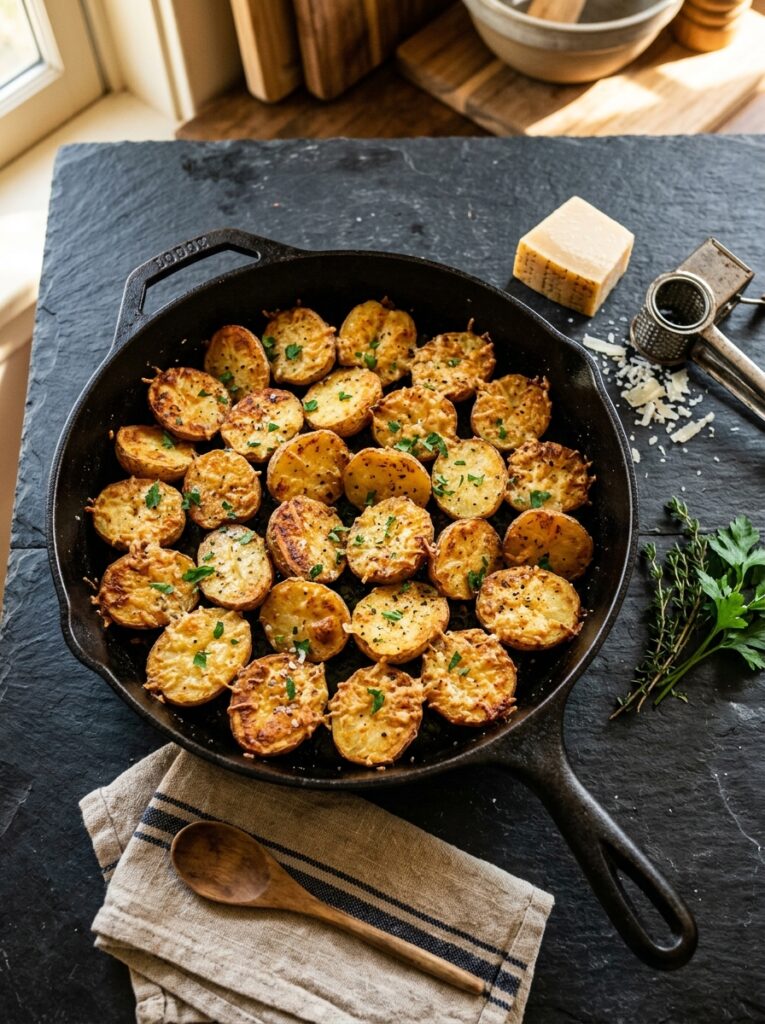
Parmesan Crusted Potatoes are the side dish that quietly upstages the main course. A crispy, deeply golden cheese crust on the outside, a soft fluffy center — and every ingredient on the list is probably already in your kitchen.
The problem most cooks run into isn’t flavor. It’s getting the crust to stay intact and actually crisp up instead of steaming soft or peeling off the pan in patches. That’s what this guide is about. Six methods — oven-baked halves, garlic butter wedges, air fryer baby potatoes, stovetop smashed, herb-roasted fingerlings, and thin crispy slices — each one suited to a different potato, a different piece of equipment, or a different amount of time. The principle stays the same across all of them: real Parmesan, high heat, and patience while the crust bonds.
Scroll through and find the one that matches what’s in your kitchen right now.
What You’ll Need
Equipment
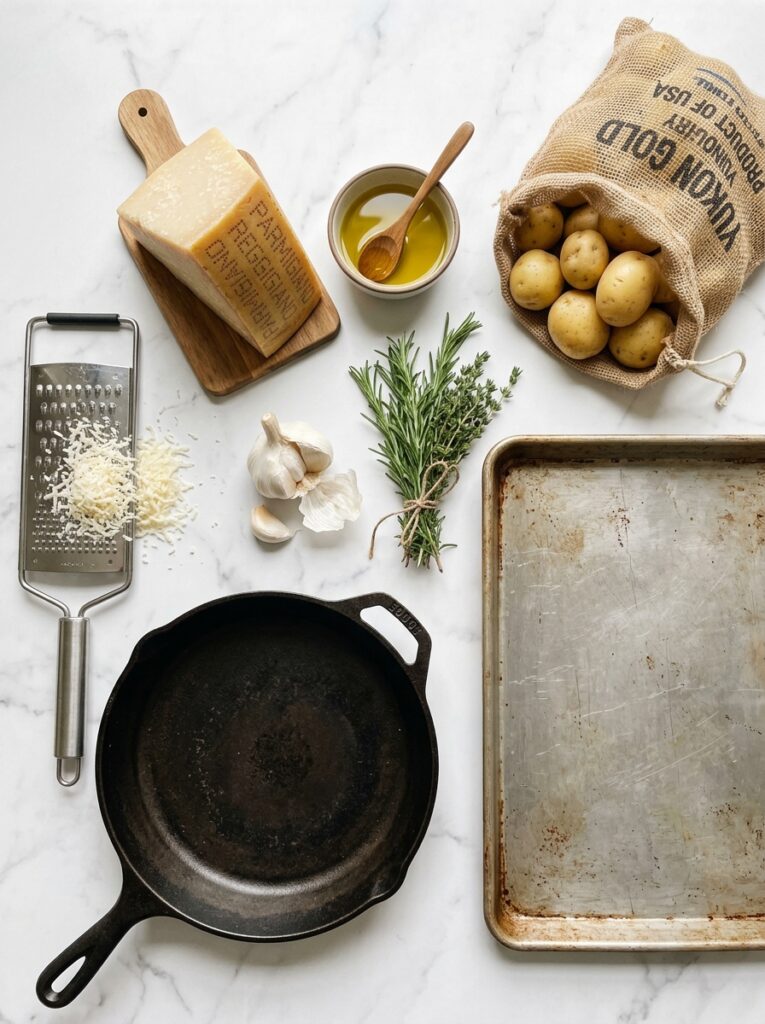
- Rimmed baking sheet — for oven methods; the rim keeps butter from running off the edges
- Cast iron skillet or heavy oven-safe pan — for the crust-down methods; cast iron holds heat more evenly than nonstick and produces better browning
- Air fryer — for Method 3 only; a standard basket-style works fine
- Box grater or microplane — freshly grated Parmesan makes a noticeably better crust than the pre-shredded kind; pre-shredded has anti-caking powder that changes how it melts and browns
- Sharp knife and cutting board
- Small mixing bowls — for coating mixtures
- Pastry brush — optional but useful for even oil or butter application
Shared Ingredients Across Methods
- Parmesan cheese — freshly grated from a block if you can. The difference between a block and the green canister isn’t subtle once you’ve made both.
- Butter and/or olive oil — butter contributes flavor and browning; olive oil handles higher heat and contributes to crispiness
- Garlic — fresh minced or garlic powder; both work depending on the method
- Salt and black pepper
- Fresh herbs — rosemary, thyme, and parsley are the most natural pairings with potatoes and Parmesan
- Potatoes — the variety matters by method; each recipe below specifies which type to use and explains why
Optional Add-Ins (work across multiple methods)
- Smoked paprika for warmth and color
- Lemon zest for brightness
- Red pepper flakes for heat
- Dried Italian seasoning
- Cream cheese or sour cream stirred into the base before coating
Recipe 1: Classic Oven-Baked Parmesan Potato Halves
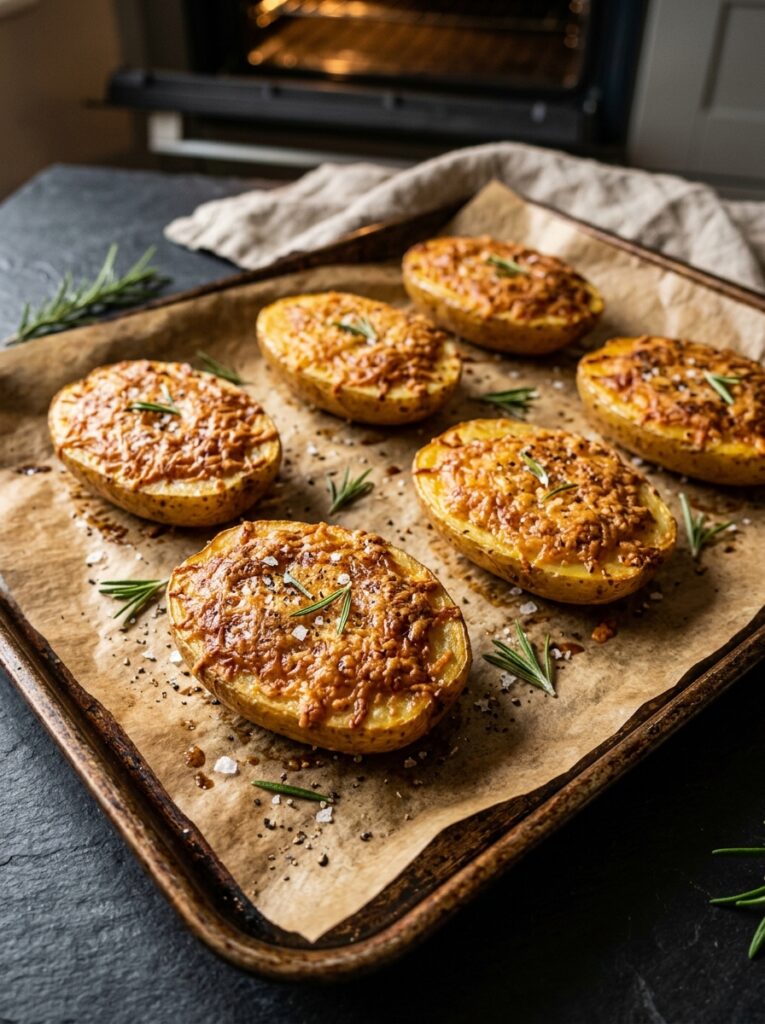
Start here if you haven’t made these before. Yukon Gold potatoes halved, pressed cut-side down into a Parmesan-butter mixture spread directly on the pan, and left alone in the oven while the crust forms. The underside of each potato comes out as a solid, golden Parmesan shell. The top stays soft and pillowy. It’s the most forgiving method in this guide, and the core technique carries over into every other recipe here.
Ingredients
- 4 medium Yukon Gold potatoes, scrubbed and halved lengthwise
- 3 tablespoons unsalted butter, melted
- ⅔ cup freshly grated Parmesan
- 2 garlic cloves, minced (or ½ teaspoon garlic powder)
- 1 teaspoon dried rosemary or fresh, finely chopped
- ½ teaspoon salt
- ¼ teaspoon black pepper
- Fresh parsley, for garnish
Instructions
- Preheat oven to 400°F. Pour the melted butter directly onto the rimmed baking sheet and spread to coat the center area.
- Combine Parmesan, garlic, rosemary, salt, and pepper in a shallow bowl. Sprinkle the mixture in a thin, even layer over the buttered area of the pan. This is what each potato will press into.
- Press each potato half cut-side down into the Parmesan mixture, pressing firmly so the coating sticks.
- Roast for 30–35 minutes without moving them. The crust needs uninterrupted contact with the hot pan to set and brown properly. Opening the oven to check early breaks that contact.
- After 30 minutes, slide a thin spatula under one potato to check. The crust should release cleanly and be deeply golden. If it sticks or looks pale, give it another 5 minutes undisturbed.
- Serve crust-side up, scattered with fresh parsley.
In my experience, the single most important step here is not touching the potatoes for the first 30 minutes. Any movement disrupts the crust while it’s forming and you end up with patches instead of a solid shell.
Recipe 2: Garlic Butter Parmesan Potato Wedges
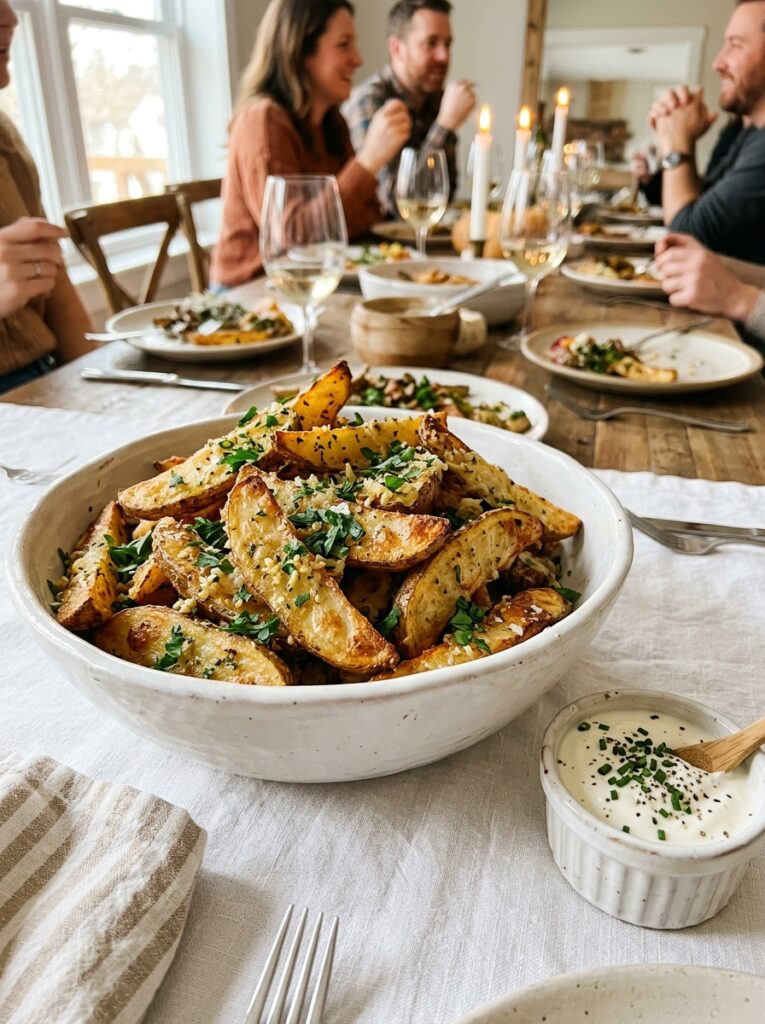
Wedges have more surface area than halves, which translates to more crust per bite. This version builds a wet coating first — garlic butter that the Parmesan clings to — so the cheese has something to bond with and the exterior picks up more richness. These have a way of disappearing off the serving tray before everyone has sat down, which is either a compliment or a problem depending on how you look at it.
Ingredients
- 4 large russet potatoes, scrubbed and cut into 8 wedges each
- 3 tablespoons unsalted butter, melted
- 2 tablespoons olive oil
- 3 garlic cloves, minced
- ¾ cup freshly grated Parmesan
- 1 teaspoon Italian seasoning
- ½ teaspoon smoked paprika
- Salt and pepper to taste
- 2 tablespoons fresh parsley, chopped
Instructions
- Preheat oven to 425°F. Line a large rimmed baking sheet with parchment paper.
- Whisk together the melted butter, olive oil, and minced garlic in a large bowl. Add the potato wedges and toss until every piece is coated.
- Combine the Parmesan, Italian seasoning, smoked paprika, salt, and pepper in a separate shallow bowl.
- Press each buttered wedge into the Parmesan mixture on all coated sides, pressing firmly. Arrange on the lined baking sheet in a single layer with space between each wedge. Crowded wedges steam rather than roast and the crust goes soft.
- Roast for 35–40 minutes, flipping once at the halfway mark, until the edges are deeply golden and the Parmesan coating is set and crispy.
- Scatter with fresh parsley before serving. Sour cream or garlic aioli alongside is optional but worth it.
Recipe 3: Air Fryer Parmesan Baby Potatoes
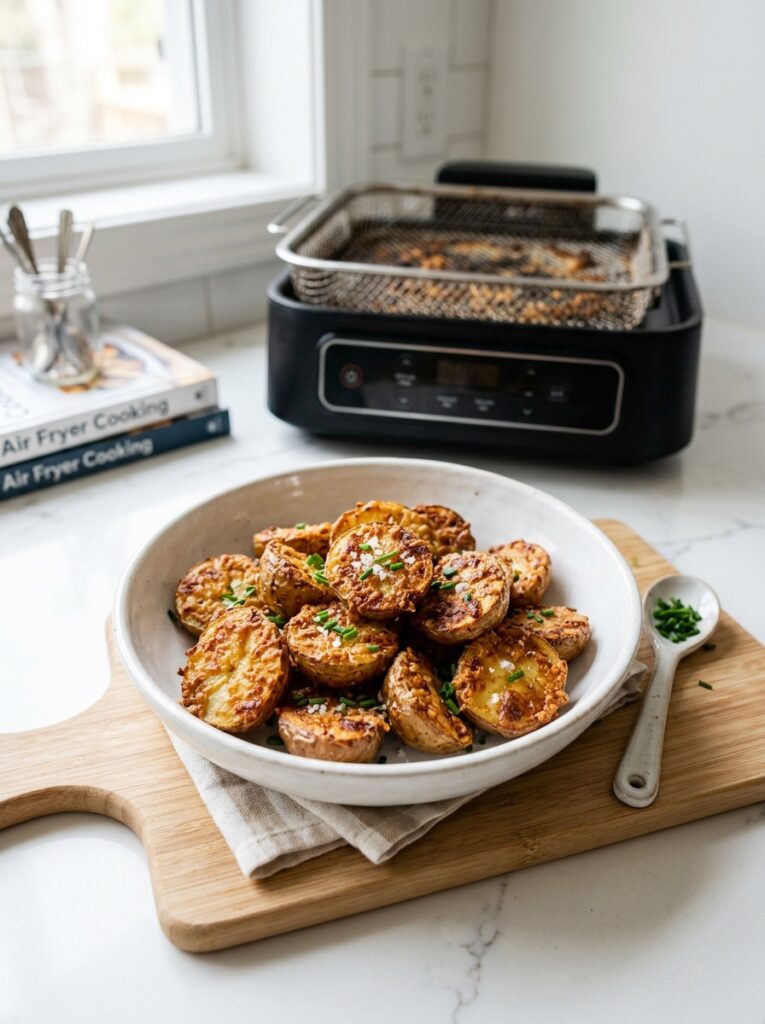
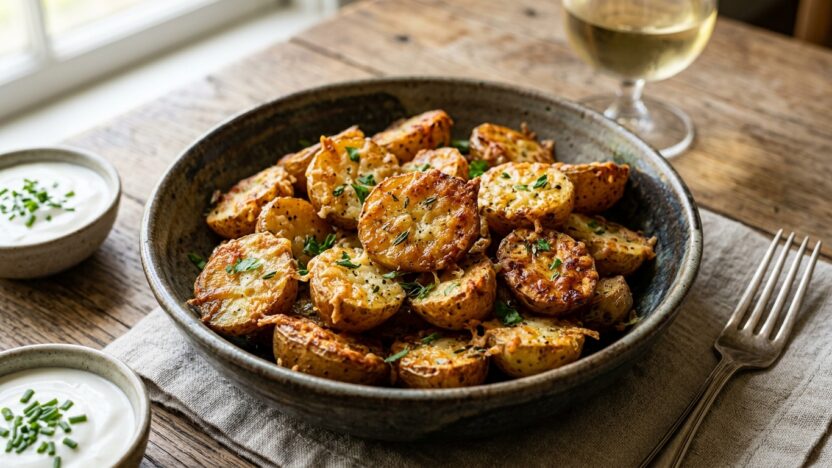
Baby potatoes cook through fast enough that the air fryer is a realistic weeknight option here, not just a novelty. The circulating heat creates a crispier Parmesan crust than most ovens can achieve, particularly on the edges where the cheese gets a little lacy and almost fried-looking. The cut surfaces go deep golden while the rounded skin side stays soft. Fifteen minutes start to finish once the air fryer is hot.
Ingredients
- 1.5 lb baby potatoes (any color), halved
- 2 tablespoons olive oil
- ½ cup freshly grated Parmesan
- 1 teaspoon garlic powder
- ½ teaspoon onion powder
- ½ teaspoon dried thyme
- Salt and black pepper to taste
- Fresh chives, for topping
Instructions
- Toss the halved baby potatoes with olive oil, garlic powder, onion powder, thyme, salt, and pepper in a bowl until well coated.
- Add the Parmesan and toss again. It will stick to the oil-coated surfaces.
- Preheat the air fryer to 400°F for 3 minutes.
- Arrange the potatoes cut-side down in the basket in a single layer. Work in batches — don’t stack or crowd.
- Air fry for 15–18 minutes, checking at the 15-minute mark. Cut surfaces should be deeply golden and the Parmesan visibly crisped. Shake the basket gently at the halfway point to prevent the skin side from sticking.
- Serve immediately topped with fresh chives.
I’ve noticed that air fryer models vary significantly in how hot they actually run. The first batch is always a test — if yours tends to run hot, check at 13 minutes.
Recipe 4: Stovetop Parmesan Smashed Potatoes
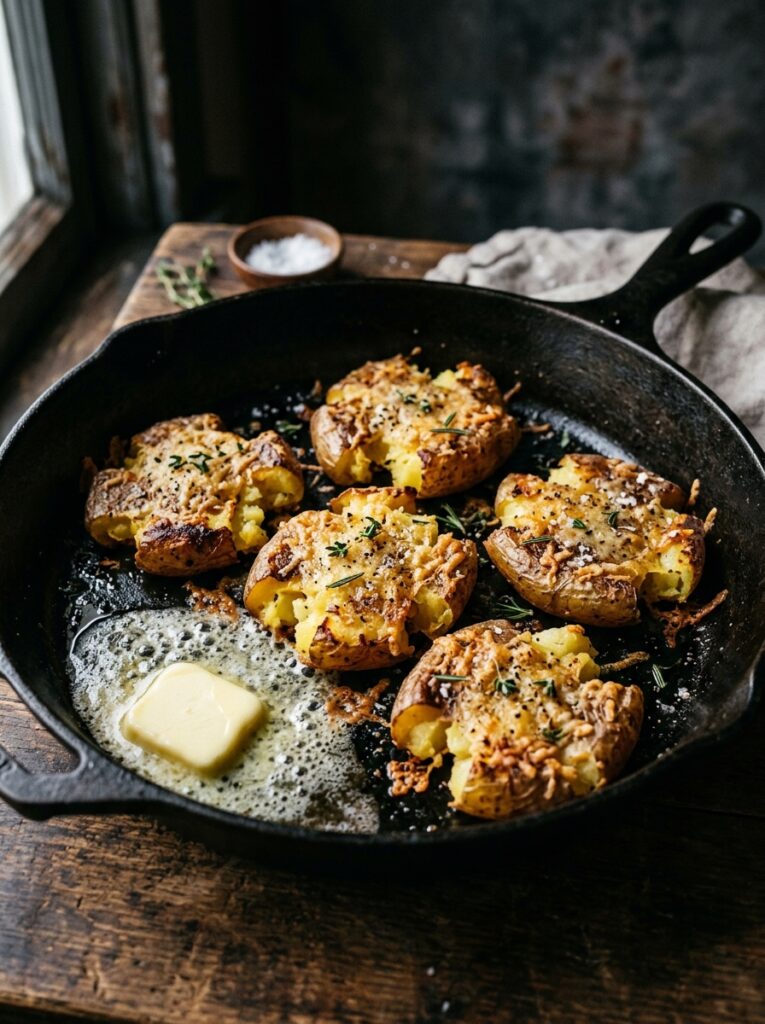
These are different from the rest. You boil the potatoes first until soft all the way through, smash them flat, then crisp the surfaces in butter with Parmesan added on top. The irregular torn edges from smashing become almost chip-like after a few minutes in a hot cast iron pan. The thick center stays fluffy. If I had to pick one method from this guide to make every week, this would be it.
Ingredients
- 1.5 lb small-medium Yukon Gold potatoes, whole
- 3 tablespoons salted butter, divided
- ½ cup freshly grated Parmesan, plus extra for topping
- 2 garlic cloves, minced
- ¼ teaspoon red pepper flakes (optional)
- Salt and black pepper
- Fresh thyme or chives, for serving
Instructions
- Boil the whole potatoes in well-salted water for 15–20 minutes until fork-tender all the way through. Drain and let them sit on the cutting board for 5 minutes so the surface moisture dries off. Wet potatoes won’t crisp.
- Using the bottom of a glass, a flat spatula, or your palm with a towel, press each potato flat to about ½ inch thick. They’ll crack and tear at the edges — that’s the point.
- Season the smashed potatoes with salt, pepper, and red pepper flakes if using.
- Melt 2 tablespoons of butter in a large cast iron skillet over medium-high heat. Once the foaming settles, add the smashed potatoes.
- Cook without moving for 4–5 minutes until the underside is deeply golden. Flip carefully, add the remaining butter and garlic, and cook another 3–4 minutes.
- Reduce heat to medium, scatter Parmesan over each potato, and cover the pan loosely for 1–2 minutes until the cheese melts and starts to crust around the edges. Serve from the skillet.
Recipe 5: Parmesan Herb Roasted Fingerling Potatoes
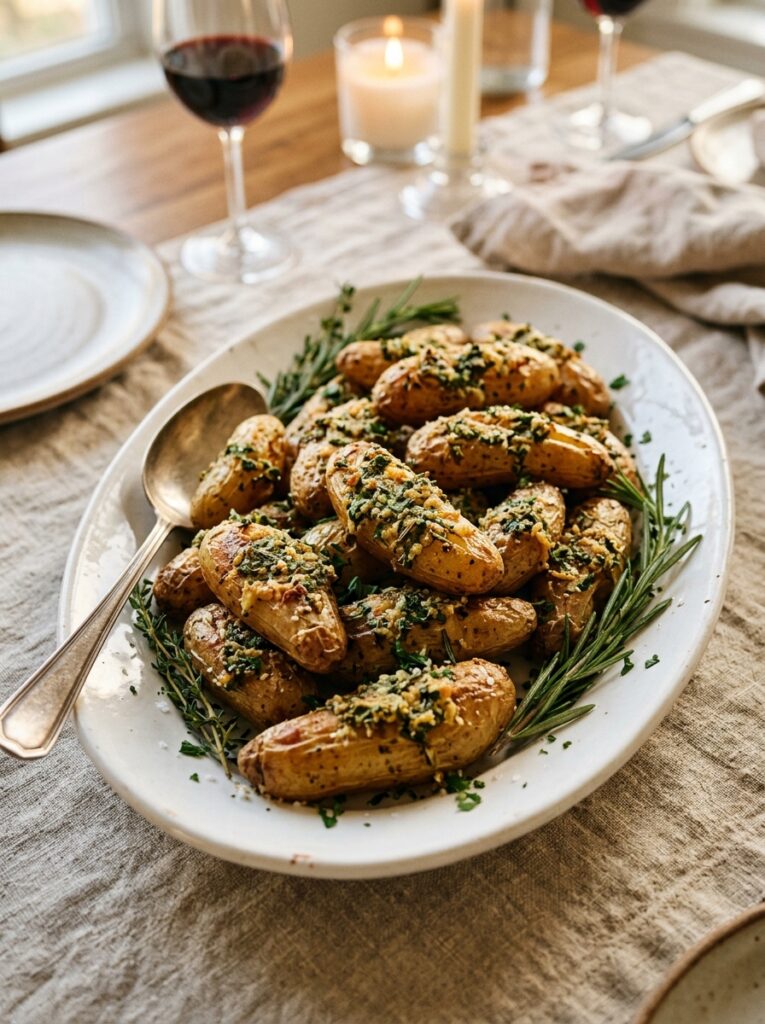
Fingerling potatoes are waxy and dense, which means they roast without turning mealy or falling apart. This method keeps them whole and coats the entire surface in an oil-herb-Parmesan mixture before roasting — so unlike the halved methods where only one face gets a crust, every part of the potato picks up some coating. The lemon zest in the herb mix is a small detail that makes a noticeable difference once the potatoes come out of the oven.
Ingredients
- 1.5 lb fingerling potatoes, scrubbed (halved lengthwise if large)
- 3 tablespoons olive oil
- ⅔ cup freshly grated Parmesan
- 2 teaspoons fresh rosemary, finely chopped
- 1 teaspoon fresh thyme leaves
- 2 garlic cloves, minced
- Zest of ½ lemon
- Salt and cracked black pepper
Instructions
- Preheat oven to 425°F. Line a rimmed baking sheet with parchment.
- Combine olive oil, garlic, rosemary, thyme, and lemon zest in a large bowl. Add the fingerlings and toss thoroughly.
- Add the Parmesan and toss again until the coating is distributed over all the potatoes.
- Spread on the prepared baking sheet in a single layer — two pans if needed.
- Roast for 25–30 minutes, shaking the pan once at the halfway point. The skins should be split and golden, the Parmesan coating browned and set.
- Taste one before serving. Fingerlings have a mild natural flavor and usually need a heavier hand with salt than you’d expect.
A helpful trick: if fingerlings keep rolling and won’t sit flat, score a thin slice off one side before coating so they have a stable surface. It also gives the Parmesan more direct pan contact.
Recipe 6: Crispy Parmesan Potato Slices
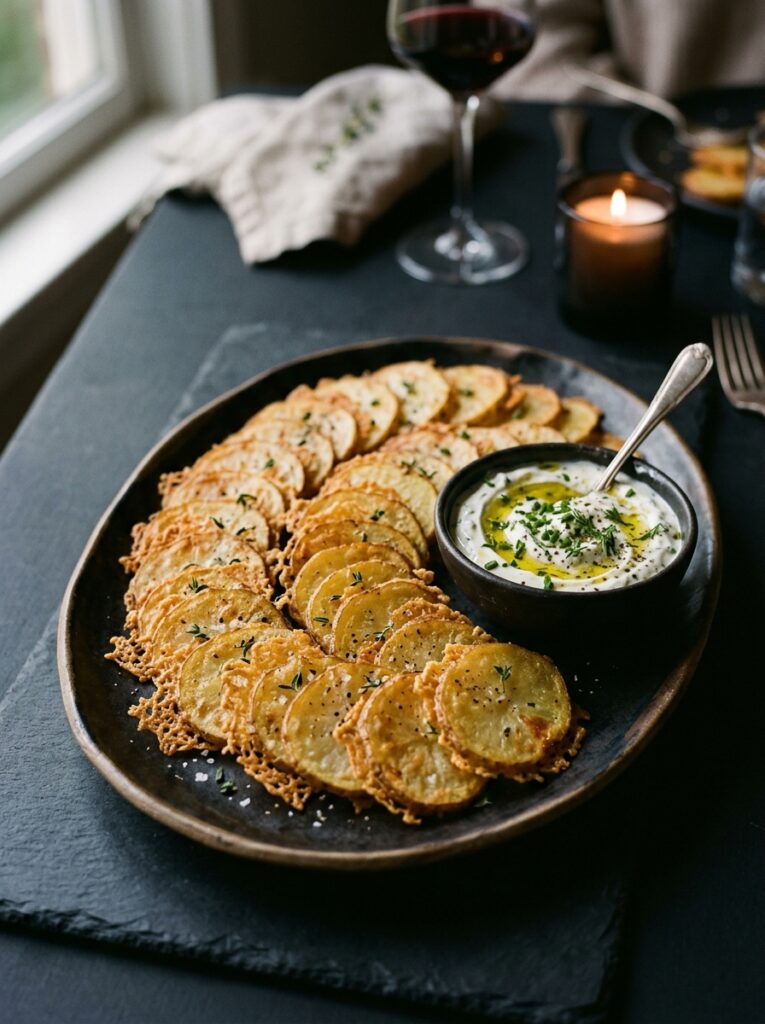
Sliced thin and roasted at high heat, these land somewhere between a roasted potato and a proper chip. The edges get lacy and almost fried-looking where the Parmesan goes thin against the hot pan. The center of each slice stays tender. They go fast — this is the version where people keep picking “just one more” off the serving plate until the plate is empty. Uniform slices matter here, so a mandoline is worth using if you have one.
Ingredients
- 3 large russet or Yukon Gold potatoes, sliced into ¼-inch rounds
- 3 tablespoons olive oil
- 1 tablespoon melted butter
- ¾ cup freshly grated Parmesan
- 1 teaspoon garlic powder
- ½ teaspoon dried oregano
- ½ teaspoon salt
- ¼ teaspoon black pepper
- Pinch of cayenne (optional)
Instructions
- Preheat oven to 425°F. Line two baking sheets with parchment paper.
- Combine olive oil and melted butter in a large bowl. Add the potato slices and toss to coat both sides of every piece.
- In a shallow bowl, mix together the Parmesan, garlic powder, oregano, salt, pepper, and cayenne.
- Press each potato slice into the Parmesan on one side, pressing firmly, then lay them Parmesan-side down on the baking sheet. Sprinkle a little more Parmesan on the exposed tops.
- Roast for 20–25 minutes, rotating pans halfway through, until the edges are golden and the Parmesan has browned. Thinner slices crisp faster — watch the edges, not the clock, after the 20-minute mark.
- Let cool on the pan for 2–3 minutes before moving. The crust continues firming up as it cools.
I’ve seen this one go wrong when slices overlap on the pan — they steam against each other and the crust softens before it sets. Single layer, a little space between pieces, and two pans beats one crowded pan every time.
Tips for Best Results
The single thing that matters most across all six methods is using freshly grated Parmesan from a block. Pre-shredded Parmesan from a bag contains cellulose or potato starch to prevent clumping, and those anti-caking agents interfere with how the cheese melts and browns. Instead of forming a solid crust, it tends to clump, steam, and stay pale. A microplane or box grater takes about two minutes. The visible difference in the finished crust is not subtle.
Dry your potatoes before coating. Surface moisture is what prevents crisping. After washing, pat them dry with a kitchen towel. After boiling — especially for the smashed method — let them sit on the cutting board for a few minutes so steam can escape before you add any oil or coating.
Preheat your pan. For the oven methods, putting butter or oil on the pan and heating it in the oven for 5 minutes before the potatoes go in means they hit a hot surface immediately rather than warming up gradually. That immediate contact is what starts the crust forming. A cold pan gets you a softer result.
Give the pan room. When potatoes are crowded, trapped moisture steams them instead of allowing them to roast. The coating goes soft before it has a chance to brown. This is worth repeating because it’s the most common reason these don’t turn out right — too many potatoes in too small a space.
Season the cut surface of the potato, not just the coating. The Parmesan mixture is salty, but a large potato half has a lot of interior that the coating can’t reach. A light sprinkle of salt directly on the cut surface before pressing into the Parmesan makes the finished potato taste seasoned all the way through rather than only on the crust.
Common Mistakes to Avoid
Moving the potatoes too early is how most batches get ruined. The Parmesan crust goes through a soft, vulnerable stage before it bonds and sets. If you flip, poke, or shake the pan during that window, you break the crust before it’s formed. For oven methods, set your timer and walk away. For the stovetop smashed version, press the potato down once and don’t touch it for a full 4–5 minutes.
Using the wrong potato for the method matters more than people expect. Waxy varieties — baby potatoes, fingerlings, red bliss — hold their shape during cooking, which is exactly what you want for Methods 3, 4, and 5. Starchy varieties like russets and Yukon Golds give you a fluffier interior, which makes the contrast with the crust more pronounced — better for Methods 1, 2, and 6. Swapping a waxy potato into a starchy method (or vice versa) changes the texture in ways that aren’t always good.
Too much fat on the pan is the opposite of what people usually worry about, but it’s a real problem here. Parmesan crisps through direct contact with heat, not by frying in fat. If the butter pools too deep on the pan, the Parmesan absorbs it, becomes greasy, and never gets the crispiness you’re looking for.
Trusting visual cues over the fork test. Parmesan browns faster than potatoes cook through. A crust that looks deeply golden and done can sit over a potato that’s still firm in the center. Always check with a fork before pulling from the oven — and if the crust is browning faster than the potato is cooking, tent loosely with foil for the last 8–10 minutes.
Grating Parmesan ahead and leaving it open in the fridge. Parmesan grated a day or two in advance dries out and loses the moisture that helps it bind. Grate it fresh just before using, or at most a few hours ahead kept covered.
Variations
Parmesan and Mozzarella Blend: Replace about a third of the Parmesan with finely shredded mozzarella. The mozzarella melts differently and gives you a slight pull when you break the crust, while the Parmesan still handles the browning and saltiness. Works especially well in the smashed and wedge methods where you want a slightly gooier finish.
Truffle Parmesan: Add a tiny drizzle of truffle oil over the finished potatoes right before serving. Don’t cook with it — high heat kills the flavor quickly. Half a teaspoon across a full batch is enough; truffle oil is easy to overdo and once you’ve gone too far it’s all you taste.
Spicy Calabrian Chili: Mix ½ teaspoon of Calabrian chili paste into the butter or oil coating before adding the Parmesan. It’s subtle — more warmth than heat — and it works especially well against the saltiness of the cheese. I’ve made this version more than any other variation in this section.
Lemon Herb (Lighter): Swap all butter for olive oil, use only fresh herbs, add the zest of a full lemon, and cut the Parmesan back slightly. The result is brighter and less heavy — better as a side alongside fish or a simple roast chicken than something more rich.
Dairy-Free: A 1:1 swap of nutritional yeast for Parmesan doesn’t taste the same, but it comes much closer than you’d expect when you add a pinch of extra salt and garlic powder. The crust crisps well at high heat. If you go this route, use coconut oil or a neutral plant-based butter for the fat component rather than olive oil alone.
Loaded: After the potatoes are done roasting, top with sour cream, crispy bacon crumbles, a little shredded cheddar, and chives. Best on the halved or smashed versions where the surface is flat enough to hold toppings without everything sliding off.
Storage and Reheating
| Storage Method | Container | Duration | Notes |
|---|---|---|---|
| Refrigerator | Airtight container | 3–4 days | Crust softens in the fridge; reheat properly to revive it |
| Freezer | Airtight freezer bag, single layer | Up to 1 month | Texture changes slightly but still good reheated |
| Room Temperature | Covered plate | 1–2 hours max | Fine for same-day serving; refrigerate after that |
The microwave will heat these through, but the crust turns soft and a little rubbery. For a crust that crisps back up, use one of these instead:
- Oven at 400°F for 8–10 minutes on a bare baking sheet with no parchment — you want direct pan contact
- Air fryer at 375°F for 5–7 minutes — fastest method and the most effective at restoring crispiness
- Skillet over medium-high heat with a small knob of butter, crust-side down for 3–4 minutes
From frozen: thaw in the fridge overnight and then reheat with any method above. If you’re going straight from frozen to the oven, allow 15–18 minutes at 400°F and check with a fork before serving.
FAQs
What type of potato works best for Parmesan crusted potatoes? Yukon Golds are the most versatile — enough starch for a fluffy interior, enough wax to hold their shape through roasting. Russets give the crispiest crust but can dry out inside if overcooked. Baby potatoes and fingerlings are better suited to methods where you want the skin intact. Each recipe in this guide calls out which type to use and why, so you don’t have to guess.
Why does my Parmesan crust keep falling off? Usually one of three reasons: the potatoes were too wet when coated, the fat layer wasn’t thorough enough for the cheese to bind to, or they were moved too soon. Pat the potatoes completely dry, make sure the butter or oil coating covers every surface, and don’t touch them during the first two-thirds of cooking time.
Can I use grated Parmesan from the green canister? Technically yes, but the result is noticeably different. The fine powder doesn’t form the same layered crust, and the anti-caking agents in the canister version interfere with browning. You’ll get flavor but not the crispy, structured crust. Buy a wedge if you can.
How do I know when Parmesan potatoes are done? Two checks at once: the crust should be deep golden rather than pale yellow, and a fork or knife should slide through the thickest part of the potato without resistance. If the crust is browning faster than the potato is cooking through, cover loosely with foil and give it another 8–10 minutes.
Can I prep these ahead of time? Partially, yes. For the oven methods, par-boil or par-roast the potatoes to about 80% done, cool them, and refrigerate up to 24 hours ahead. Apply the Parmesan coating and finish roasting just before serving. The crust comes out the same, and you save most of the active time on the day.
Do I need to peel the potatoes? For most of these recipes, no. Yukon Gold, baby, and fingerling skins are thin enough that they soften during roasting and don’t get in the way. Russet skins are thicker and chewier — worth peeling for the wedge and slice methods if you want a more uniform texture throughout.
Conclusion
The difference between good potatoes and great potatoes is almost always just heat, technique, and Parmesan quality. The method you choose matters less than getting those three things right.
Start with the classic oven-baked halves if this is your first time. Get comfortable with how the crust behaves in your oven, how long it takes to set, what it looks like when it’s done. After that, the other five versions make sense quickly and come together without much thought. Save this guide to your Pinterest dinner sides board for the next time you’re staring at a bag of potatoes wondering what to do with them. And if one of these becomes a regular in your house, come back and tell me which one.